Past event
American Monuments, American Cities
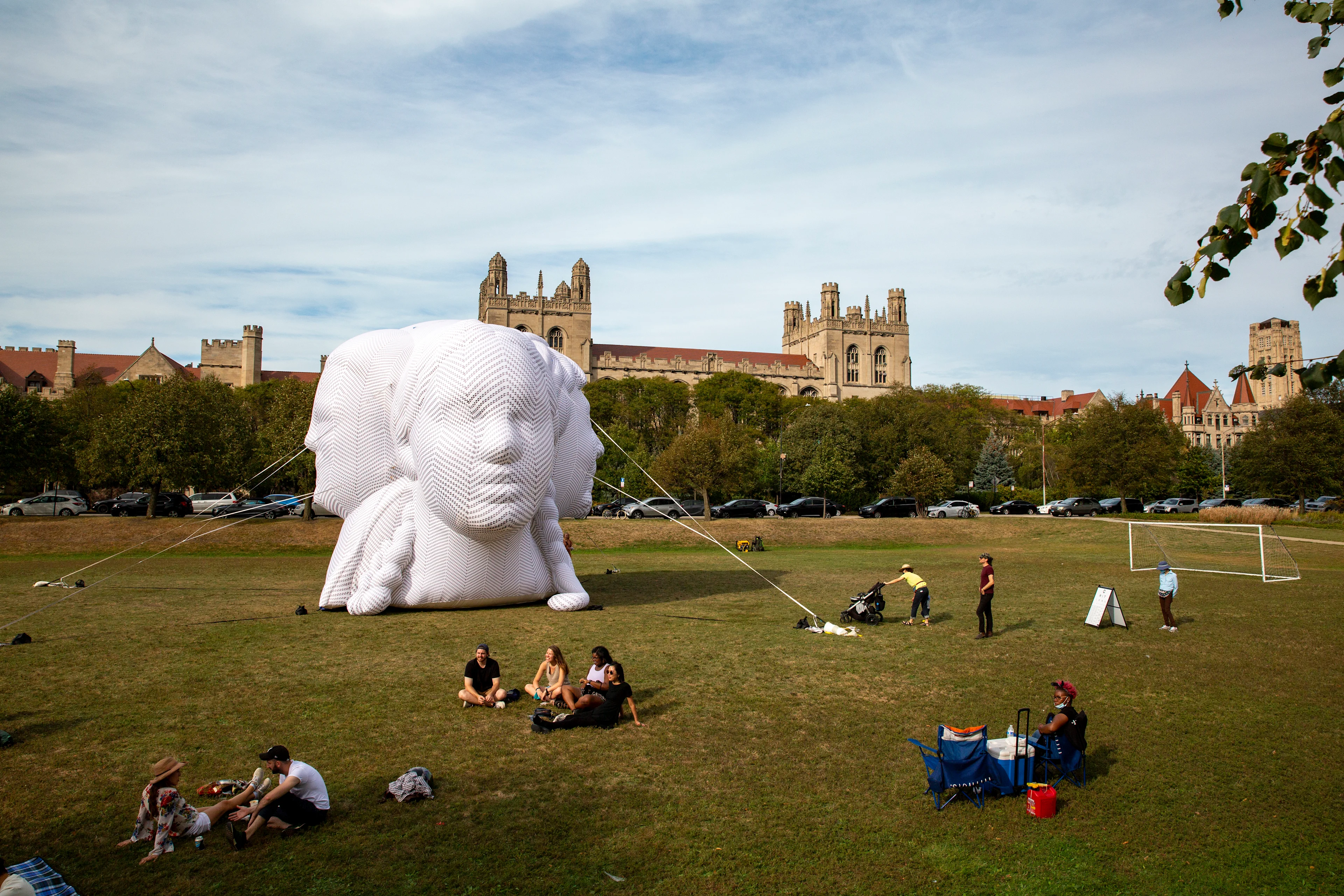
Collectively, the eight projects represent the nexus of hyperlocal Chicago history and the ongoing struggle to overcome the shortcomings of the past. Upon installation, each will become a site of community building and healing, all while commemorating the intergenerational struggle for justice and resilience in the face of adversity.
One of the eight projects, which promises to engage a dark chapter of Chicago history, is the Chicago Torture Justice Memorial. Initially approved by the city in May 2015 as part of a reparations package that included payments to 118 victims of police brutality, the memorial has faced repeated delays—until now. It will pay tribute to the innocent, predominantly African American men who suffered beatings, electrocutions, and suffocation at the hands of police commander Jon Burge and his subordinates, known as the “Midnight Crew,” from the early 1970s until 1991.
The design for the memorial, created by artist Patricia Nguyen and architectural designer John Lee, was selected by survivors through an open process. It will prominently feature the names of the victims and the dates on which they endured torture. Extensive community engagement efforts have been underway since the spring of 2023, and the memorial is expected to be installed in Woodlawn, Chicago, in the fall of 2024.
In light of this grant, Chicago mayor Brandon Johnson has affirmed the value of memorializing a disturbing history of police brutality. As relayed by Chicago’s PBS station WTTW, he said, “It is important that we capture that history in a physical way. The impact that it is going to have—it is not only educating a generation on how these systems fail and harm people, but we also have the ability to tell our stories with our art.” Adding, “See, when oppressors look to dominate people, they go after their history, their art, and thier culture. We’re not going to do that in Chicago.”
Similarly, the other projects are exploring and memorializing historically significant moments in the city of Chicago. The city’s Department of Cultural Affairs and Special Events and the Department of Water Management, for example, are collaborating with the Mother Jones Heritage Project (MJHP) to honor the contributions of Chicago activist Mother Jones to labor history. The project aims to engage the community, address the dearth of monuments celebrating women, and raise awareness of the city’s labor history. With plans for community engagement activities to ensure the inclusion of perspectives from labor, immigrant, worker, and women’s rights movements, the monument is expected to be installed at Jane Byrne Park by the summer of 2024.
See below for the list of eight projects identified through the new work engagement process by the Chicago Monuments Project: