Voice
Humanities Graduates Can Find a Great Job. It’s Time to Make This Fact Known.
Read the essay 
Not your average internship, on-the-job learning opportunities offered at some schools today connect college students to a variety of local nonprofits, ranging from museums to mental health centers, where they apply classroom learning to real-world challenges while building networks, confidence, and clarity about their futures.
For many, these internships are more than just resume boosters—they’re turning points. Whether rediscovering childhood joy through autism support work, live-streaming stories from Latinx educators, or uncovering art histories in a campus museum, humanities students are finding purpose in unexpected places.
Cozi Jones knew she wanted to work in the field of mental health but never saw herself dealing with children. She didn’t think she had the patience. Jones says she also found it hard to relate to them, in part because she says she didn’t grow up with emotional stability as a child.
So the 22-year-old began her career working with adults while also studying communications at Old Dominion University (ODU) in Norfolk, Virginia. She interned at Hope House, a local service organization that supports people with intellectual and developmental disabilities.
As a behavioral support specialist intern at Hope House, Jones researched and compiled information on different mental health disorders and assisted with trainings, personalized behavior plans and community events. While she worked to help adult clients of Hope House, her perspective shifted on working with kids.
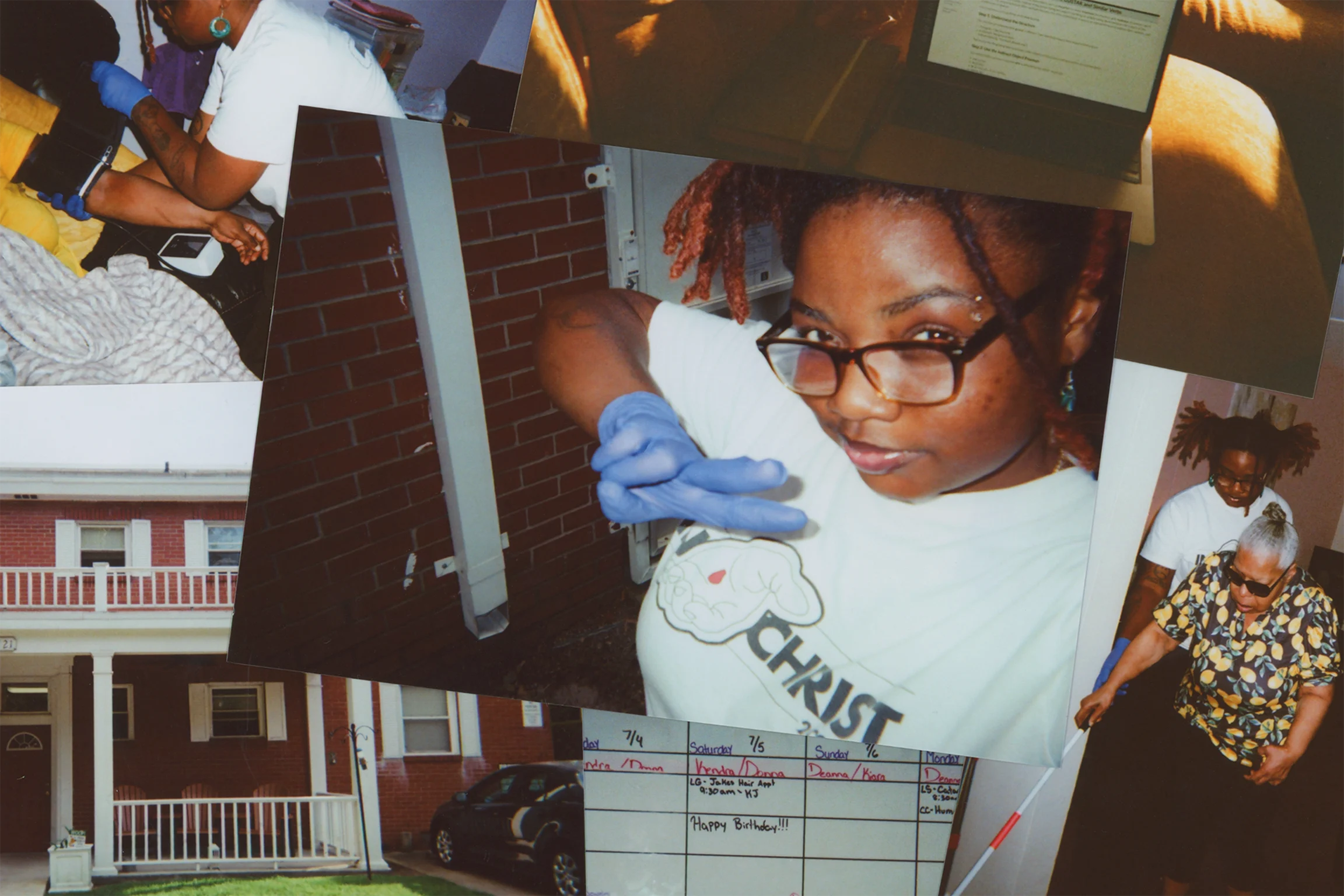
“Dealing with mental health and working with different behaviors during my internship opened my heart to all ages,” says Jones. “I want to continue to have compassion towards others and the patience and the will to understand and get to know others.”
Now an ODU graduate, Jones has a job as a behavior technician at Children First ABA Clinic. “Working with kids now is eye opening and it awakened the child in me,” she says. “Since I work with children with autism it taught me about the negative stigma that is placed on these children. They are all so different, it is amazing seeing their different and individualized talents.”
Jones is one of more than a hundred students across the country who’ve taken part in and benefited from a humanities-focused internship with support from the Mellon Foundation. These grants fund paid internships for undergraduate humanities majors at eleven US universities and colleges, placing students at local organizations and providing them with valuable work-related skills and experience, mentorship and professional networks. Many of these programs also help students create online electronic portfolios, offer career development support, assist humanities faculty members with integrating work-based learning into the curriculum, and more.
“Humanities students tend to have lower internship rates than students in other majors and this puts them at a disadvantage academically and professionally,” says Elizabeth Zanoni, an ODU associate professor of history.
These internships also help counter a common misconception that humanities majors have limited job prospects. In fact, a study by the American Academy of Arts and Sciences found that around 95 percent of terminal humanities bachelor’s degree holders between the ages of 23 and 32 were fully employed, similar to rates for degree holders in that age group across all fields.
Jones only realized her work fell under the humanities umbrella through her internship, which paved the way to landing her current job and solidifying her future aspirations. She plans to enroll in a master’s degree in clinical counseling at ODU next year.
“If I didn't have Hope House on my resume, I don't think I would've got the job,” she says.
Jones’ internship was facilitated and funded by ODU’s Monarch Humanities Internship Academy, launched in 2024 with Mellon support. ODU’s goal is for every graduating student to have completed an internship by 2027.
In Missouri, Yojayra Valdez also recently finished a humanities internship, which, she says, is setting her up for a better future. The University of Missouri–Kansas City (UMKC) graduate interned at Latinx Education Collaborative, a nonprofit working to improve educational equity and opportunities for area youth. She helped with several initiatives there, such as ‘Ask an Educator,’ a program that livestreams interviews with Latinx teachers, EducaTec, which teaches parents to use technology to better support their children at school, and other programs that inform parents of their rights.
“This is my first internship, so any experience is a good experience,” says Valdez, who studied sociology. She adds that she has to work a little harder to get her foot in the door and make her own way, since the career path for sociology majors can be less clear compared to fields like engineering.
Besides gaining work experience, Valdez says the internship also helped her to feel more connected to her community, both through using her Spanish-speaking skills and being able to offer support.
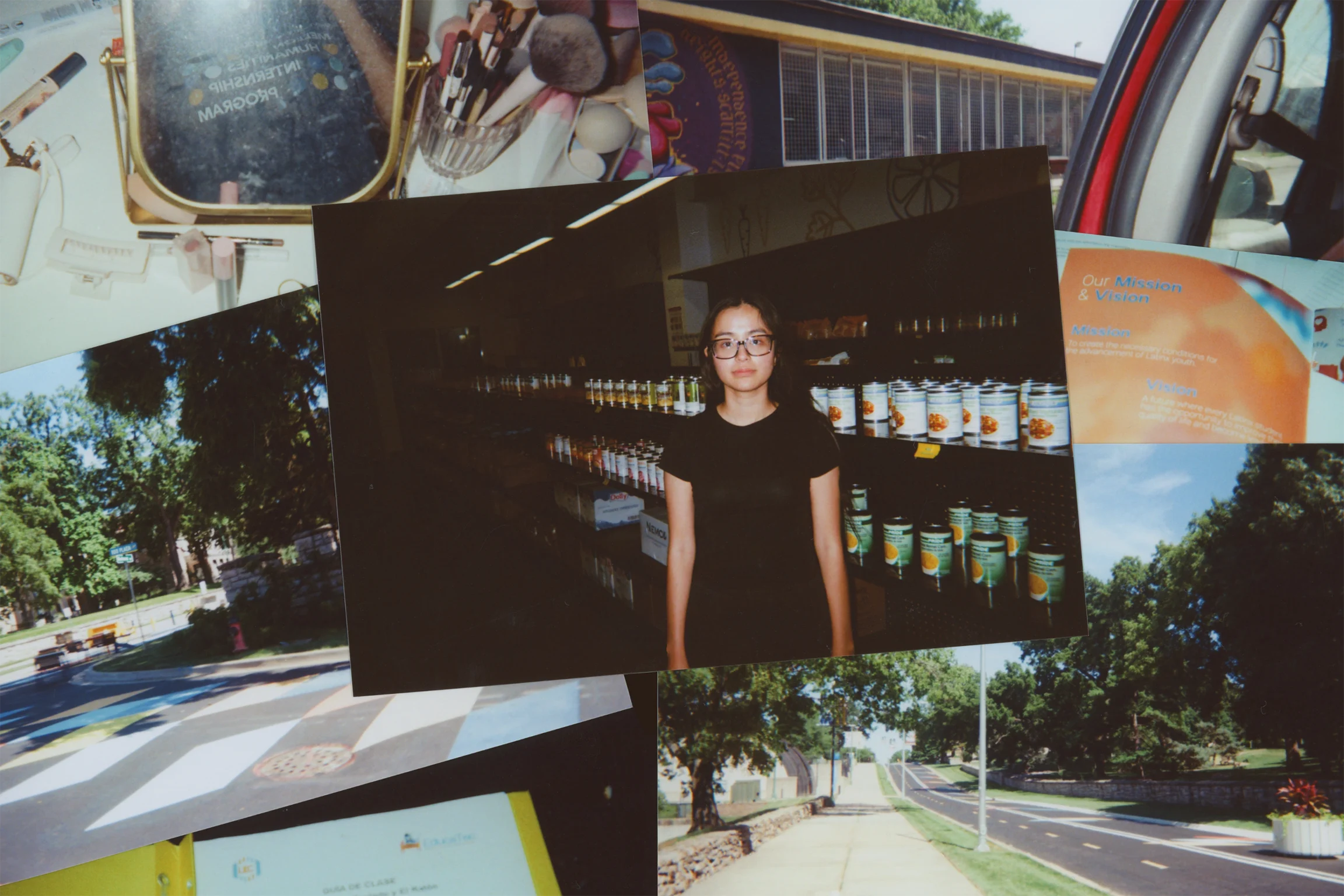
“It’s nice to meet other Latinos in education because there’s really not a lot of us,” she says. “I hope to use this experience to help more Latinos understand the opportunities they have for an education, that there are people in their corner.”
Valdez also hopes to leverage this experience as she pursues her master's degree in public health next year. She says the soft skills she’s learned through her humanities studies are vital to making this happen.
ODU’s Zanoni agrees. “Humanities majors walk away with a well-rounded, diverse skill set that prepares them to thrive in a variety of different fields and industries,” argues the professor, who is also the director of ODU’s Internship Studio in the Monarch Humanities Internship Academy. Those skills, she says, include critical thinking, creative problem solving, and persuasive communication.
All the internships are also paid—a crucial part of these grants. A salary helps ensure students have equal access to internship experiences, regardless of their financial status.
A wage allowed Allison Cambra, a history major who recently graduated from University of North Carolina at Greensboro (UNCG), to take a different approach to her humanities internship at the Weatherspoon Art Museum, a contemporary art museum on campus.
“I’ve been able to pull back at work so that I can fully focus my attention on the needs of the Weatherspoon, which is the sector I want to be in,” she says. “I’m not scrambling for time, and I’m able to do the work that I need to be successful.”
As part of her internship, Cambra supported in-person, interactive public discussions about the museum’s artworks, which included researching the Moroccan artist Lalla Essaydi. She also worked on label writing and expanding the institution’s database. These experiences, Cambra says, have opened her eyes to what the contemporary art world can offer.
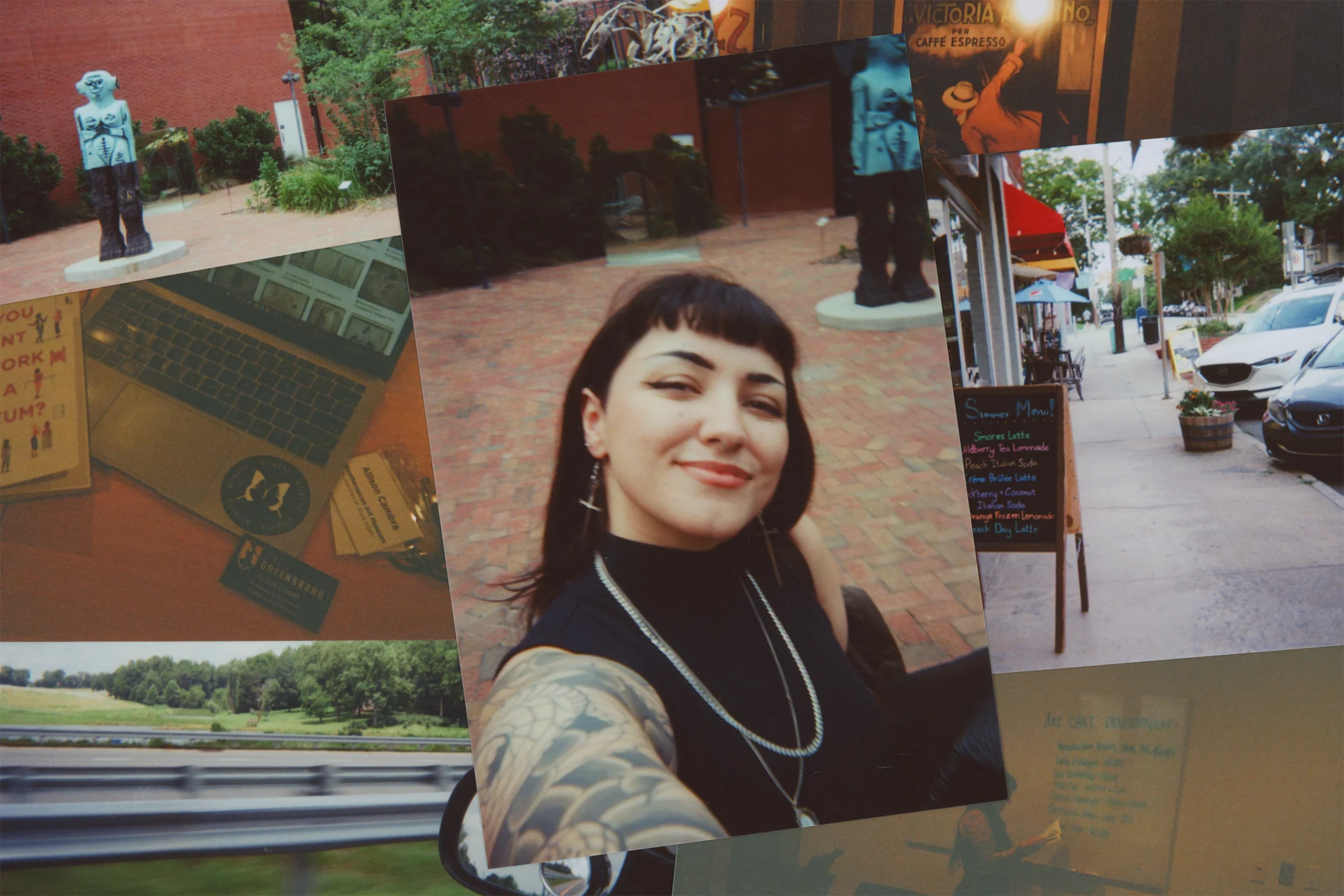
Beyond the internships, the UNCG internship program, called Humanities at Work, also has a course component focused on career development. This includes helping students with job searches, providing mentorship, and connecting with humanities professors and professionals. With its track record in enrolling first-generation and lower-income students, the university supports a wide range of students.
Cambra didn’t go to college thinking she’d study art history, but now she’s looking to do a master’s degree in the field with a focus on provenance research, followed by a law degree. She says her internship was integral to shaping her master’s degree proposal and defining these career goals.
“What I want to do has been really forming over the last couple of years at UNCG,” she says. “My experience in this program, particularly, has really given me the confidence that what I'm doing is needed, that it's meaningful, and that it will serve a greater purpose.”