December 18, 2024
Deana Haggag to Helm Mellon Foundation Arts and Culture Grantmaking
A bassline hums throughout a studio in Brooklyn. Students solder wires to handmade synthesizers, while others experiment with DJ equipment for the first time, gearing up to produce their own tracks. This is Willie Mae Rock Camp, an experimental music program that emphasizes STEM learning and self-expression at the same time.
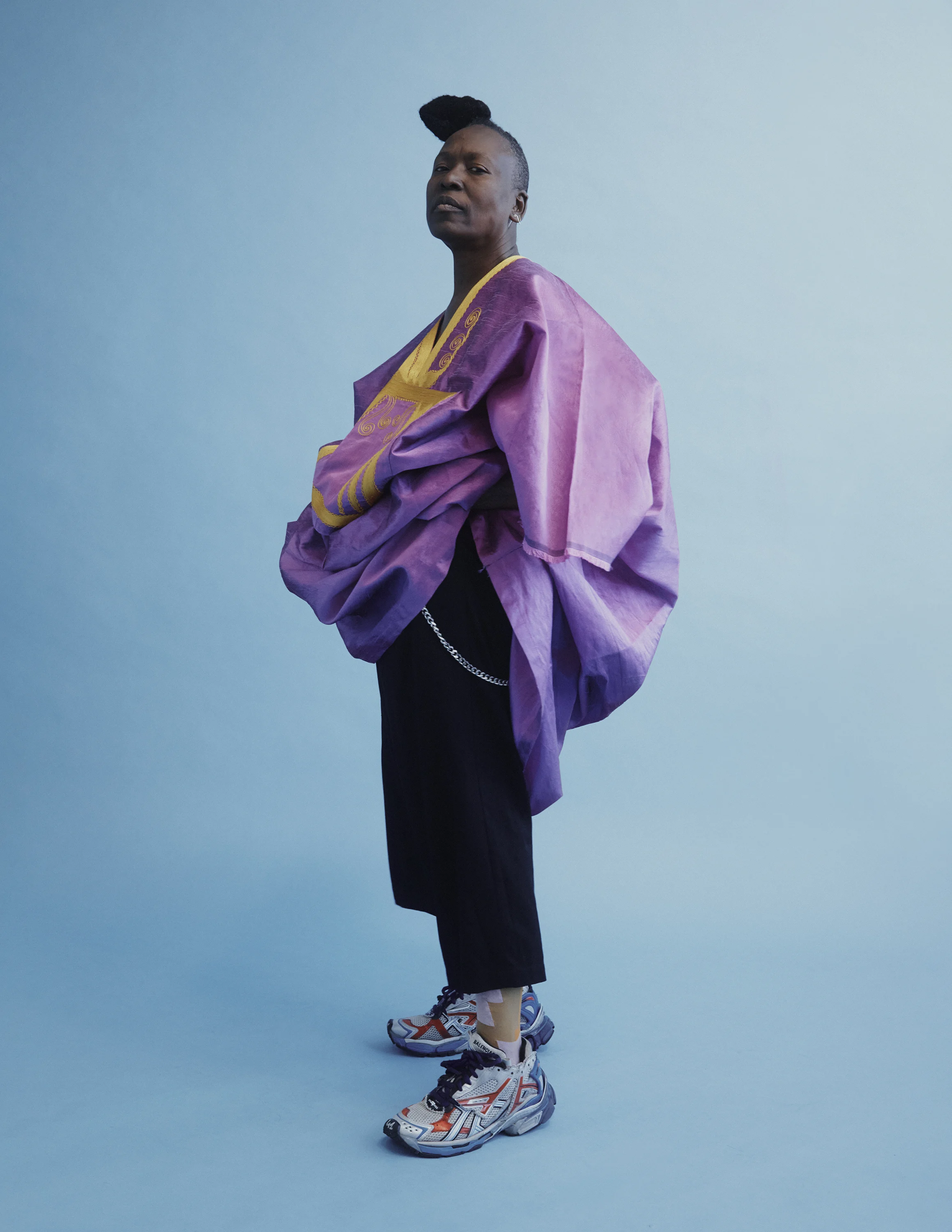
“At Willie Mae, our scientific method is ‘mess around and find out,’” says Executive Director LaFrae Sci, an award-winning multi-instrumentalist, composer, and educator. “We create a space where the kids can experiment, not try to emulate, and come up with their own sounds and think beyond genre, outside of the box.”
Willie Mae was founded in 2004 as one of the country’s first summer rock camps for girls. Today, it is still New York City’s only STEM-based and tuition-free music program that centers girls and gender-expansive youth from marginalized backgrounds. Students from across the five boroughs come together to join an intergenerational community of artists while also cultivating concrete technical skills. “If you look at the skill of the future, STEM is where it’s at,” Sci explains. “When you look at the percentage of women in STEM careers right now, it’s about 30 percent. For Black and brown women, it’s somewhere between 3 percent and 7 percent.”
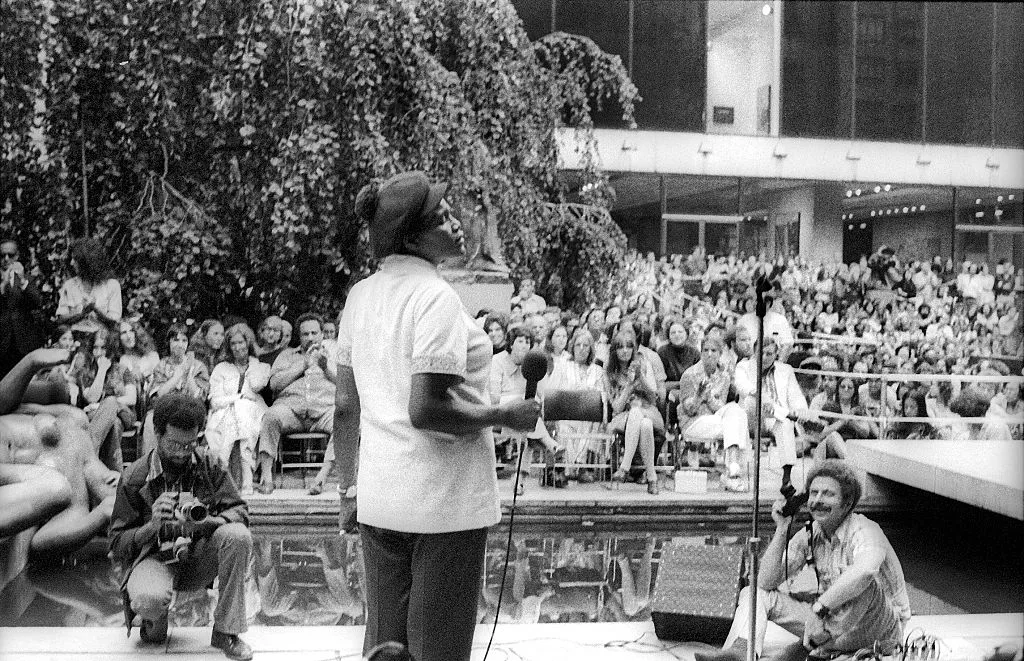
The program’s name honors rock and roll foremother Willie Mae “Big Mama” Thornton, who recorded “Hound Dog” and “Ball ‘n’ Chain” years before they became hits for Elvis Presley and Janis Joplin. In her legacy, the spirit of the program is deeply rooted in the blues and the African American oral tradition. “We treat the blues as an algorithm—to solve a challenge, to celebrate, to heal, to build community,” says Sci. “We believe that the blues is the root, and everything else is the fruit.” According to Sci, students study field recordings in the tradition of author and anthropologist Zora Neale Hurston, who famously collected the sounds and stories of rural Florida. For Sci, the blues is more than a genre. It’s a living framework for honoring history, fostering self-discovery, and sparking creative possibilities.
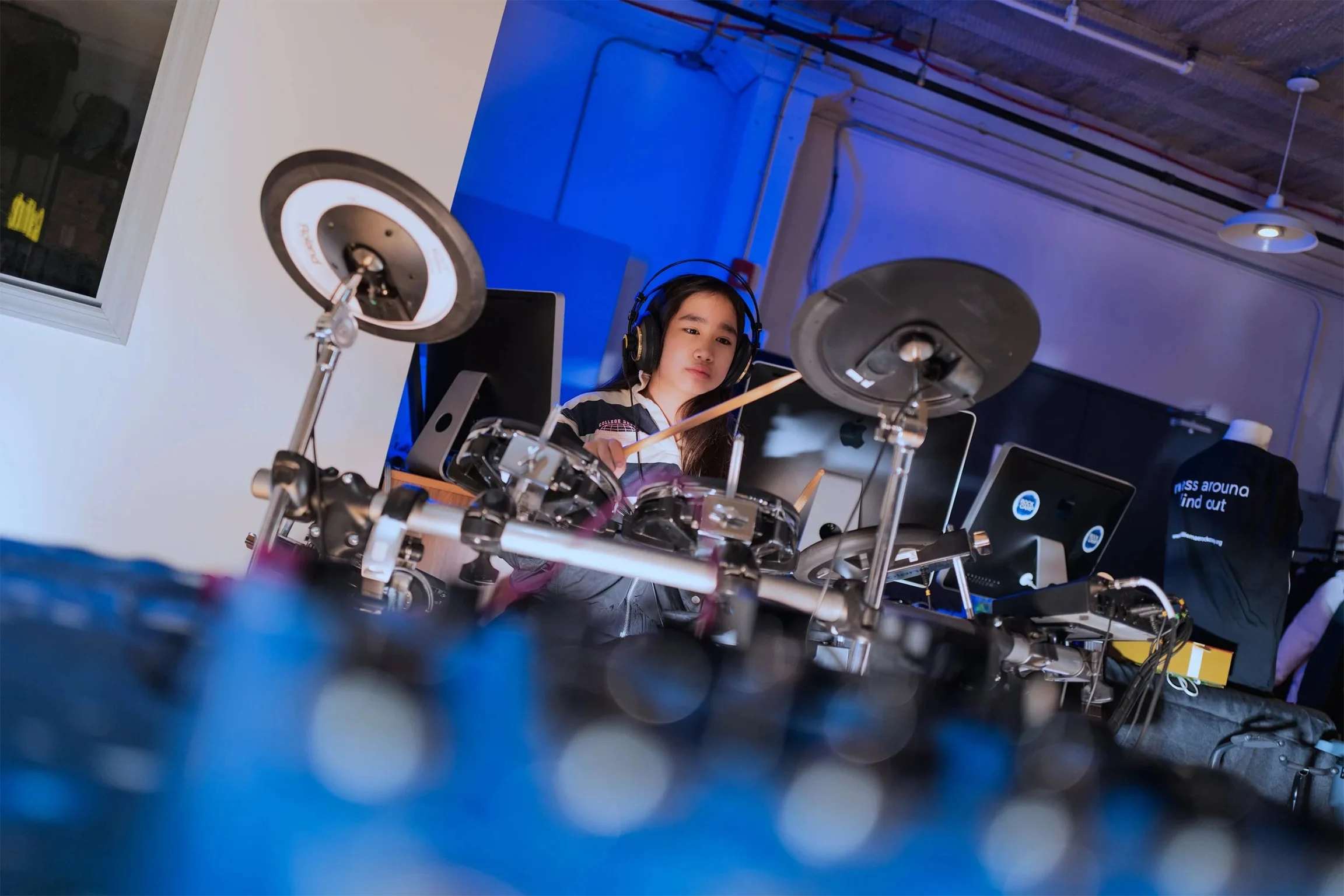
Since stepping into leadership in 2020, Sci has expanded the organization’s reach far beyond its signature summer program. What began as an intensive week of collaborative songwriting and recording is now a year-round ecosystem, reaching 15 schools and community organizations across the city. In-school lessons, after-school workshops, and mini camps explore a range of themes—from Detroit’s techno roots to immersive sound installations built through coding and design. Across all settings, students are encouraged to take risks and push boundaries.
Keeping the spirit of the blues alive means passing it from one generation to the next—a tradition Willie Mae carries forward through its Mellon-funded Alumni Fellowship program, which pairs former students with seasoned musicians, technologists, and educators.
Carys “Cabø” Dixon, Willie Mae’s first Alumni Fellow, came to the program as a skilled trap music producer but never had the opportunity to study the science of sound. She applied as a fellow to pursue her interest in experimental music—specifically multi-channel spatialized audio, a field that lacks strong representation for Black young people like Dixon. The program paired her with a mentor who opened doors to new skills and professional spaces. “[Dixon] said, ‘I’ve never experienced sound like this, but nobody here looks like me.’ I told her, ‘Yeah, but you’re the vanguard,’” Sci recalls. Dixon went on to debut a quadraphonic piece, weaving sound through using four distinct audio channels to create an immersive sonic environment. With support from the program and her mentors, Dixon developed the capabilities to access a world that had once felt out of reach.
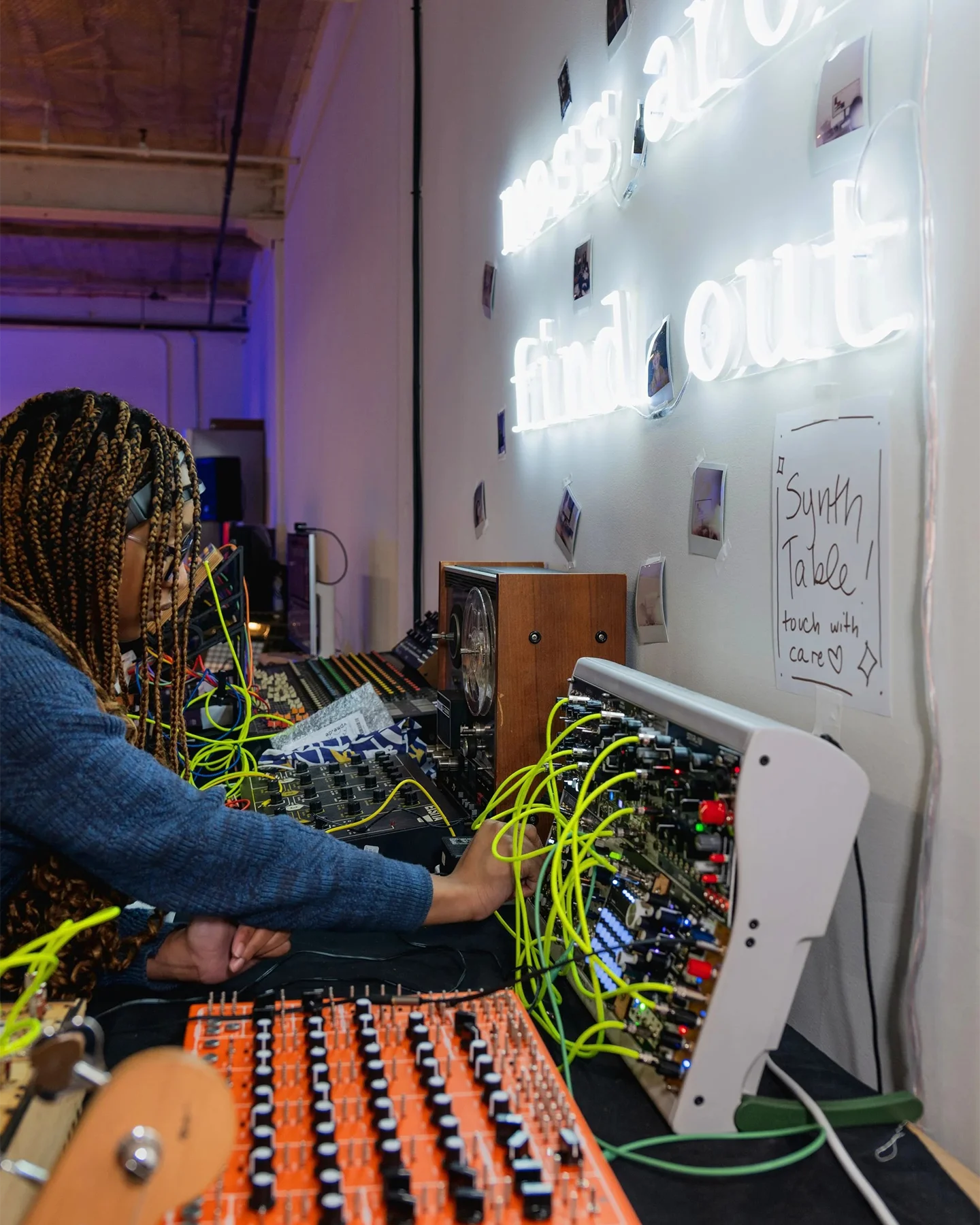
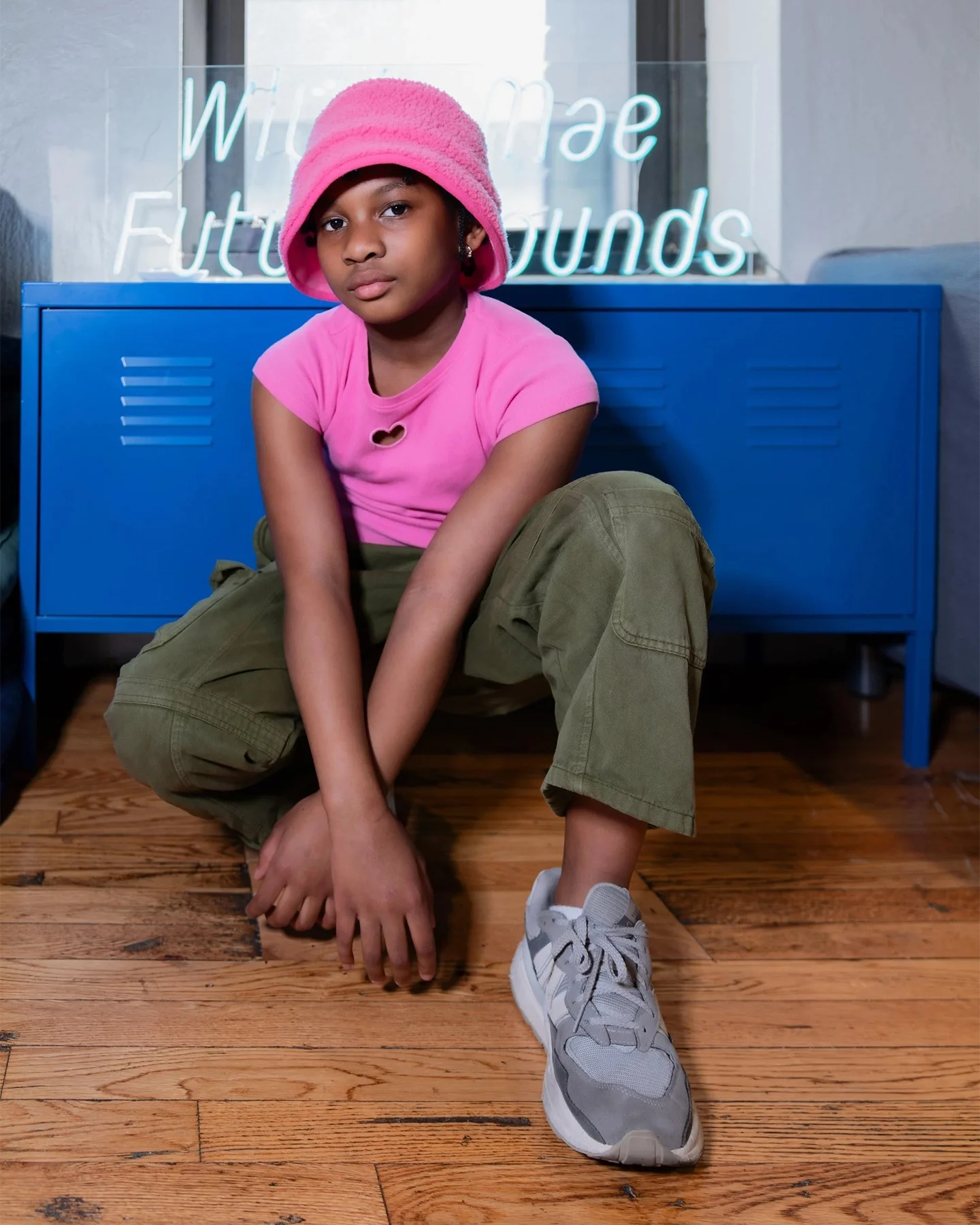
Alumni Fellows like Dixon also work in Willie Mae’s after-school programs and mini camps. They share their musical expertise—whether teaching a young student a new chord on the guitar or guiding them through synthesizer programming, sound engineering, and device building— helping students develop a deeper understanding of how music is made. “We’re building a whole community and an ecosystem, intergenerational with mentorship,” Sci says. “Our alumni aren’t just learning. They’re leading.”
While Willie Mae was once primarily a K–12 space, under Sci’s leadership the program is rapidly expanding to provide music education access to all ages. The Black Sound Salon, born from women of color gathering in Willie Mae’s sound lab after hours to experiment with new technology, has grown into a regular program. “I want to learn how to use a looper. I want to learn how to program a synthesizer. I want to learn how to record myself,” Sci recalls participants saying. For her, it’s proof that creative empowerment and experimentation are essential at every stage of life.
As technology evolves and accelerates further into the realm of the artificial, Willie Mae is a powerful reminder of how STEM can be a tool for self-expression and transformation. “In this world where influencers are influencing and AI is out of control,” Sci says, “our students having a sense of self, creative confidence, and the agency to use their voice is the greatest thing we can offer.”
Willie Mae Rock Camp for Girls, Inc., was awarded $500,000 in September 2024 through the Arts & Culture grantmaking area.