Community Foundation of the Lowcountry, Inc.
Make Ndolé with Adrian Lipscombe
On every plate in the South, there’s a story that needs to be told.
That’s the driving force behind the vision of four Black female food experts, who are teaming up to create the Muloma Heritage Center—a one-of-a-kind kitchen in St. Helena Island, South Carolina.
It’s natural that a kitchen on the South Carolina coast would feature the vast and unique food traditions of the Gullah Geechee—a people who were enslaved on isolated islands and coastal plantations in South Atlantic states. Their isolation, according to the Gullah Geechee Cultural Heritage Corridor, “created a unique culture with deep African retentions.” Now, the Muloma Heritage Center sees an opportunity to expand the definition of Southern food even further—exploring the broader culinary culture and contributions that emerged from Africa and its diaspora.
With deep roots in the South, we asked Mashama Bailey, Tonya Thomas, Ada Anagho Brown, and Adrian Lipscombe what they want Americans to know about Southern cooking.
Ada Anagho Brown
Founder, Muloma Heritage Center
President and Founder, Roots to Glory Tours
“Southern food is an interpretation of the land our ancestors landed in and the resiliency of what they did with the food. ”
Mashama Bailey (MB), James Beard Award-winning executive chef and partner of the critically acclaimed The Grey in Savannah, Georgia, as well as the newly opened L’Arrêt by the Grey in Paris, France: I think Southern food is multifaceted. Southern food is Black food. Southern food is traditional American food.
When people think of it, they probably think of celebratory dishes like fried chicken. But they don’t remember subtle, everyday things like lima beans and rice and cornbread—those things that nurture and grow families who didn’t have much or who ate off the land. Sometimes there was abundance, and sometimes there wasn’t.
Tonya Thomas (TT), executive pastry chef and owner of H3irloom Food Group in Baltimore, Maryland: I have to agree—and I don’t want to say it’s looked down upon, but it’s not revered as much as maybe we revere it.
Still, I don’t know anyone who says, “I don’t like Southern food.”
Ada Anagho Brown (AAB), founder of Muloma Heritage Center and president and founder of Roots to Glory Tours: There’s something that [Southern and Black] chefs often say—that “they gave us the scraps, but what they didn’t understand is that we knew what to do with the scraps.” And we created something fantastic with it.
So, Southern food is an interpretation of the land our ancestors landed in and the resiliency of what they did with the food.
Adrian Lipscombe (AL), founder of the 40 Acres Project and founding member of OneKitchen: I’ve always seen that you eat it together. You’re sitting around a table—with generations of family, generations of friends. Southern food is something that brings people together.
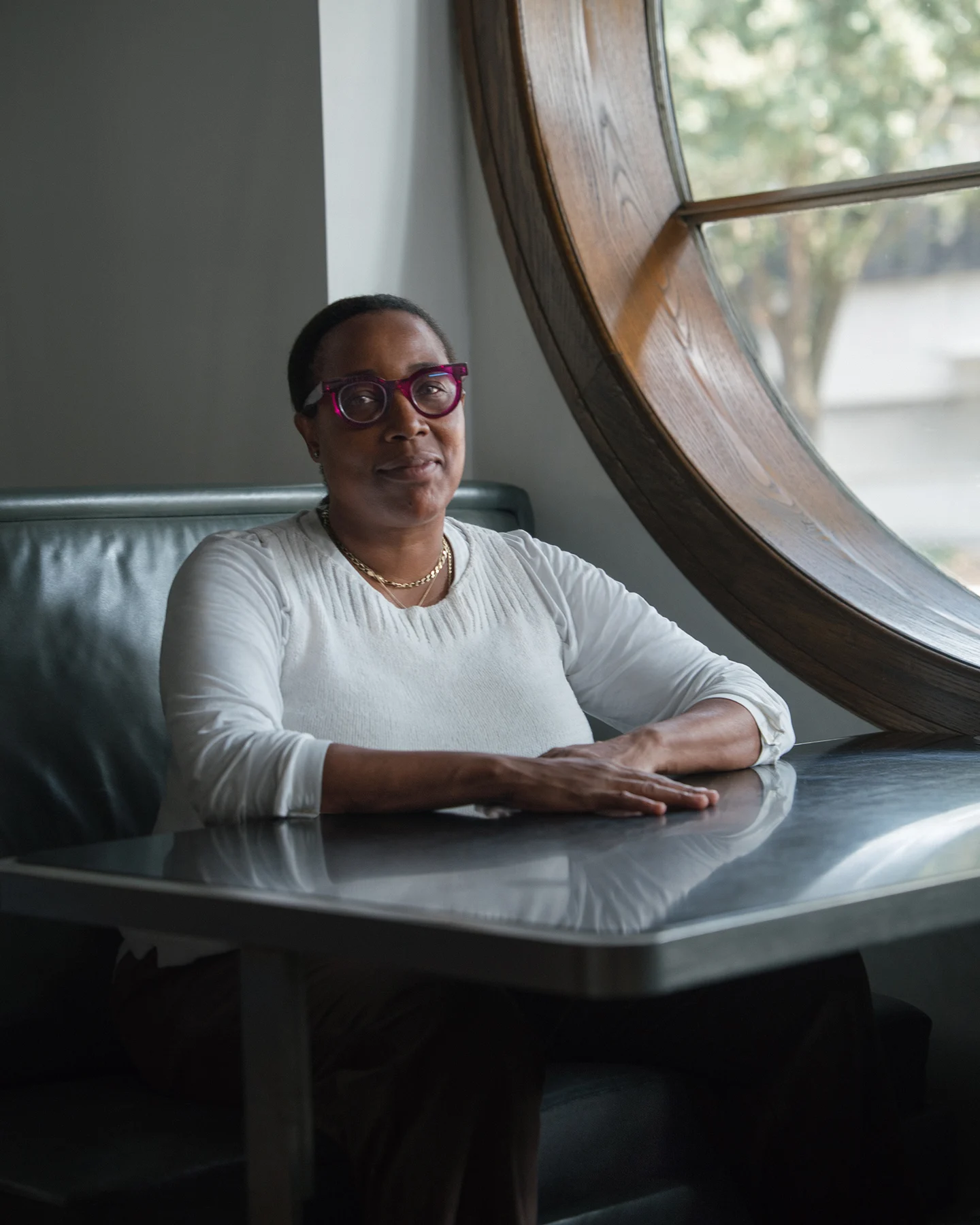
MB: A pot of stewed greens. It’s something people don’t often talk about, but everyone who is Southern knows exactly what it is.
You can have it in the dead of winter, when it’s smoky and comforting and satisfying. And you can have it in the summer, when the greens are more tender, and it’s refreshing like a tea. (I almost slurp it.)
AL: We took about 30 chefs to Cameroon as a part of the Muloma Heritage Center. We had their national dish, ndolé—a bitter green that’s made with peanuts. I found out that they use a technique to get rid of the acrid taste. And when I came back, I decided to use this technique on the collard green [a vegetable common in Southern cooking]. And it worked! When I serve it for events, no one can tell me it’s a collard green.
TT: For me, it’s succotash. It’s traditionally made with corn and peppers and lima beans, but it’s just taking the harvest of what we have. In the summer, we do succotash with black-eyed peas. Getting into the fall months, we do it with squashes and then add peppers and onions. You can make it hot. Or you can make it a salad.
AAB: For me, there is a dish my father used to make [in Africa] every Sunday—it’s called cornchaff—and it’s a combination of corn, beans, palm oil, and meat. Hearing Tonya talk about succotash and corn makes me think about cornchaff and corn on a Sunday. That’s what I think Southern cuisine represents—it’s an extension of what we know on the African continent.
MB: I love that. We’re essentially from Africa, so we draw those parallels. I think that through food is how we continue to tell our story—our history.
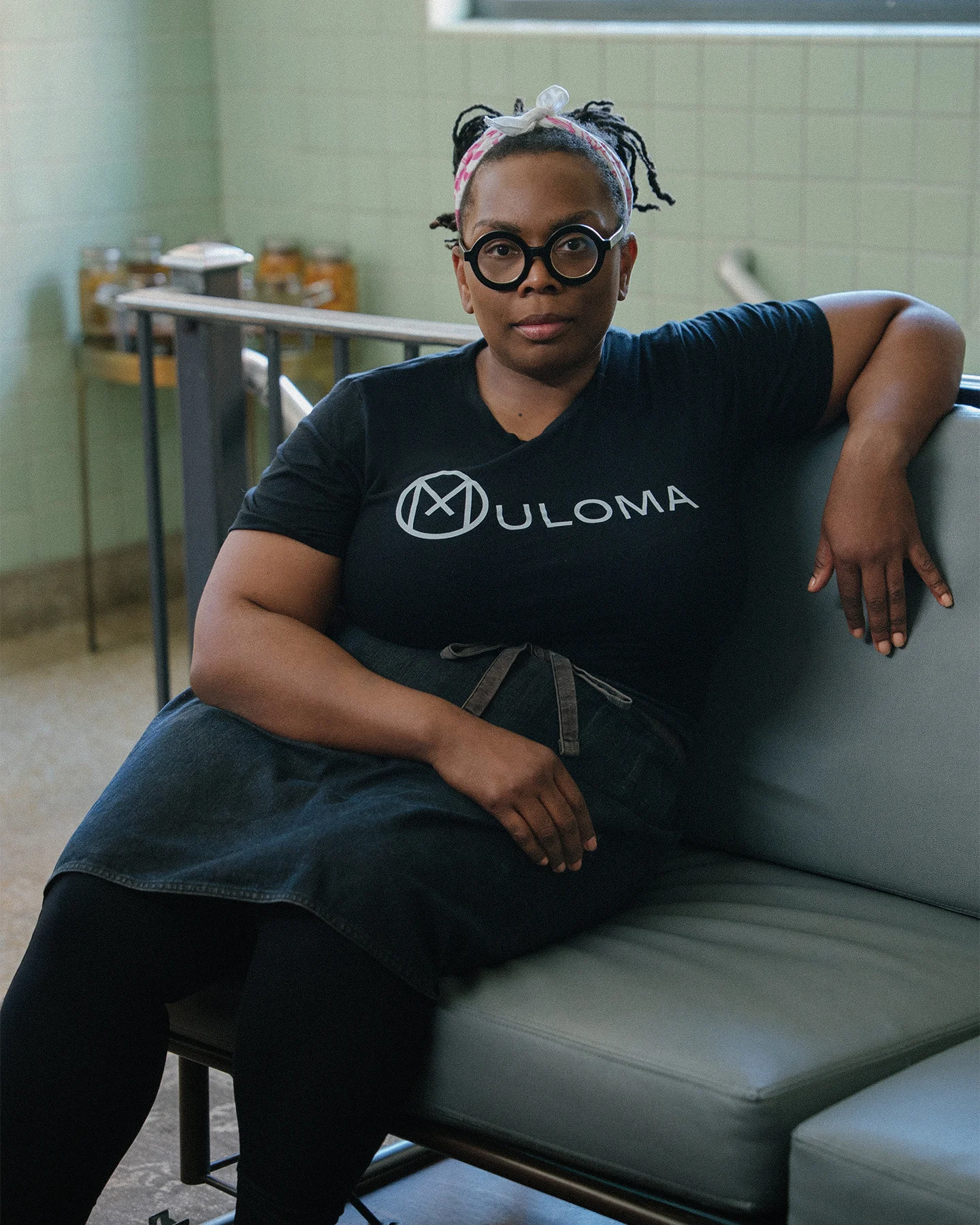
AAB: Country onion [an onion-shaped seed from a plant with a smell that’s similar to garlic and chives]. This is something that, in my house, if I don’t have it, my husband better figure out a way for me to get it. And if my aunties don’t have the country onion? Forget about it. They’re not ready for me.
AL: For me, it’d probably be sweet potatoes. I’ll eat them anytime. It’s that dish that no one expects can be savory or sweet. I feel like I'm George Washington Carver—he did research on the sweet potato, too. I even make a sweet potato butter rum cake. People are just taken aback by the flavor and what a sweet potato can do.
TT: I might have to say salt. It’s one ingredient that—whether for a savory or sweet dish—helps balance everything out. And you’re talking to a baker here. In some cases, the salt actually elevates or highlights the sweetness of an item or a dish.
AAB: Well, that's interesting because there are some places in Africa where they can get salt easily (like Senegal). But for us, in the central part of Africa, it’s not as important because we had to trade in order to get salt. So, we figured out ways to deal with that. And what’s one of those ways? Country onion.
[Everyone laughs.]
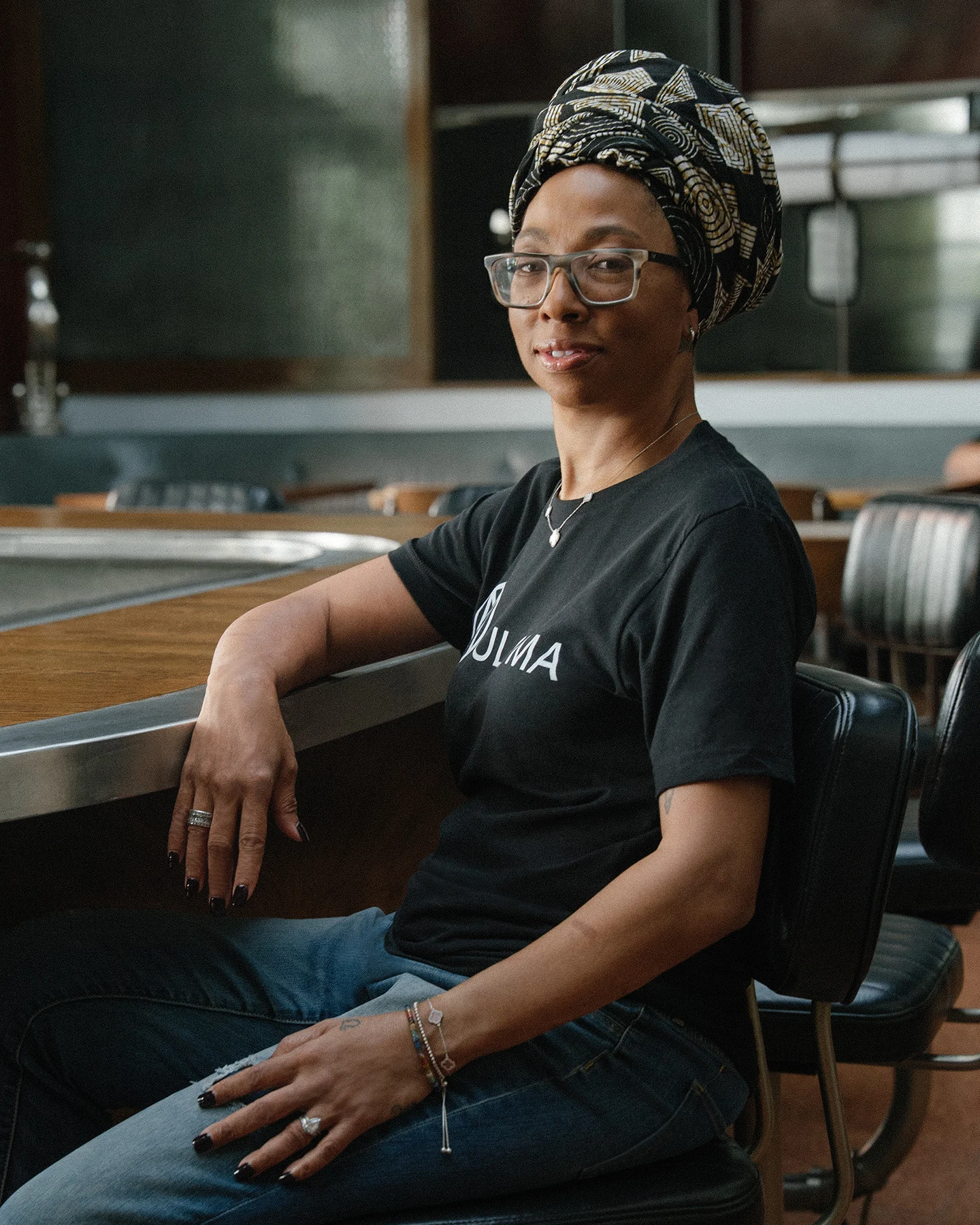
AL: Recently, I went back to Works Progress Administration interviews (you can read them online) to try to understand how people who were enslaved thought of food.
The example that I came to was that collard was used to cook bread. Overnight, they would wrap the bread in collard and put them in ashes. And then by morning, the collards are kind of burnt and ashed off. Just like an oven. And they had this amazing bread.
AAB: I came [to the United States from Africa] when I was 10 years old. Once I understood that all the dishes that I'm familiar with are also dishes that are known as Southern dishes, it was like, “wait a minute—well, aren't we the same people?”
In the seventies, as an African and immigrant, it was very difficult. But then learning other cultures within the US—especially the Gullah Geechee culture [here in South Carolina]—helped me bridge the gap, understand myself better, and understand that what we created as a people is really important. It's a global entity.
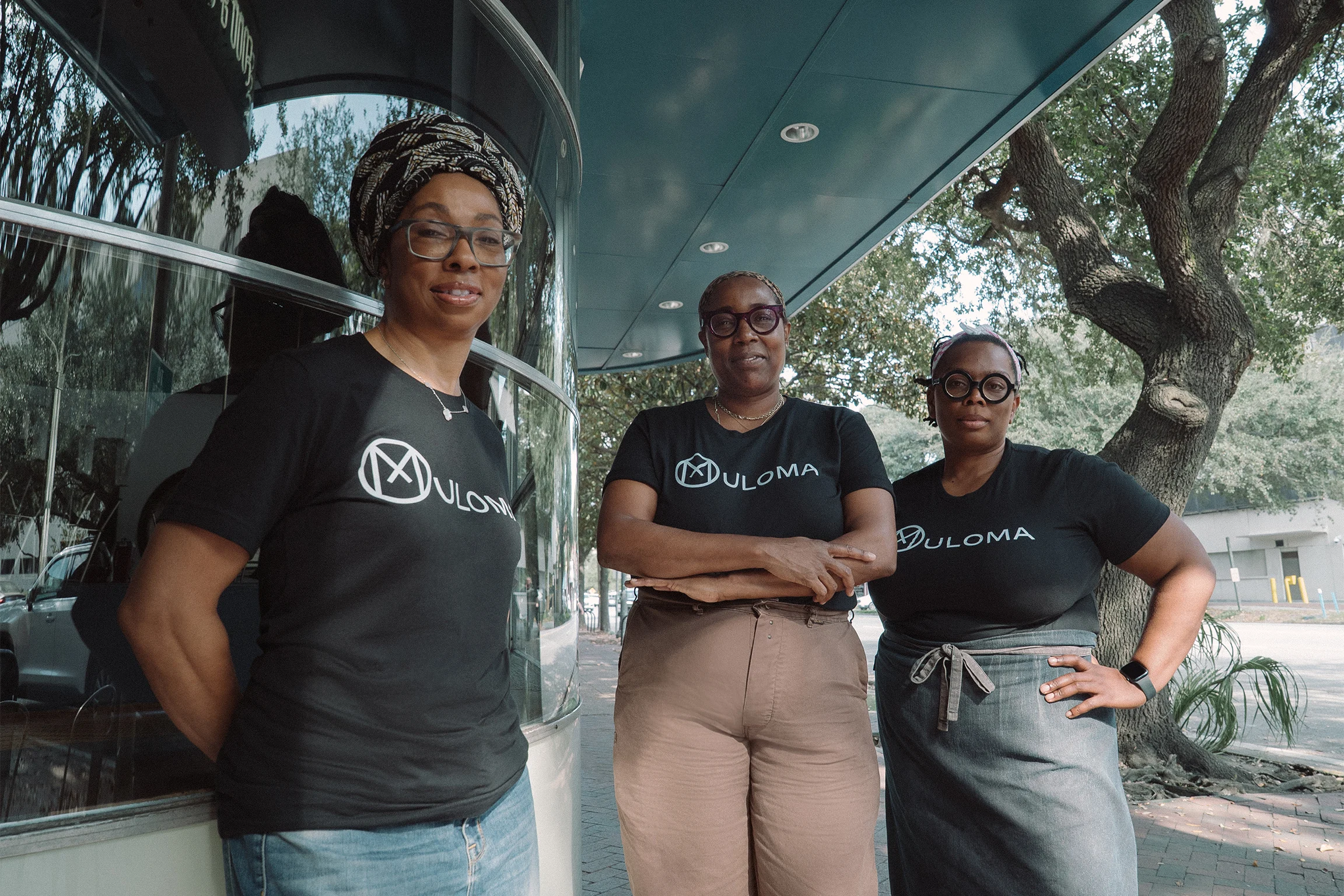
AAB: I think it is important that the people who are coming to this site understand not only that the Gullah Geechee food and culture of this area is important, but also that there were other foodways that came from it. This place is kind of like ground zero.
TT: I was just about to say: it’s about connecting the dots. Because part of my family originated in South Carolina. Then they wound up in North Carolina. Then wound up in Baltimore (where I am now). So I have that migration story. What we had available here is different from what was there. And you think about how the dishes changed: “Well, this is what we normally had there, but I only have this available now, so this new dish is being created.”
MB: It’s also just about accessibility to the food—and keeping it open and nurtured and fueled.
AAB: For me, it's like when I see that people want to learn. It gives me the fire to want to teach. And anybody that's going to come down here I know is going to want to learn.
We share a lot of things that we don't realize until we get together.
AL: And then there is this whole aspect of what food does to you—what it invokes in your memory or a feeling you’ve had.
And you can never be mad when you’re eating.
Grant insight
Community Foundation of the Lowcountry, Inc.
Community Foundation of the Lowcountry, Inc. was awarded $1,765,000 in September 2023 through the Humanities in Place grantmaking area.
View grant details