Lessons in Creativity from Two Artists and Disability Futures Fellows
July is Disability Pride Month, which commemorates the signing of the Americans with Disabilities Act (ADA) on July 26, 1990, a civil rights law that prohibits discrimination based on disability.
Across the country, artists are making work that speaks to the challenges and triumphs of living with disabilities.
Meet Saleem, a poet, and Nancy, a painter. Both are Disability Futures Fellows whose work sheds light on the cultural landscape of disability in the US.
Saleem Hue Penny
When I think about my day, I often think about it starting the night before. I’m a parent of ten-year-old twins and a caregiver to family members with different medical needs, and so often I’m thinking about what the day is going to be the next day.
My ideal practice time is not at all compatible with a sort of typical family structure or a typical capitalist workday. When I didn’t have kids, the practice time could go all night if I wanted to. I’m most productive and most focused when everybody in the house is asleep, and you get that Magic Hour between like twelve and two.
I knew I wanted to be a dad since I was nine years old. Many of the things about parenting are the exact same things that are informing my art. It really is caregiving that's becoming more and more a part of my practice.
I have to think a lot about “when do I get my creative work done?” and a lot of times it’s in transit. My workday is super abbreviated because my kids are out of school at 2:45 p.m., and because, medically, I can’t drive anymore, I’m using the bus. You can drive to their school in 15 minutes, but with the bus, it’s an hour. That is when I’m working. It’s when I’m doing a lot of my thinking and dreaming.
The biggest challenge I’ve faced was the suddenness and the unknowingness of Ramsay Hunt. It’s a rare neurological syndrome and typically results in some level of facial paralysis, but in extreme versions like the one I had, it can sever different nerves. So, relearning to walk, speech therapy, vision therapy, aural rehabilitation therapy once I got a cochlear [hearing implant] — recognizing that the pace I used to move will no longer be the pace.
I’m still wrestling with how to define myself when the first question people usually ask is, “What do you do?” There’s still a lot of grief and mourning around how work can be such a part of our identity, and what it means when you don't have the ability, and accommodations can’t be made to the previous dream job. What does that mean for you as an individual within a capitalist system, as far as how you define yourself? And I have my very real, holistic answer, which is to try to heal and try to be part of other people's healing.
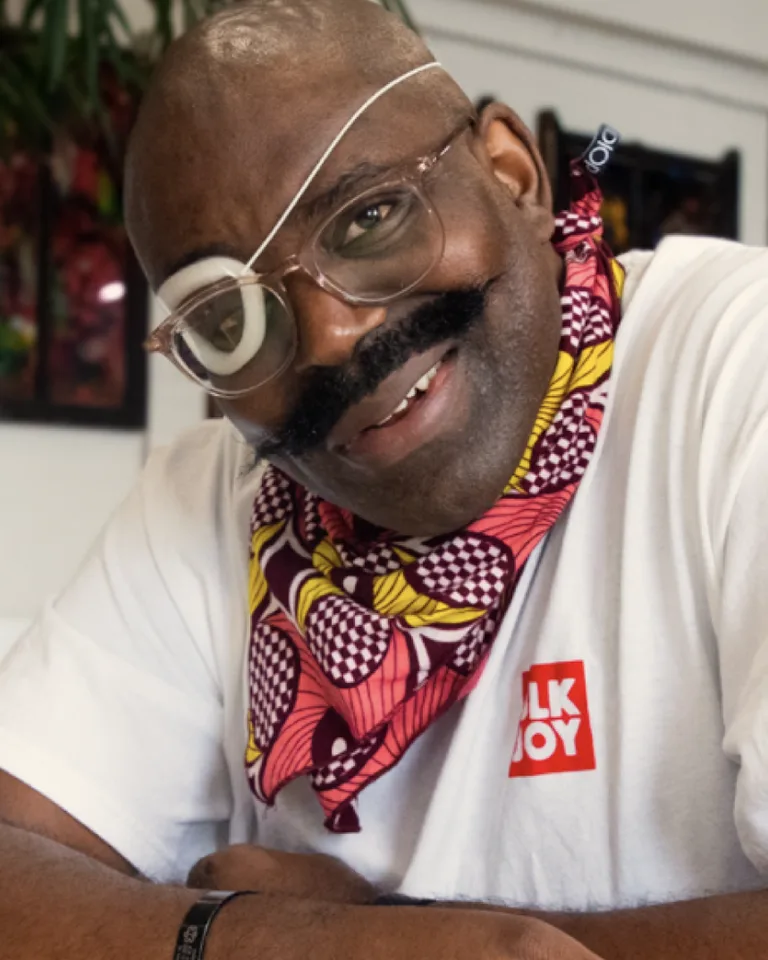
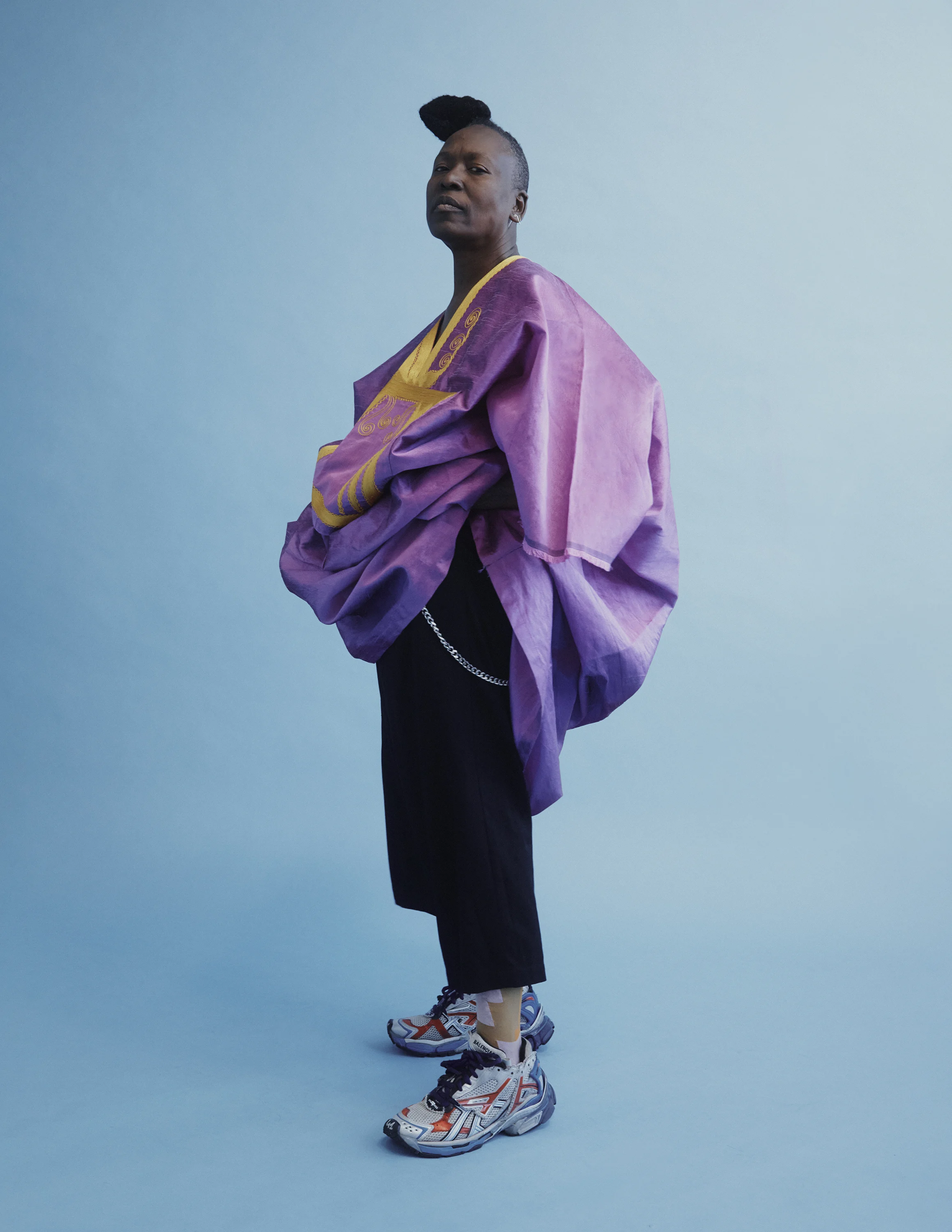
Saleem Hue Penny
Hybrid Poet
2024 Disability Futures Fellow
“The future is the rest of society recognizing that so many answers are within the disability communities.”
I write for young people of color who are navigating wild spaces. More and more youth are falling through the cracks because of societal policies. That’s who’s inspiring me, every time I see a young person do something amazing. It’s also painful, knowing that parts of the world are telling the exact folks that I’m writing for that they don’t matter, and that they don’t exist, and that, frankly, they never should have. So that’s my inspiration.
The future is the rest of society recognizing that so many answers are within the disability communities. We talk about climate change, we talk about very real disasters and military risks, food shortages. It’s the disabled community, especially the queer disabled community, who has always had to pivot and has always known no one’s coming to save us.
Disability pride is being unapologetically joyful and knowing that it's your right to take up space and to slow the pace. I would point people towards the Sins Invalid 10 Principles of Disability Justice as a way to ground themselves during this pride season. And every couple of days, really looking at one of those principles and trying to embody it.
Nancy Rourke
Every morning begins with intention. As I sip my coffee, I brainstorm new ideas for painting. That quiet morning ritual sparks my creativity and helps shape my direction for the day. Once I step into my studio, I immerse myself in a creative space filled with notes, sketchbooks, and art books.
The biggest challenge I’ve faced in my career is getting my work into art museums. At times, I’ve wondered if it’s connected to my disability. But I’ve learned to let that go and remain focused. Over time, people began to see and appreciate the meaning behind my work. I had their attention, and that inspired me to keep going.
I always carry my sketchbook—it’s something I can’t live without. It’s not just a tool; it’s a companion that helps me process ideas and jot down thoughts wherever I go.
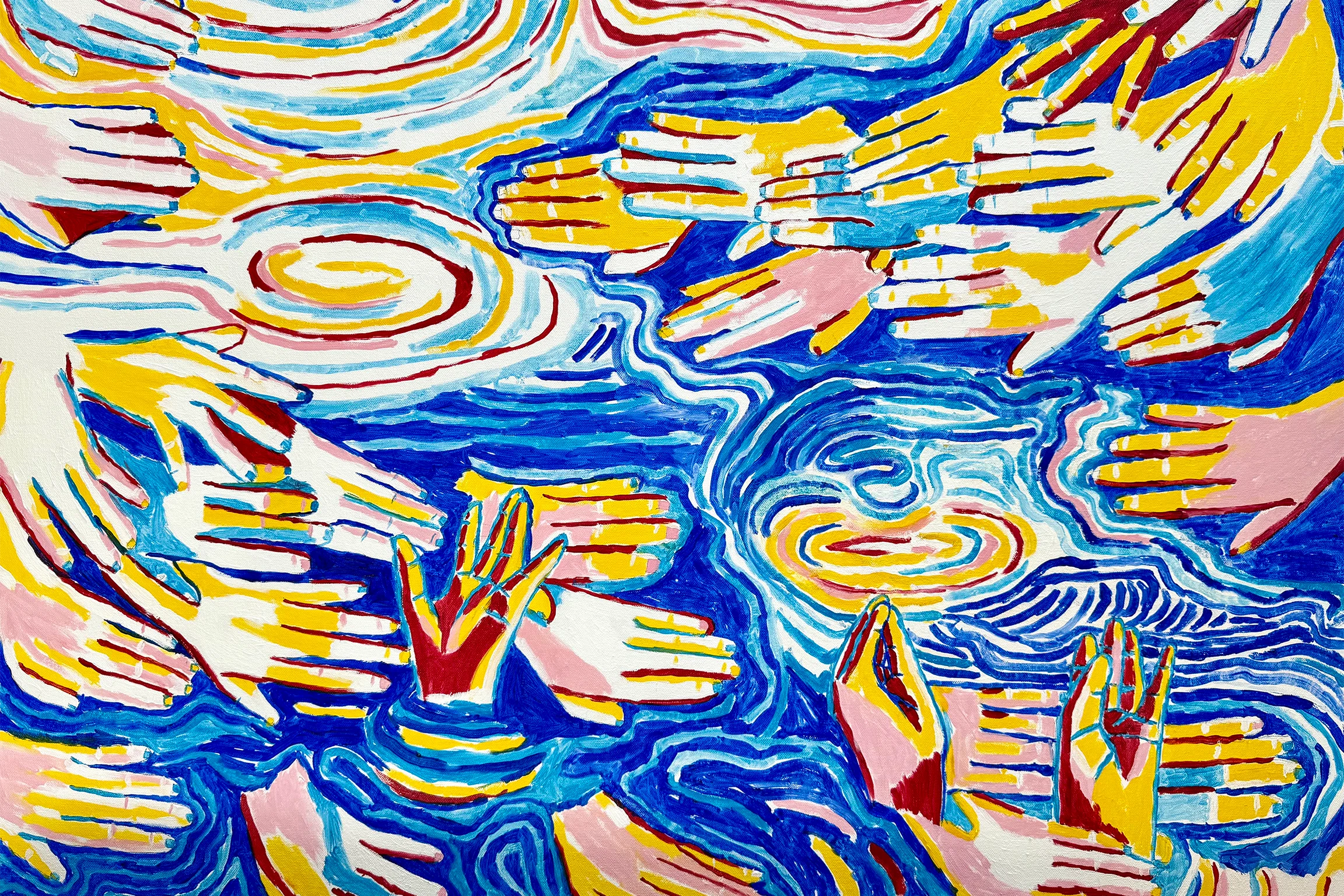
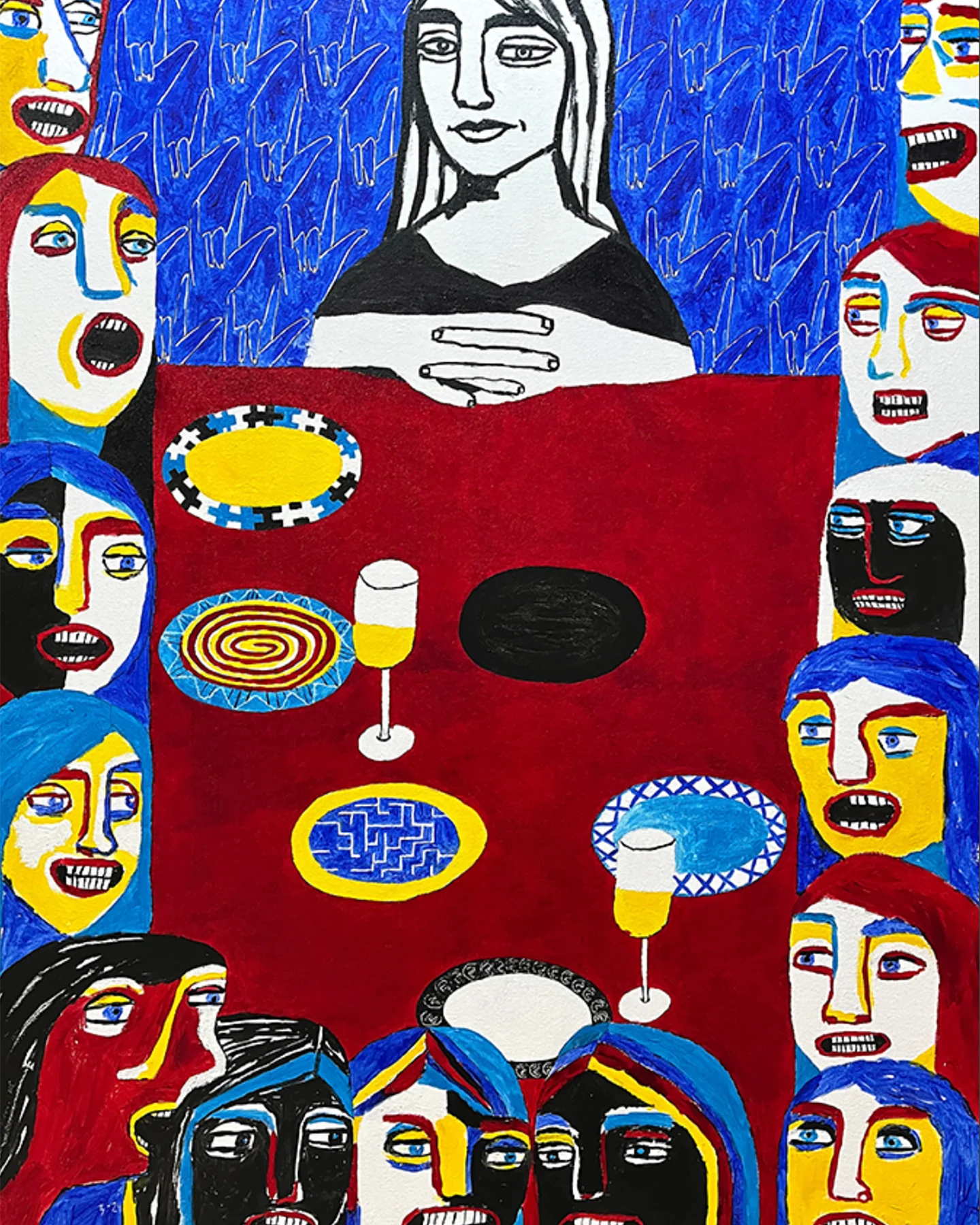
I’ve been an artist all my life. Art was my first language. It was how I communicated with my family and friends when spoken language wasn’t fully accessible to me. One example is a self-portrait I drew as a child—it showed me without a mouth and two hands in chains. That image caught my parents’ attention. They asked me what it meant, but I couldn’t explain with words—my drawing said everything I couldn’t. It spoke for me.
“I make art loud and clear” is a quote I return to in times of crisis or doubt.
I want to be remembered as an artist whose vivid paintings captured the full spectrum of Deaf culture and experience—an artist with a distinctive style, a prolific body of work, and a message that educated, empowered, and inspired.
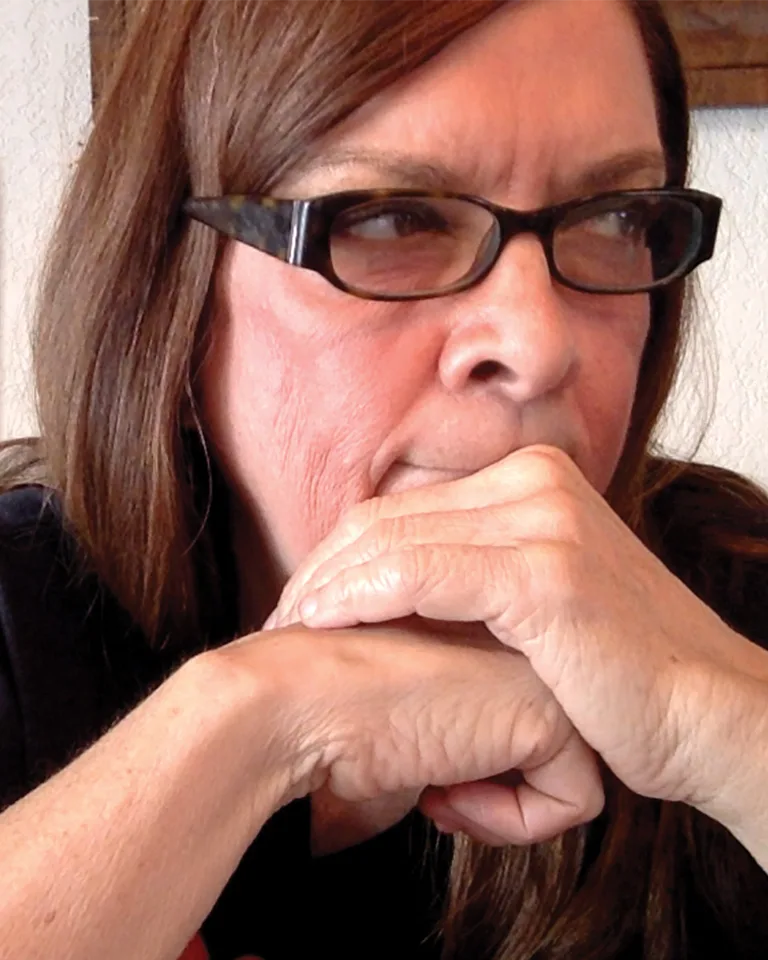
Nancy Rourke
Artist
2024 Disability Futures Fellow
“Art was my first language. It was how I communicated with my family and friends when spoken language wasn’t fully accessible to me.”
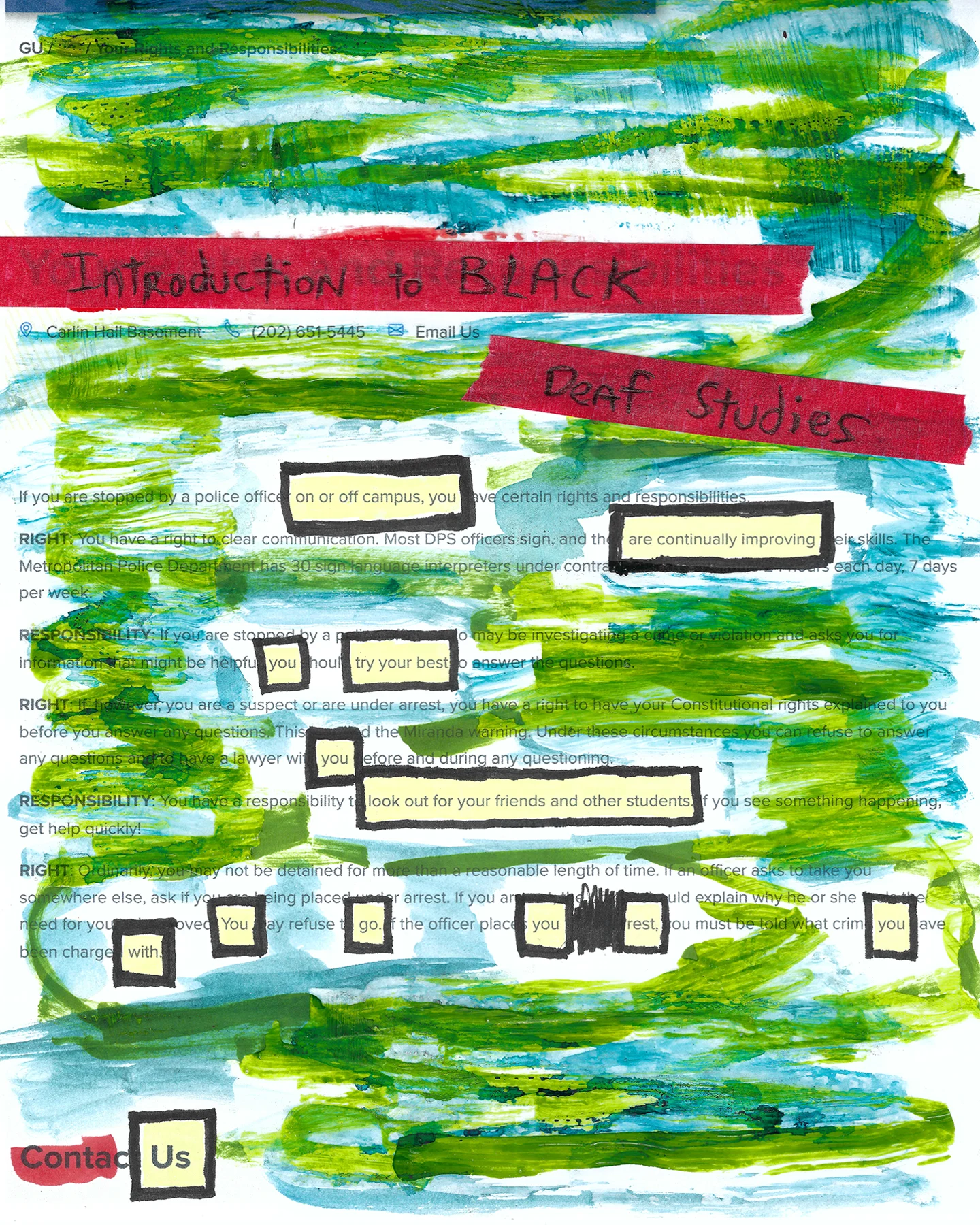
What brings me the most joy in my artistic practice is trying new techniques. Recently, I discovered junk journaling—a whole new way of making art from everyday items. I’m currently collecting found objects in primary colors to use in my own junk journals, and it’s already becoming part of my daily practice.
Make art based on your own experiences. If you’re Deaf, explore themes like language deprivation. Art has a powerful way of helping us process emotion, trauma, and memories—especially for those of us who lacked full access to language growing up. That’s not a misconception—it’s a very real, lived truth. Art empowers us to express what was once unspoken.
Biographies
Saleem Hue Penny
Saleem Hue Penny (him/friend) is a Black, disabled, “rural hip-hop blues” poet who punctuates his hybrid/mixed-media work with drum loops, Jim Crow artifacts, and birch bark. He is a worker-owner of Cooperation Racine, L.W.C.A. in the Englewood neighborhood of Chicago.
Nancy Rourke
Nancy Rourke is a Deaf artist, muralist, activist, and Native American. Her paintings bear witness to the experiences of Deaf people and explore Deaf culture and solidarity. Nancy has exhibited art internationally, including in New York, Poland, France, and the United Kingdom.
Disability Futures Fellows
Launched in 2020, Disability Futures was developed as a time-bound, three-cycle initiative, with the 2024 Disability Futures Fellows marking the program’s third and final cohort. As the program sunsets, its impact remains present through the Disability Futures Fellows’ continuous and widespread influence within the arts and culture landscape. The fellowship was funded by Mellon and Ford Foundations, and administered by USA Artists.
Grant insight
United States Artists, Inc.
United States Artists, Inc., was awarded $750,000 in September 2019 and $2,500,000 in December 2021 through the Mellon’s Presidential Initiatives grantmaking area.
View grant detailsRelated