Pink Fang’s artistic POV
Fiji Theater Company, Inc.
Ping Chong Retired After 50 Years of Groundbreaking Artistry. Here’s What Happened Next.
LocationNew York, New York, United States
Grantmaking areaArts and Culture
AuthorRyan Cadiz
VideoARE WE THERE YET? Films
DateJuly 15, 2025
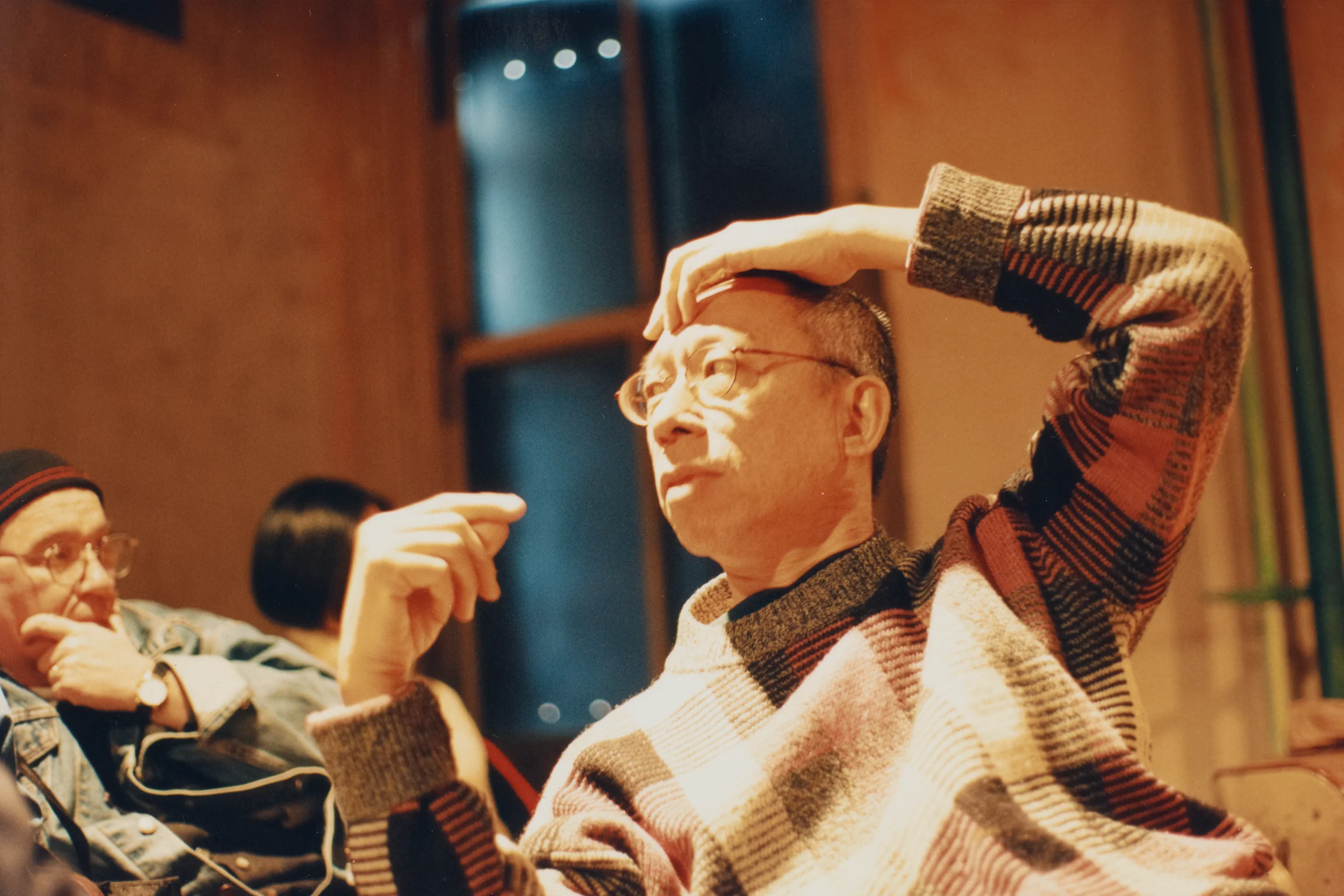
Rehearsal for “After Sorrow.” Photo: Lia Chang, courtesy of Billy Rose Theatre Division, The New York Public Library. 1996.
Evolving from a self-titled theater company to a united collective of maverick thinkers has allowed one company to honor the legacy of their founder while imagining the future.
Pink Fang is the new name of the storied multidisciplinary company formerly known as Ping Chong and Company. This updated name carries with it the heft of half of a century of uncovering stories that may have been unseen and unheard if not for the amplification of the organization's founder.
Ping Chong is a beacon and a legend in the world of independent theater not only because his personal perspective is stridently unique. He established his eponymous company with the mission of making works of theater and art that explored the intersections of race, culture, history, art, media, and technology in the modern world. Building a laboratory where he could use his multidisciplinary training—visual arts, filmmaking, dance, and performance—Chong set out to make works that gave volume and power to the voices of othered people, pioneering methods of interview-based preparation that sought to capture true moments in live presentation. As a Canadian-born American artist of Chinese descent, who worked in the US and around the globe, he divined works that are paths to understanding under-studied experiences.
It was 1972 when Chong gathered a group of artists at composer and performer Meredith Monk’s New York City loft to create his first theater piece, Lazarus. In 1975, he founded Fiji Theater Company, the original name for the organization, as a home for his work and collaborations.
Fifty years later, Ping Chong and Bruce Allardice, his decades-long artistic partner who joined the company in 1988, decided to retire from the organization that they crafted with care. In the spirit of Ping’s creative ethos and in support of fresh thinking—not only within the collaborative process of the theater art form itself, but also ethical organizational governance in general—Ping Chong and Company embarked on a three-year transition run by a five-person Artistic Leadership Team to imagine the company’s future without Ping Chong and Bruce Allardice.
In 2022, Ping Chong and Company presented Chong’s final work as the organization’s artistic director: Lazarus 1972–2022 at La MaMa Experimental Theatre Club, its longtime physical home in downtown Manhattan. In 2023, the organization formed the interim Artistic Leadership Team, comprising Managing Director Jane Jung, Associate Director Sara Zatz, and artists Talvin Wilks, Nile Harris, and Mei Ann Teo.
Part of the team’s mission was also to rename the company—at the request of Chong himself. An act both generous and humble, his intention was to make room for all the new artists and voices that are building the group’s future. To launch this vibrant new era, the company has been rechristened Pink Fang—taken from a piece of mail delivered to their theater with an unintentional mangling of Ping’s name—one of many over the years. The new moniker Pink Fang has become a talisman representing the company’s strident ownership of the diverse ways that identity can be perceived and its pride in self-definition.
A Discussion About Change
Another task was to re-contextualize and refine the organization’s mission, with the dual intention of building on its unique position as an artistic game-changer and groundbreaking platform for interdisciplinary artists of color and Chong’s artistic legacy and the organizational legacy of the company he founded.
In part funded by a Mellon grant, the company completed the organizational transformation process in June 2025. It was during the transition that the interim Artistic Leadership Team team collected thoughts and reflected on how they were working together to accomplish this creative and structural rebirth.
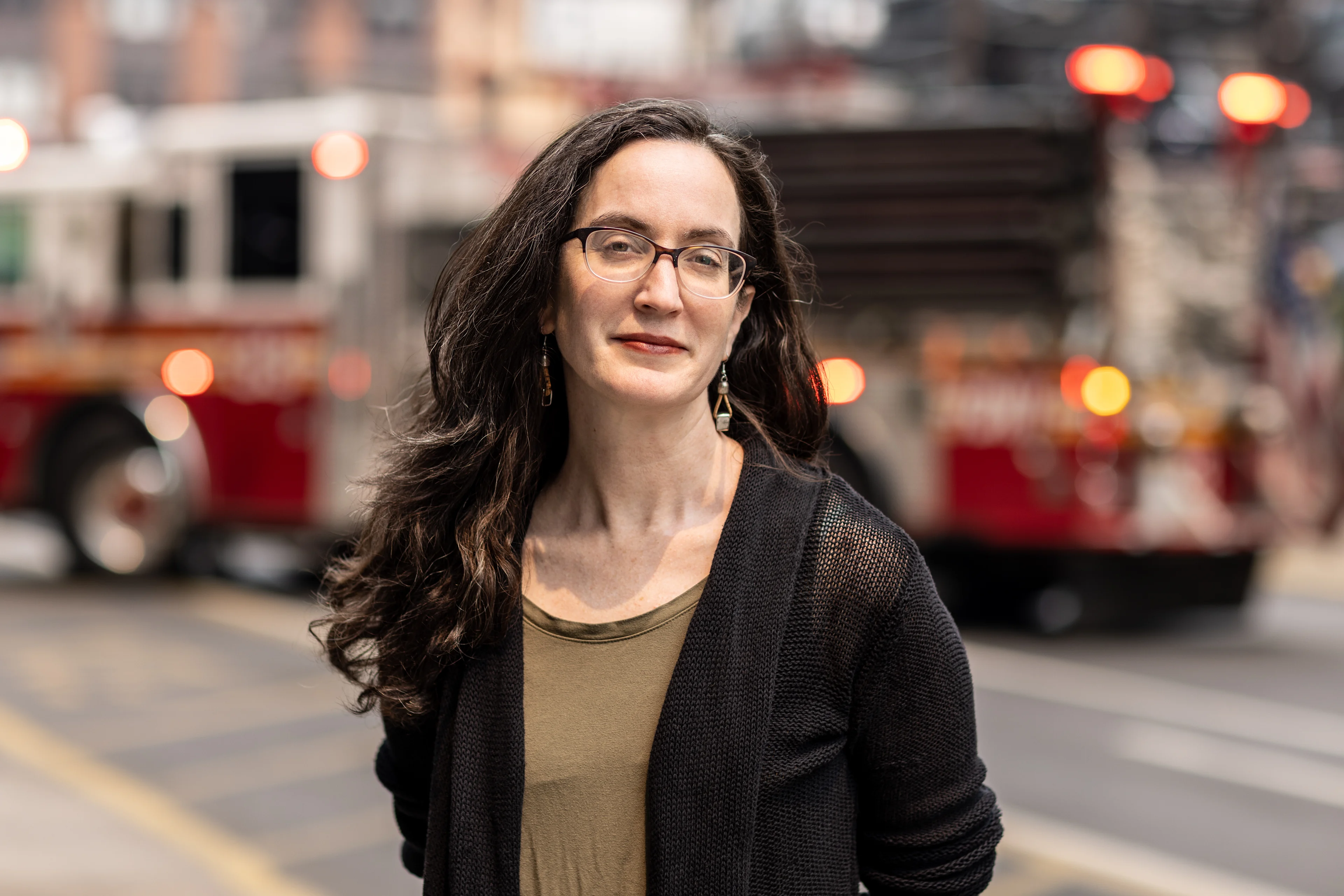
Sara Zatz
Artistic Director, Engagement
Pink Fang
“With each turn of each project and new idea, our collective practice shifts, merges, and emerges to create new and beautiful patterns of endless possibility.”
How did you come to know Ping Chong and his work?
Jane Jung: My first encounter with Ping Chong was reading the script of his work SlutForArt, co-created with Muna Tseng, which was included in the anthology, Tokens?: The NYC Asian American Experience on Stage, edited by Alvin Eng. It was a lighthouse for me, at a moment when I was really galvanized around Asian American activism and Asian American theater on my college campus. The script for Slut for Art was poetic, collaged and personal. I had never encountered anything like it, and it felt like it came from another distant and mysterious world (downtown experimental performance in NYC).
Sara Zatz: I first came to know Ping Chong and his work when I joined the company as a college intern in 1997. I took a semester off of college and my theater professor, Mark Lord—who knew and admired Ping’s work—suggested that I reach out to Ping Chong and Company. I lived in the dorms over the Annex (now the Ellen Stewart Theatre) at La MaMa. I worked in the office, under Bruce Allardice’s mentorship, and worked as a production assistant. I ran the slide projector backstage—yes, the slide projector!—on After Sorrow in 1997, just after RENT debuted on Broadway.
Talvin Wilks: The first work that I experienced of Ping’s was Nosferatu. I didn’t know much about his work before that and was blown away. I was on a new artistic journey with a group of friends forming our first company, Spin Lab, and I was being introduced to more artists in the Downtown scene. I really got to know Ping during a stint as writer-in-residence at The Group Theatre in Seattle starting in 1994, eventually becoming his dramaturg on Undesirable Elements: Seattle.
Mei Ann Teo: I studied with Anne Bogart at Columbia for my MFA in theatre directing. We had a class called “Materials” to make a work from our desired sources—a way of guiding us to set a process for our artistic lives. I was immersively theatricalizing an essay by Chinese dissident poet Liao Yiwu called “Nineteen Days” in which he recalls the [his] experiences of each year of June 4th, beginning with the Tiananmen Massacre in 1989, and the subsequent ones following his arrest and four-year detention. Anne introduced me to Ping Chong.
Nile Harris: I was introduced to Ping Chong and Company through their Creative Fellowship program in 2022. I was immediately struck by the fact that I hadn’t been introduced to Ping and his work until later in my art career, though I was familiar with his generation of artists and many of his peers. It proved to me how narratives of artists of color are continuously left in the margins; I felt a deep affinity to the ways in which his conviction to telling the underserved stories of the diaspora manifested in a panoply of mediums and theatrical techniques.
MT: He became a north star for me, as one who made a long artistic life from fearlessness of making new work, being utterly Asian and unbound by Asian-ness, and his limitless curiosity of listening and supporting real people share their lived experience.
SZ: Simply put, without Ping, I would not be the person I am today or have the courage to call myself an artist. Ping taught me how to truly listen. His methodology for community engagement has continuously shown me that theater can be beautiful, entertaining, and transformative—and also truly serve as a tool for building meaningful connections, fostering dialogue, and facilitating change.
How did the Interim Artistic Leadership Team come together?
TW: The idea of a team of five seemed like a new way to look at artistic leadership and to evolve from the single artistic leader model. In that way, the carrying forward of the Ping (and Bruce) legacy would be a shared one.
JJ: We needed to identify artistic generators and visionaries with a deep relationship to the Company. Talvin has had a long history as a core creative collaborator at PCC, Nile was a dynamic and provocative younger artist whose involvement started as a creative fellow the year prior, and with Mei Ann there was a spiritual and values alignment with the work.
The composition of the group felt like bringing together the Power Rangers—non-profit theater edition—with a gathering of a diverse array of strengths, perspectives, and life and industry experience. It was important to have both long-standing collaborators alongside newer perspectives. That mix and cross fertilization is our collective superpower, but it also takes more time and work to circle around to a shared clarity.
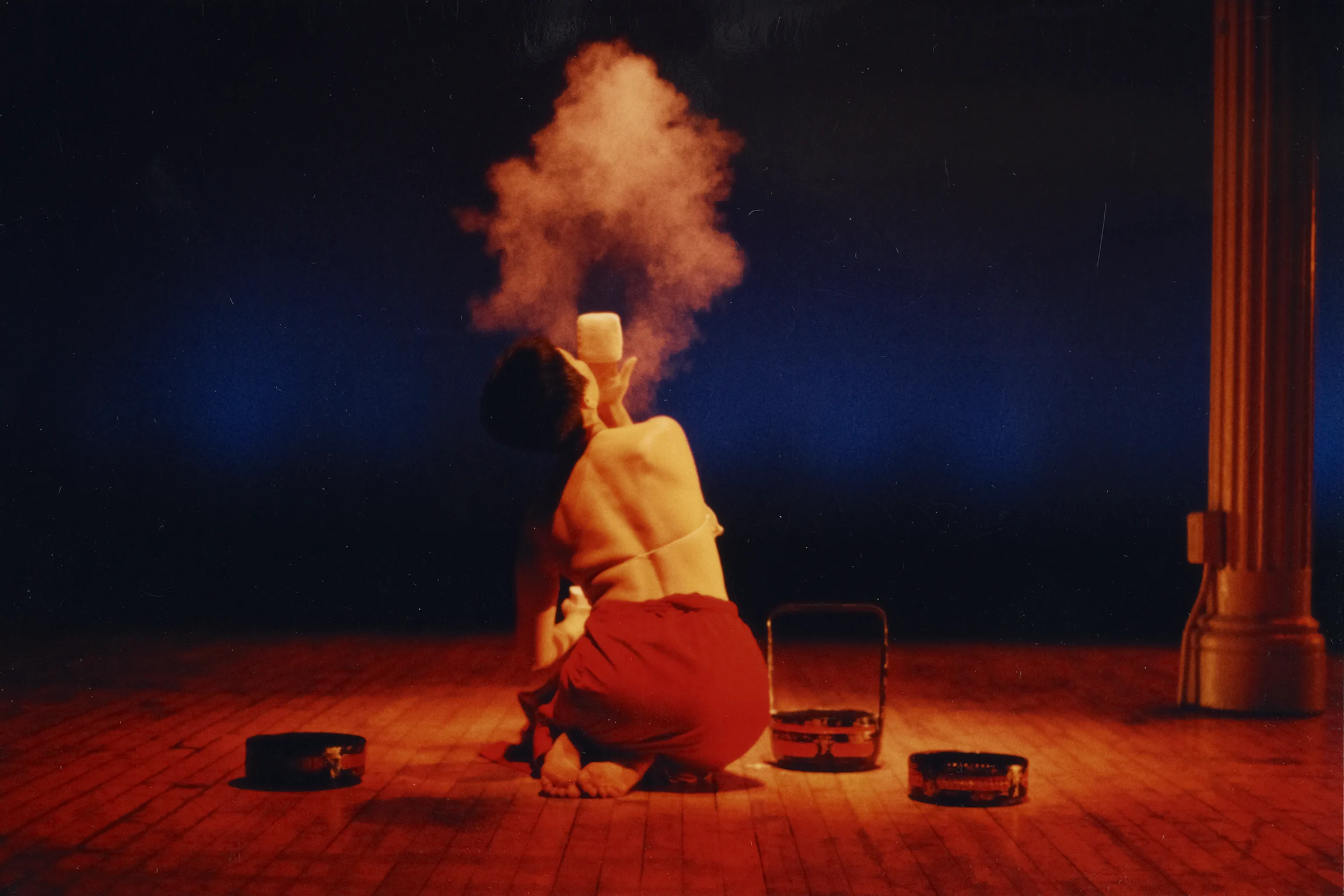
A scene from “After Sorrow.” Photo: Lia Chang, courtesy of Billy Rose Theatre Division, The New York Public Library. 1996.
How does this new company plan on celebrating and maintaining Chong’s legacy?
Nile Harris: Legacy is embodied. In our conversations with Ping, the vibe has been very “go forth and prosper.” Ping left us a rich and expansive archive of creative works and a heritage of investigating the ever-changing sociopolitical moment—and how he and his community fit in it. We embrace the legacy by curating artists that ask similar questions, while using aesthetic values and tools of our present moment.
SZ: We are forever circling back to the clarion call to “only connect” [as E.M. Forster wrote and Ping often cited] and to always remember our humanity, and that of others. There is a throughline of deep respect to hold and honor the company’s history while feeling the (sometimes daunting) charge of creating a new vision that also speaks to a new generation and a new moment.
JJ: We have a commitment to ensure Ping’s body of work is preserved and engaged with, through the archive at the New York Public Library for the Performing Arts and through the active promotion of the archive to higher learning institutions, creative organizations, and artists.
MT: Our raison d'être is not to continue for another 50 years, but to continue with the integrity of the past 50. There is a veritable treasure trove of archive, pedagogy, ethos, and goodwill in PCC. When asked what he wanted, Ping said, “I’m done. I saw this as a home for you guys to make work…you are all individual artists with your own vision. Feel free to be yourselves aesthetically…it’s a vessel for artists at a time where it’s so difficult to be at home. It’s up to you to make that home solid for yourself.”
SZ: Ping’s own vision continued to evolve over his 50-year career, and indeed his practice was one of constant innovation. With that understanding comes a grace of recognizing that we are never writing over, but adding to, the artistic legacy and path forward that Ping offered us.
TW: We are honoring the spirit of innovation and that can mean different things to different members.
How is the company changing in this new era and what are the questions on which you are reflecting?
TW: There is language [in the PCC mission statement] that is very specific to Ping and the way that his work is situated in the world. We have been talking about how multiple artists can benefit from this new idea of a “company.” [During this transition period], we have been in a process to break down the idea of mission and determine what it means as a way forward.
JJ: In this new era, we find ourselves with a breadth of activities and programs, reflective of the expansive team and staff structure. We’re working to ensure sustainability on the fiscal and human fronts. We were privileged to have this time and space to try things, explore possibilities, get into the bigger questions.
MT: With Ping, the focus was centered on one artist’s impulses, aesthetics, and creative trajectory. In moving on, we have to ask ourselves: ‘Why should we exist? What is relevant now? What is key to keep? What might be destroyed in the attempt to hold on to?’ I find it both liberating and very challenging that there is profound purpose and necessity in everything we do.
SZ: Within the frame of a multi-artist organization, the challenge is to hone and present a clear artistic vision, so that people understand how an organization can hold and embrace multiple artistic perspectives and approaches, under a unified vision and purpose. I have described experiencing our collaborative process as similar to a kaleidoscope, where, with each turn of each project and new idea, as each artistic generator’s role and vision shifted, our collective practice shifts, merges, and emerges to create new and beautiful patterns of endless possibility.
As an art form that relies heavily on collaboration, how do you see PCC as a model for theater creation in the future?
SZ: It’s true that theater is an artform that relies heavily on collaboration, but it can also be so, so, so hierarchical. Sometimes by necessity, to get things done efficiently, but it inevitably represents all the stresses and structures, and the inequities, of our society at large.
NH: The reliance on the trope of the extraordinary individual will have to be challenged. As we see in theater production, it takes a village to make a show happen. Organizations are no different. The approach of having multiple leaders, empowered in their unique expertise, only builds the networks of support and engagement.
SZ: I think [our work] can be a model of how to make our creative and organizational spaces as caring and nourishing as our engagement and education spaces, so we can all learn from each other, and build together, and so the ripple effects of shared community and can endure, even after the curtain call comes to an end.
The Future of Pink Fang
As Pink Fang unveils themselves as a re-energized force—not only in avant-garde theater, but as communicators in a world that is becoming increasingly complex—their grounding in what it means to be human has crystallized the mission of their company: “Pink Fang creates art at the intersection of performance, community building, and social justice, rooted in the ethos of Ping Chong.”
With this focus comes continued refinement in their leadership structure. The principals of the company moving forward will be Jane Jung as managing director, Sara Zatz as artistic director, engagement, and Mei Ann Teo as artistic director, new work. Talvin Wilks and Nile Harris, resident artist, remaining valued and active contributing artists.
Zatz says this of the company’s unfolding future: “My hope is that we will continue to foster a space of creative evolution, artistic nurturing and care with communities. I hope that our audience can anticipate experimentation and surprises. That our practices will be rooted in building trust, willingness to take artistic risks, using art and storytelling to create spaces of belonging—hopefully to create meaningful dialogue and engage in civic discourse, while making space for stories that would not otherwise get told or heard.”
Grant insight
Fiji Theater Company, Inc.
Ping Chong and Company was awarded $900,000 to support a three-year strategic leadership transition to build a new organizational structure in April 2022 through Mellon’s Arts and Culture grantmaking area.
View grant detailsRelated
Is making art essential work?
Artists as Catalysts
In focus
Ripple Effect