“Body and Soul” by John Coltrane
Jazz Foundation of America
What Makes “Body and Soul” a Classic? Three Jazz Legends Break It Down
LocationNew York, New York, United States
Grantmaking areaArts and Culture
AuthorRyan Cadiz
DateNovember 24, 2025
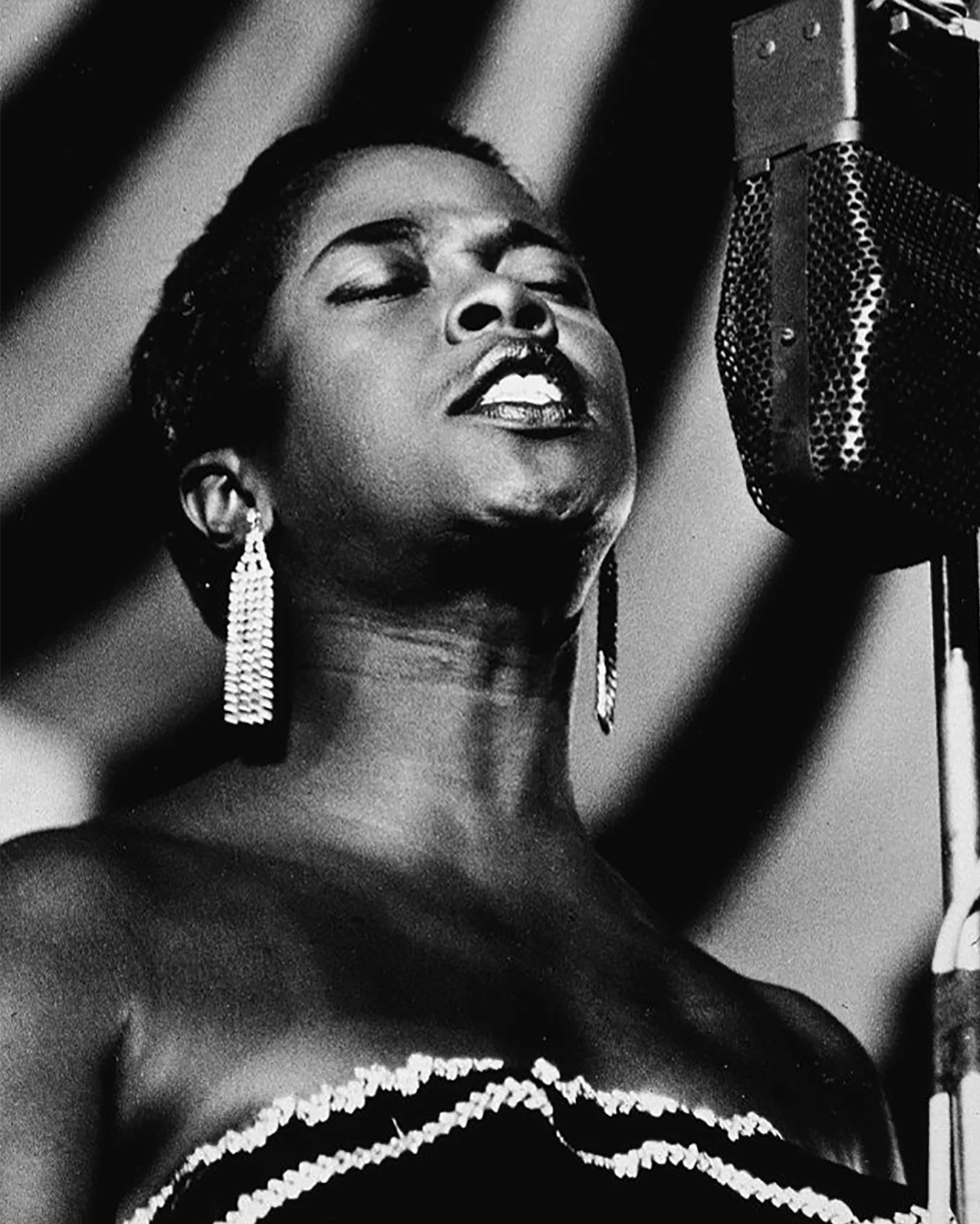
American jazz vocalist Sarah Vaughan closes her eyes as she sings during a performance at the Randall's Island Jazz Festival, New York, New York, August 23, 1957. Photo by Bob Parent, Getty Images
What this classic from the Great American Songbook can teach us about jazz.
You’ve probably heard the song “Body and Soul.” Maybe you can even hum along without really knowing how it became a part of your, and so many others’, collective memories.
Written in 1930 by Johnny Green with lyrics by Edward Heyman, Robert Sour, and Frank Eyton, it is cited as the most recorded song in jazz; thousands of recordings exist today. From classic renditions by Billie Holiday and Louis Armstrong to newer performances by Amy Winehouse and Tony Bennett.
“Body and Soul” is recognized as part of the Great American Songbook—a canon of standards originally created for musical theater and Hollywood films from the 1920s to the 1950s. These tunes are the bedrock of jazz as an art form; they are taught in institutes and musical training programs but also passed down from one generation of artists to the next through performing together.
To some artists, these songs contain the essential vocabulary of jazz and learning how to play them endows fluency in a language that is shared by musicians from different disciplines, geographies, and generations.
We asked Michele Rosewoman, Herlin Riley, and Carmen Lundy—all members of the 2025 Jazz Legacies Fellowship—to break down just what it is about “Body and Soul” that makes the 95-year-old song still feel new.
Melody
Lundy, Riley, and Rosewoman all agree that, although there are many ways into a song, the strongest gravitational pull is the melody.
“It's about the melody first—no doubt about it,” says Lundy, an award-winning vocalist, pianist, and bandleader currently based in Los Angeles. “Beyond knowing the lyric, you've got to understand the harmonic development, the structure, the form, the range of the melody. You can only render the song in a more interesting musical way by knowing that,” she adds.
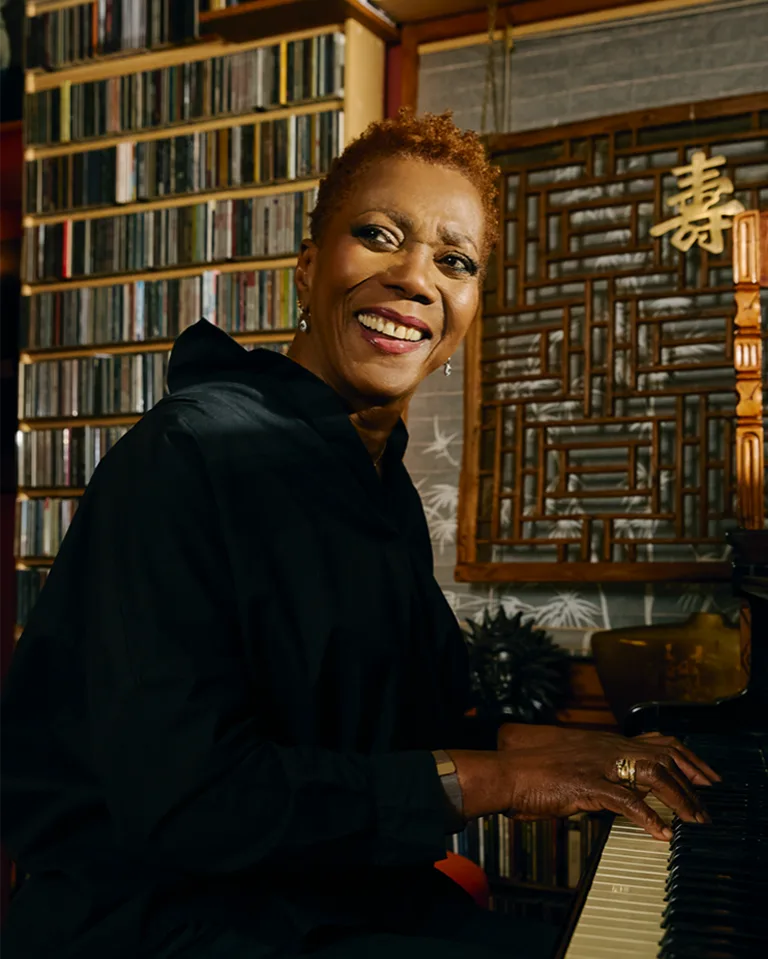
Carmen Lundy
Jazz Legacies Fellow
“Beyond knowing the lyric, you've got to understand the harmonic development, the structure, the form, the range of the melody. You can only render the song in a more interesting musical way by knowing that.”
Harmony
Rosewoman, an innovative pianist and composer and the bandleader of both her highly acclaimed Quintessence and New Yor-Uba ensembles in New York City, says that what originally compelled her to play “Body and Soul” was the way her late beloved mentor, the legendary Oakland-based pianist and organist Ed Kelly played it. His approach, Rosewoman notes, greatly inspired her own approach to the song.
Rosewoman also recalls that hearing the “quintessential Billie Holiday version” of “Body and Soul” led her to appreciate how, in turn, John Coltrane had unique ways of making the composition, as well as many others, his very own.
“[Coltrane] and his ensemble brought their own voice to the song with his modal approach—right in the middle of it, very modal with a pedal tone. And then within the bridge, he brought the Giant Steps approach to the chord changes with the up-a-minor third, down-a-fifth movement, as if it’s built into the song. It’s coming from his unique vision,” Rosewoman says.
Coltrane’s rendition, which Rosewoman designates as a “sultry New York soundtrack . . . super elegant and emotional” inspires her current approach to playing this classic song and other standards in her repertoire.
Lyrics
When asked about their favorite interpretations of the song, all of the musicians emphasize the historical importance of two especially legendary recordings: Sarah Vaughan’s classic vocal performance and Coleman Hawkins’ tenor saxophone version.
Riley, a New Orleans native, drummer, educator, and bandleader, says a performer’s belief in the lyrical intention of a song is paramount. He stresses that even an instrumentalist cannot perform a song with words they do not believe in and must strive to match lyrical intention.
“Ben Webster was playing a sax solo over ‘Body and Soul’ and then he stopped in the middle of it. [The other musicians asked] ‘Why you stop playing?’ He said: ‘I stopped playing because I forgot the words,’” Riley recalls.
As a vocalist, Lundy says she appreciates how, in Vaughan’s rendition, she didn’t feel the need to swing the tune, allowing the ballad to slow down. She calls out Vaughan’s solo encore in Brussels in 1974, when she accompanied herself on piano, as a precious moment of vulnerability.

Herlin Riley
Jazz Legacies Fellow
“Ben Webster was playing a sax solo over ‘Body and Soul’ and then he stopped in the middle of it. [The other musicians asked] ‘Why you stop playing?’ He said: ‘I stopped playing because I forgot the words.’”
Vaughan’s later duet on the piece with Carmen McCrae was so striking that many singers who followed styled their vocals similarly. Lundy remembers that she misheard their rendering of the lyrics and went on to include the error in an early "build-your-chops" gig at a venue in New York City.
“In walks Billy Eckstine—the guy that introduced the world to Sarah Vaughan and so many others. He's sitting down, checks me out. So, what do I pick? ‘Body and Soul.’ He walks over to me after my set . . . and he goes: ‘It's “I'm yours.” And he walks out. He corrected me on that lyric and left.”
Lundy says that the club then refused to pay her, and having used her last subway token to get to the gig, she walked the thirty blocks home in the snow. Though stunned at the time, the singer never forgot the importance of a song’s elements beyond the melodic line.
Rhythm
“Rhythm is always part of me as a drummer,” says Riley, who says he can’t remember a time when he could not play the drums because he came up with so many musical mentors in his family.
“In the beginning, I just heard the beautiful melody, and then after engaging and hearing the rhythms and actually knowing what the rhythms are saying, it’s still a beautiful song to me,” he says of “Body and Soul,” citing Webster’s reimagined version, which is instrumental.
Riley sees the parts of “Body and Soul” as ingredients for musicians: “The elements of the music can stand on [their] own . . . and also lend themselves to a whole different song, depending on who writes it and how they put it together,” he says.
The possibilities for fusion within a standard like “Body and Soul” are a reminder of what it takes to be a jazz artist, say Lundy, Riley, and Rosewoman.
“There was a lot of exploration in a tune like that. There's something about how ultimately, we all have these two things in the course of life—the body and the soul,” Lundy says.
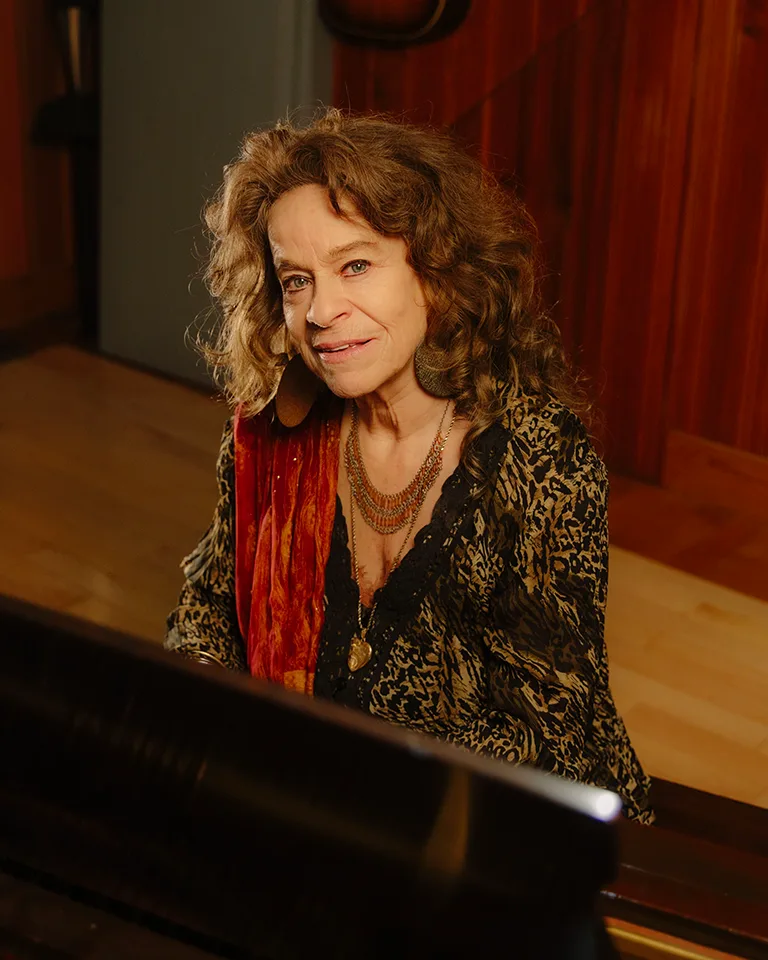
Michele Rosewoman
Jazz Legacies Fellow
“I don’t force anybody into a route. I say, ‘Is this something you want to learn?’”
Exploration, after all, is essential, agrees Rosewoman. “When I teach,” she says, “I don't force anybody into a route. I say, ‘Is this something you want to learn?’ [If not], I say, ‘Come on, let's do something else. Let's go about it another way.’”
Riley offers a similar take: Today's artists can expand the art form through a mix of honoring the past and taking risks. “I always tell them to learn the history . . . of the instrument and of the music, because it [will] help you develop and shape your own musical identity and your own vocabulary as a musician,” Riley says. “But then I tell them also to be true to yourself. There is no destination when you’re engaging in this music. It’s all about the journey.”
Grant insight
Jazz Foundation of America
To support the creation and administration of the Jazz Legacies Fellowship, The Jazz Foundation of America was awarded $15,000,000 in 2023 through Mellon’s Arts and Culture grantmaking area.
View grant detailsRelated

November 12, 2025
Mellon Awards $6.5M to Institutions Advancing Jazz Scholarship and Storytelling
Efforts of Grace, Inc.
New Orleans Artists Are Showing Up Where You'd Least Expect It—the Doctor's Office
Is making art essential work?
Artists as Catalysts
Eight Organizations Striking Major Chords in Contemporary Jazz Culture