Phillip Brian Harper
Vice President, Programs and Higher Learning
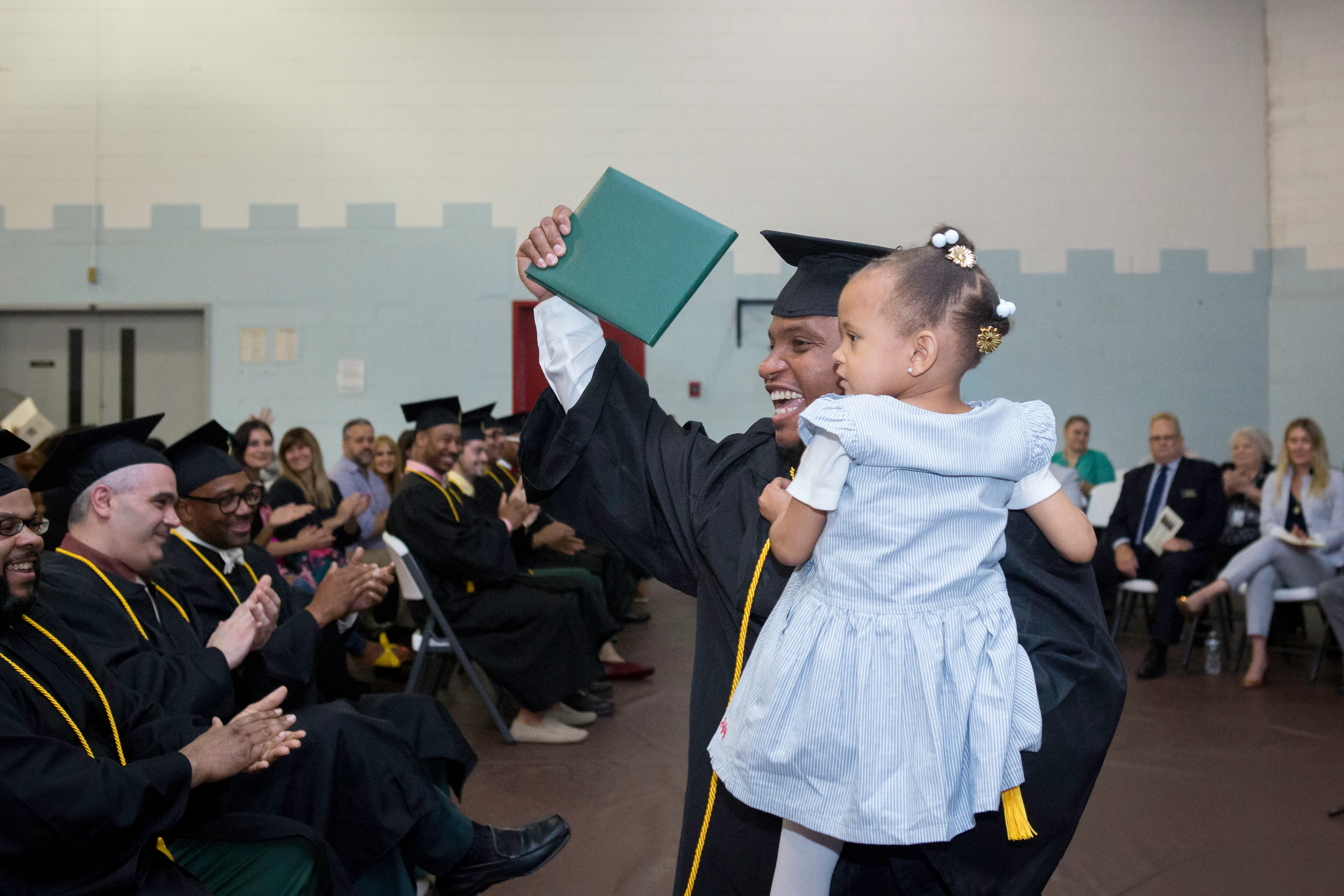
As the only arts and humanities funder supporting higher education in prisons, Mellon advocates for a holistic approach, centering innovative programs that promote the perspectives and leadership of system-impacted individuals, as well as those that deliver education and resources to often overlooked populations and geographies. Further, this strategy drives the funding of programs and curricula that offer a deep understanding of what makes us human—an understanding that is especially needed in the often dehumanizing constraints of carceral settings.
Postsecondary educational programs in prisons have been shown to bolster the families and communities they touch, yet there remains a fundamental lack of higher learning opportunities for incarcerated and formerly incarcerated individuals. According to a 2022 survey by the Alliance for Higher Education in Prison, only around 600 of nearly 5,000 state and federal prisons and local jails have higher education programs. In the ever-evolving world of higher education in prisons—especially as Federal Pell Grants are reinstated next month for incarcerated learners—it is crucial to adopt new grantmaking strategies and support programs that address emerging needs in the field.
“Promoting liberal arts higher education in carceral settings is a crucial element of the Higher Learning program’s strategy for enhancing equitable access to advanced humanities thought and knowledge,” said Phillip Brian Harper, Program Director for Higher Learning at the Mellon Foundation. “Mellon is firmly committed to the idea that everyone must benefit from the liberatory power of the humanities, and our evolving portfolio of support for the education of incarcerated individuals epitomizes that commitment.”
“Access to higher education in prison illuminates some of the darkest corners of our society, revealing an untapped reservoir of intellectual potential. It transcends the steel bars and concrete walls, proving that the pursuit of knowledge is an invincible spirit representing freedom that no physical confinement can curtail,” said Ved Price, Executive Director of the Alliance for Higher Education in Prison. “The investment in prison education is also an act of resistance that refuses the notion that any individual is beyond the emancipatory power of knowledge.”
“Without educational opportunities, justice-involved individuals like me fail in overwhelming numbers to reintegrate into society,” said Jessica Hicklin, Chief Technology Officer of Unlocked Labs. “The Mellon Foundation, with its holistic approach to arts and humanities, is answering the call, providing us the essential opportunities not only to return to but thrive in society.”
To achieve a more systemic impact within the rapidly developing system of higher education in carceral settings, Mellon aims to fund prison education programs whose locations, methods, or demographics extend impact and further cultures of learning in carceral spaces; promote system-level transformations that improve educational opportunities for incarcerated and formerly incarcerated students; and support leadership development, particularly for those directly impacted by the criminal legal system.
Alliance for Higher Education in Prison –Shifting Narratives through Experiential Learning – to support the Alliance for Higher Education in Prison in advancing its strategic effort to increase interest among incarcerated people in HEP programs by focusing on new academic identities and to provide incarcerated graduates opportunities to apply their knowledge in context and build professional skills. Funds will support paid humanities internships for currently incarcerated students, an annual academic conference from prison, and collaborative efforts to support HEP amidst a rapidly changing field.
Hudson Link for Higher Education in Prison, Inc. – Rise Up Conference for Higher Education in Prison – to support the 3rd Annual Rise Up Conference for Higher Education in Prison, which is conceived for and led by those with lived experience in the carceral system and fosters fresh leadership within the field.
Loyola University New Orleans – Building an Evidence Base and University Resources for Expansion of Higher Education in Prison in Louisiana – to support a research base for emerging statewide efforts to expand and improve access to higher education among incarcerated people in Louisiana.
Operation Restoration – Operation Restoration Tulane College of Professional Advancement College in Prison Program – to support the expansion of the Louisiana-based College in Prison Program for incarcerated women, and establish post-release leadership development opportunities.
Pitzer College – Enhancing Justice Education Programs – to support the creation of a Critical Justice Education program incorporating the five undergraduate Claremont Colleges, the Claremont Graduate University, Norco Community College, and nearby carceral facilities.
Unlocked Labs – Unlocking Education for All – to support the expansion, scaling, and widespread adoption of an open-source learning management system for prison education programs in the United States.
Villanova University – Expanding Access to Higher Education in Pennsylvania State Prisons – to support the creation of a Pennsylvania consortium of higher education prison programs, in addition to college preparatory education courses and the expansion of the Bachelor of Arts program in a Philadelphia prison facility.
For nearly a decade, Mellon has supported projects that foster broad and equitable access to higher learning opportunities in carceral settings. Imagining Freedom, Mellon’s new $125M initiative, expands upon this commitment by addressing the problems of mass incarceration and the criminal legal system. The Foundation’s grantmaking through Higher Education in Prisons will continue to focus on supporting humanities-based courses and degrees for incarcerated learners, as well as efforts to make internships, research opportunities, and other forms of intellectual and personal support available to these students.
###
The Andrew W. Mellon Foundation is the nation’s largest supporter of the arts and humanities. Since 1969, the Foundation has been guided by its core belief that the humanities and arts are essential to human understanding. The Foundation believes that the arts and humanities are where we express our complex humanity, and that everyone deserves the beauty, transcendence, and freedom that can be found there. Through our grants, we seek to build just communities enriched by meaning and empowered by critical thinking, where ideas and imagination can thrive. Learn more at mellon.org.
Vice President, Programs and Higher Learning