
Humanities for All Times
Initially launched in 2021 as a $16 million initiative, Humanities for All Times awarded grants to its first cohort of twelve liberal arts colleges across the US that same year. Through distinctive analytical projects now being developed in twenty-two liberal arts programs, the initiative aims to demonstrate the power of the humanities in addressing societal challenges, and to ensure that students acquire the skills to diagnose the cultural conditions hindering the achievement of a fully just and equitable society while also identifying the steps necessary for change.
“The objective of Humanities for All Times is two-fold,” says Phillip Brian Harper, program director for Higher Learning at the Mellon Foundation. “On the one hand, it is meant to make students aware of the concrete, practical skills they can develop through humanities study. On the other, it aims to help students recognize that imagination itself, which is one of the primary foci of humanities inquiry, is essential to effective social justice work.”
Of the fifty liberal arts colleges invited to submit proposals for this second cohort, ten institutions were selected to receive a grant of up to $1.5 million to be used over a three-year period to support the envisioned curricular projects and help students to see and experience the applicability of humanities in their real-world social justice objectives.
Carleton College (Northfield, Minnesota)
$1,500,000 for Indigenous Engagement in Place, a project that seeks to enliven learning, teaching, and public scholarship in the humanities and across the liberal arts through curricular and scholarly collaborations with Indigenous partners that will lead to the development of a new minor in Native American and Indigenous Studies.
Claflin University (Orangeburg, South Carolina)
$1,489,000 to establish the Claflin University Humanities Hub—a project focused on place-based collaborations, embedding social justice content in general education curriculum, and community-participatory research that promotes race/gender equity, environmental justice, and community wellbeing. The approach centers on recruiting and nurturing students in the humanities as scholar-activists committed to cultural preservation and visionary leadership.
Franklin & Marshall College (Lancaster, Pennsylvania)
$1,447,000 for Reckoning with Lancaster. To come to grips with Lancaster’s complex history and the college’s role in it, the College would forge new community partnerships of learning and creation to formulate a common future. A robust program of thematic inquiry and curricular renewal would establish a new general education program for experiential learning in and with the city of Lancaster and provide a community-based, humanities-informed experiential learning opportunity to all students.
Haverford College (Haverford, Pennsylvania)
$1,500,000 for Together with Humanities: Language, Community, and Power. Responding to student demand and the energies of faculty for greater engagement with projects that have direct social impact, Haverford envisions a curricular initiative to develop a series of co-taught courses and course clusters that interrogate the intersections of Language, Community, and Power (LCP).
Lake Forest College (Lake Forest, Illinois)
$1,207,000 for HUMAN: Humanities Understanding of the Machine-Assisted Nexus. This project explores what it means to be human in the age of AI by engaging an interdisciplinary group of humanities faculty fellows who, in partnership with Chicago-based organizations and colleagues in computation and data science, will develop new courses, digital humanities research projects, seminars, publications, artist residencies, and other means of demonstrating the role that the humanities should play in public policy, cultural preservation, and community education in an AI-inflected world.
Middlebury College (Middlebury, Vermont)
$1,486,000 for Migrant Justice in Vermont and Beyond, a project aimed at examining Vermont’s complex migration history in the context of both local and global studies of migration. Middlebury’s humanities faculty have a wealth of expertise in historical and current migration, racial injustice, food and cultural studies, translation, and religious conflict. Applying this knowledge, faculty will examine migrant justice through curricular intervention and Public Humanities Labs that teach students about migrants’ experiences and offer opportunities to engage with local organizations.
Southwestern University (Georgetown, Texas)
$1,287,000 for Deepening the Heart of Texas: Public-Engaged Humanities for Social Justice. As a private Hispanic-serving institution and the oldest college in Texas, Southwestern University aims to work through the publicly engaged humanities (PEH) to address the racism and hate that have roiled its region, state, and country, and encourage the development of an informed and active citizenry. This project would reimagine the General Education curriculum to foreground difference and social justice themes and center public-facing humanistic methodologies for students; add new community-engaged learning and undergraduate research classes in the humanities; increase summer undergraduate PEH research opportunities that expose students to humanistic methodologies; and rethink tenure and promotion guidelines to reward faculty for PEH work.
University of Puget Sound (Tacoma, Washington)
$1,334,000 for Reimagining Justice and Carceral Systems through the Humanities. This project seeks to reimagine the field of Crime, Law, and Justice through humanities approaches and highlight the humanity and experiences of those most impacted by carceral and legal systems.
Wellesley College (Wellesley, Massachusetts)
$1,495,000 for Transforming Stories, Spaces, Lives: Rethinking Inclusion and Exclusion through the Humanities. The project aims to redesign Wellesley’s humanities curriculum through programming that teaches humanistic methods and offers research opportunities to students. In a bold transformation of the humanities on campus, students will gain skills not only to define inclusivity but also to understand how narratives foster and inhibit inclusive practices. The broadest ambition is to help create a just and equitable campus that can equip students to make change in the world.
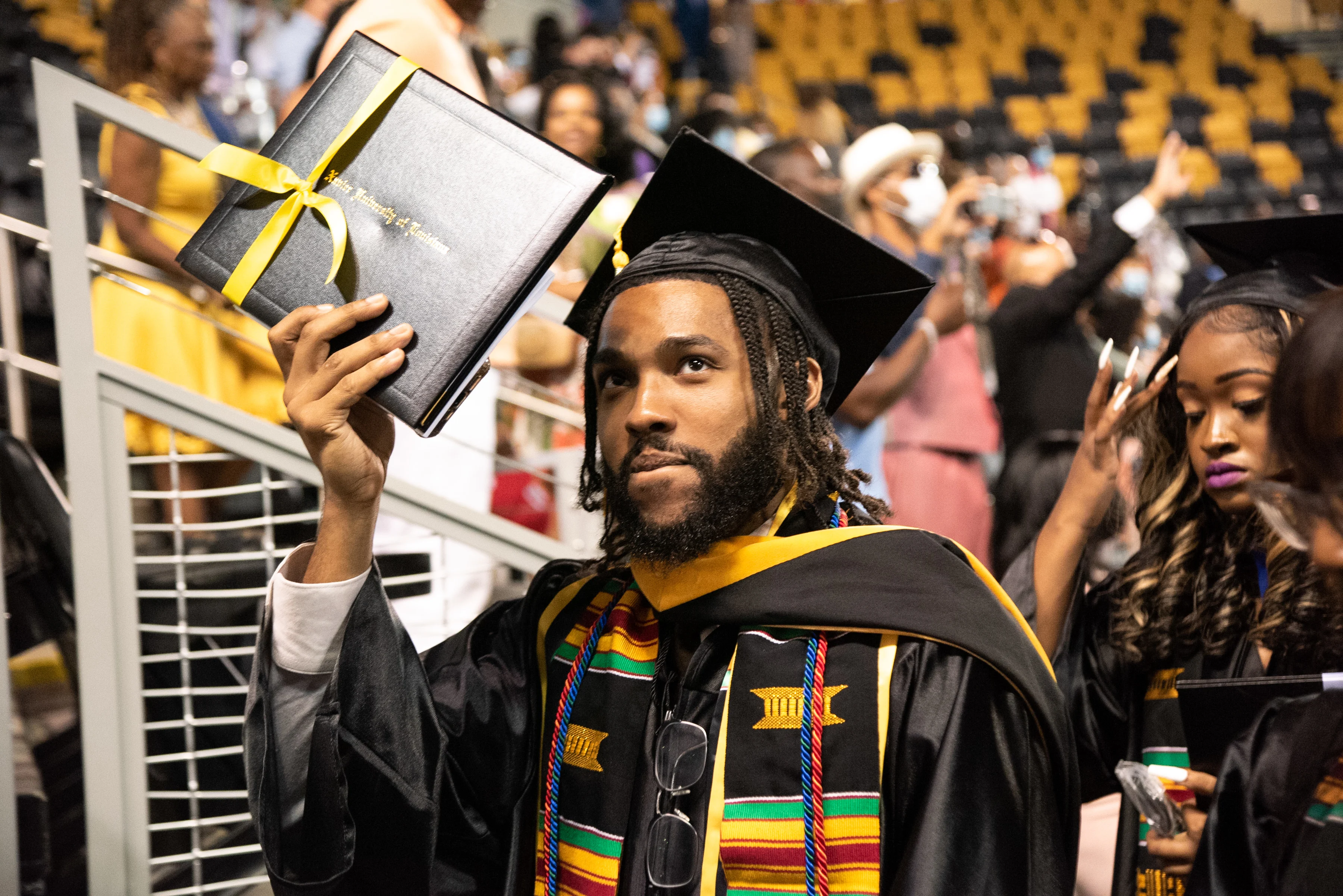
Xavier University of Louisiana (New Orleans, Lousiana)
$1,500,000 for Restoring the Black Intellectual Tradition at an HBCU through a Centralized University Honors Curriculum. Referencing a recent past when HBCUs drove each successive wave of African American advancement and empowerment by producing the leading Black thinkers of their respective eras, this project would revive the tradition whereby HBCUs served as the primary context within which Black students were educated in the history and major currents of Black intellectual thought.
###
The Andrew W. Mellon Foundation is the nation’s largest supporter of the arts and humanities. Since 1969, the Foundation has been guided by its core belief that the humanities and arts are essential to human understanding. The Foundation believes that the arts and humanities are where we express our complex humanity, and that everyone deserves the beauty and empowerment that can be found there. Through our grants, we seek to build just communities enriched by meaning and guided by critical thinking, where ideas and imagination can thrive. Learn more at mellon.org.