The Center for Economic Research and Social Change, Inc.
Freedom, Put in Writing
With my incarceration came advocacy. I often write on behalf of incarcerated people and other marginalized populations in prose, essays, and poetry.
My acting background and advocacy collide in my play SuperNova, which I have been working on for nearly a decade while incarcerated in the Minnesota Department of Corrections.
A full-length, two-act play, SuperNova speaks to women’s incarceration and its effect on their children. It is a collection of stories, based on real accounts, told through six identities: mothers, storytellers, women battling addiction, women living with mental illness, survivors of abuse and violence, and women facing poverty. The play concludes with a child reading a letter telling us how she feels living without her mom.
The intent is for an audience to leave with more empathy for the incarcerated and their families, and with heightened awareness of how the current legal system damages our fellow citizens.
Initially, I thought I would build a play around six people who each embodied one of the identities. But I soon realized that there isn’t “one” addiction story and there isn’t “one” mother. Instead, I would make a voice mosaic. I saw the last scene with clarity: a child standing alone in a spotlight. Everything before that moment builds to the child.
Prison is constructed to isolate. Unless you live in a housing unit with someone, work with them, attend a group together, or happen to have the same courtyard time, you do not have the ability to meet for a conversation.
In 2017, when I started the endeavor of writing SuperNova, I lived in a unit of 60. So, I interviewed 59 people.
The challenge in writing a long series of monologues is making sure every soliloquy is rooted in language that is specific—to show the multiple layers of each person. As I wrote down their interview answers, I paid close attention to meter and cadence.
Then, I transposed the interviews into a script. This was in 2018, when we could still use the computer lab. (Now, we don’t have the option to type, print, or electronically store our writing.)
To establish a place marker, I opened the play with eight women standing in a row of “hall phones,” giving snippets of their conversations. In reality, there is only one phone per prison wing for 12-16 people, plus two phones in a community space that also serves as a dayroom. In the wings, the phones hang on a wall: blue boxes with square, silver buttons, the receivers attached by a silver metal cord.
It’s a scene that speaks to how important our outside connections are.
The play’s subject matter can be heavy and needs a breath for the audience to have a laugh and decompress. I was a dance major in college, and I tend to add dance into my productions. So, I added a ballet/Busby Berkeley–inspired dance number at the end of Act 1. It’s unexpected, a little crazy, and kind of funny.
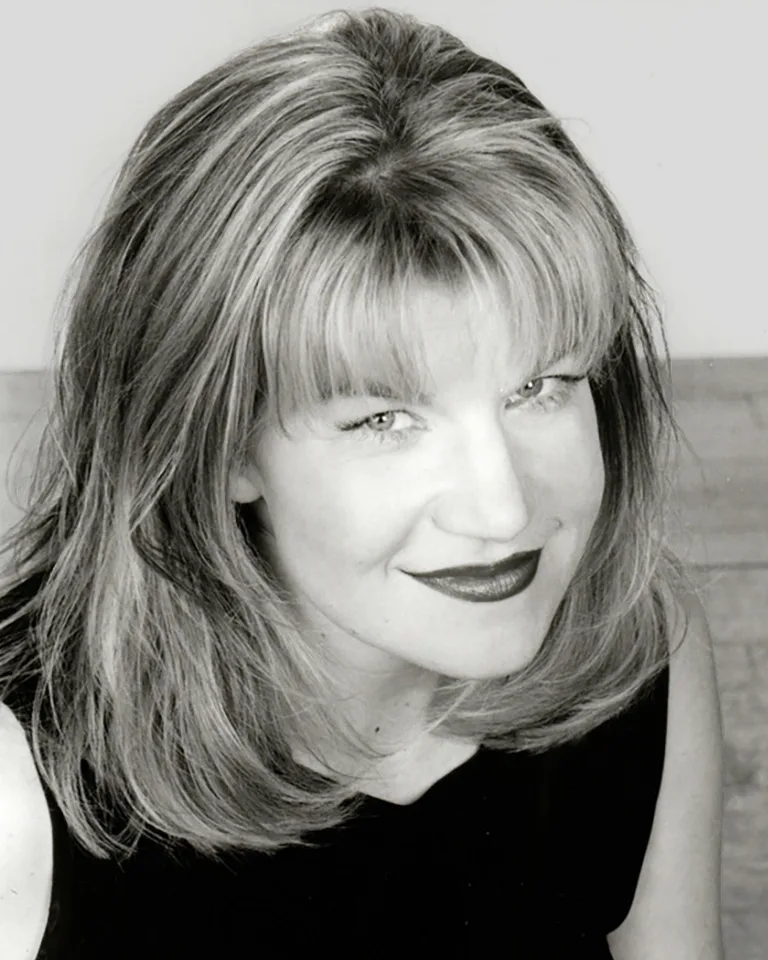
Elizabeth Hawes
“The intent is for an audience to leave with more empathy for the incarcerated and their families, and with heightened awareness of how the current legal system damages our fellow citizens.”
I always thanked the women I interviewed for their stories. The response was always something to the effect of, “If this helps even one person, I am happy to do this.” I think they want to be heard.
And it has been collaborations with people who are outside that have helped to propel SuperNova forward.
In 2020, Jen Bowen, artistic director of Minnesota Prison Writing Workshop, spoke about SuperNova to some Twin Cities theaters. But then came the pandemic, and all the stages were silenced.
Five monologues from SuperNova, directed by Gia Forakis, were staged and well received at Wild Project’s 2022 Play Festival in New York City. But the play has never been performed in its entirety.
What I needed for SuperNova was someone who understood and was connected to theater to help me get my play out into the world. In the summer of 2024, PEN America offered me a theater mentor.
I was paired with Anderson Cook. What I’ve learned since is that Anderson Cook is a gem: an award-winning blogger, playwright, and maker of musicals. At first, we sent letters through the post, but mail takes 21 days to reach me because the original document is first sent to Phoenix, Maryland, to be scanned and copied. JPay—an online service for communicating with people outside of prison who have set up an account—has been faster.
While the body of the play was already written, I had questions about dance notation and music for the dance number, as well as how to find a home for SuperNova. Anderson provided information on theaters, playwriting programs, and staging strategies. He wrote:
“Find a champion who can take on your project until it also becomes their project, and they do all the things for you that you are currently unable to do in terms of networking/production meetings/casting, etc. to serve as a proxy.”
Recently, he introduced me to Rachel Gita Karp, the phenom director of social justice–infused theater based in Brooklyn, New York. Rachel now has SuperNova and has agreed to champion the play into production. She is currently researching our best options.
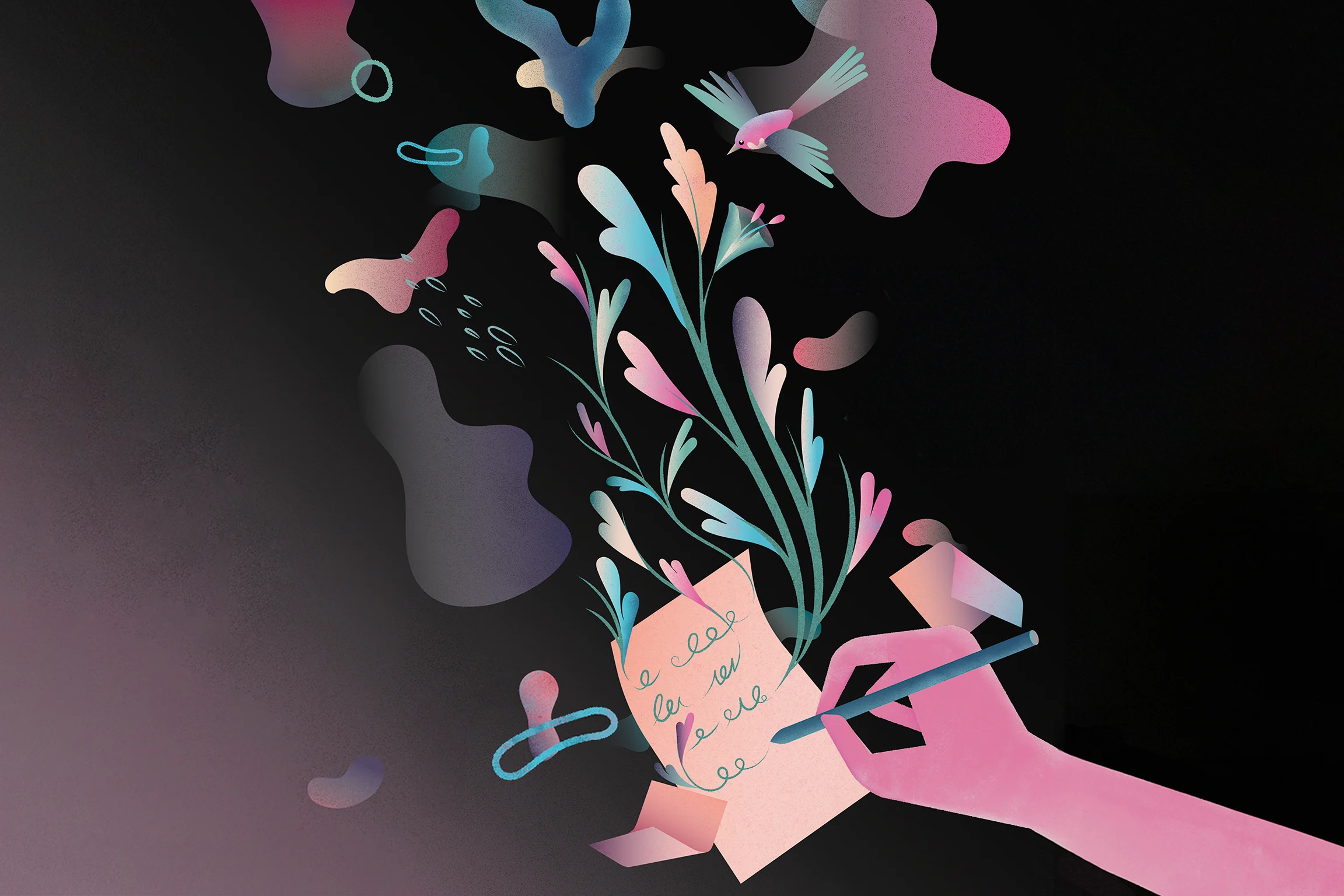
Receiving a Writing Freedom Fellowship from Haymarket Books in 2025 was an out-of-the-blue kindness. I know that had I not won, I would still be a writer of witness and still be trying to publish work to amplify voices of incarcerated people. But I also believe in this idea: Writing is an invitation. Purposeful work connects people in empathy. We unite in kindness.
The Writing Freedom Fellowship has united with me in kindness.
Theater requires investment. It is expensive and time consuming and it involves a lot of people. But with investment comes sticky connection to a new audience. For someone trying to plant seeds of change, this is gold.
There is nothing more rewarding than seeing a project you’ve worked on for a long time realized in the world. I’m coming into that. I recognize that bringing SuperNova to the stage needed a network of people. I am so grateful for all those who have recognized the value of my work and have been willing to help me.
As we all lean into change, we raise our hands to the sky.