April 29, 2025
America’s Humanities Councils Get a Lifeline
These publicly funded, nonpartisan councils offer a wide range of free and low-cost programming, bringing the humanities out of the classrooms and into parks, libraries, and town halls.
“For more than 50 years, humanities councils have served as the backbone of American cultural life, connecting people through programs that illuminate, honor, and celebrate our shared history at the local level,” said Phillip Brian Harper, the Mellon Foundation’s program director for Higher Learning. “The work of these councils touches every aspect of communities across our country.”
In 2025, Mellon partnered with the Federation of State Humanities Councils to provide emergency funding to the 56 state and jurisdictional councils when $65 million in federal funding was eliminated.
From the US South to the Caribbean, these six councils show what that support makes possible, offering accessible arts, literary, and cultural heritage programs for all ages.
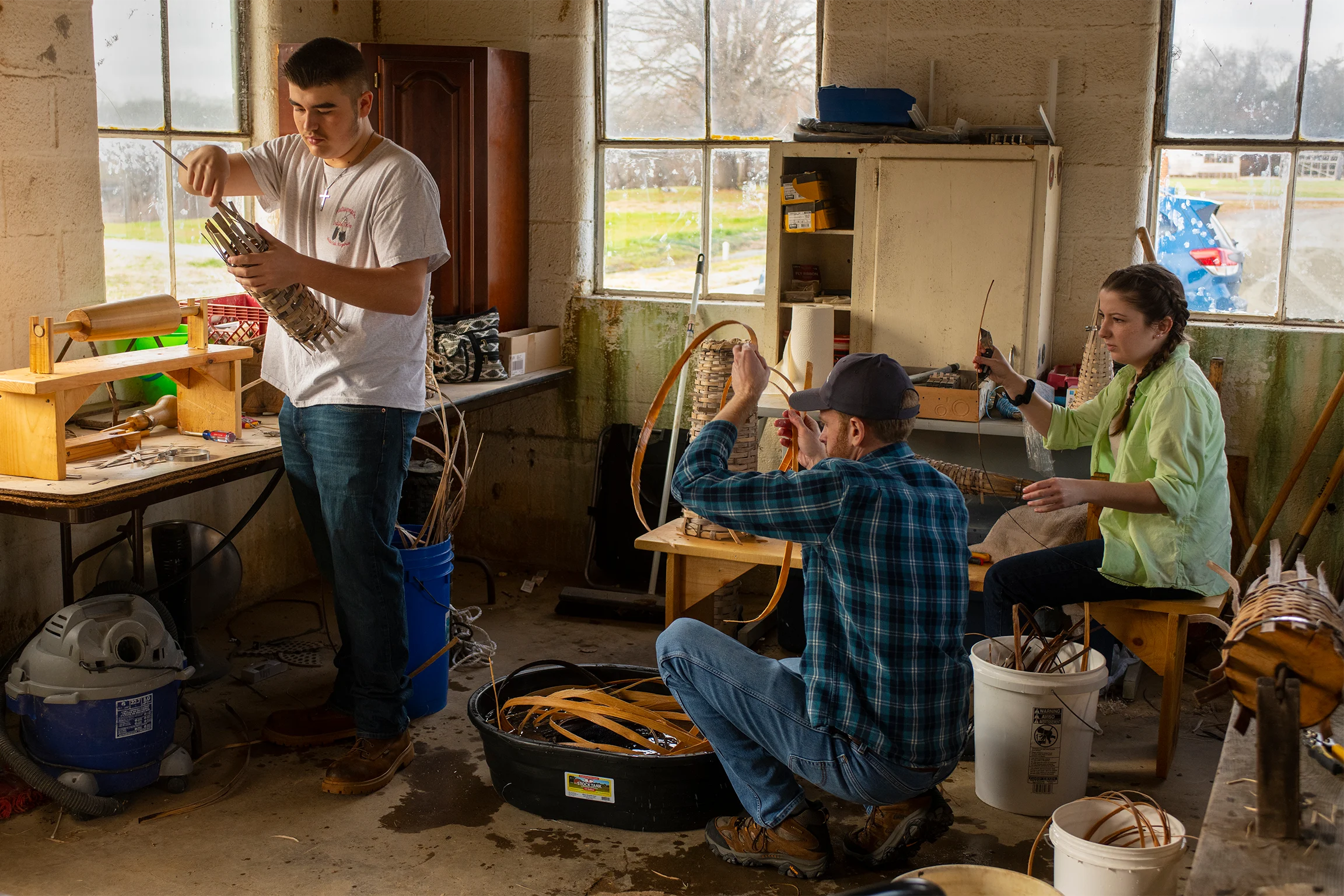
At one point, Dr. D. Brad Hatch was the only member of the Patawomeck Indian tribe who knew how to make a traditional eel pot, a woven basket trap for catching eels. Once a vital source of income and survival for the Indigenous people who lived in the region, eel-pot weaving was beginning to fade from Patawomeck memory. In 2022, Hatch became a teaching mentor to fellow tribe members David Onks and Reagan Anderson through the Virginia Folklife Apprenticeship Program, helping revive the tribal practice.
The Apprenticeship Program, which connects master artists and other trade specialists with apprentices eager to hone their craft, has supported 154 apprenticeship partnerships since its start in 2002. As with eel-pot weaving, apprentices are stewarding a wide range of vital cultural traditions—from draft-horse training and instrument building to traditional healing and dance. As traditions evolve with time and technology, these practices help sustain the legacy of Virginian cultural heritage.
“While I’m making the pots, I do think of the people of our past,” Anderson told Virginia Humanities. “I’ll think, ‘Oh George Newton might use this on his line.’ Or I’ll think of my great-grandfather. The whole time.”
For the Mississippi Humanities Council, “the humanities are for everyone,” including the 19,000 people incarcerated in Mississippi’s prisons. When students in a prison education program expressed a hunger for books, the council launched its first prison book club at the Mississippi State Penitentiary at Parchman in 2022. Today, that effort has grown into 16 book clubs across 12 carceral facilities.
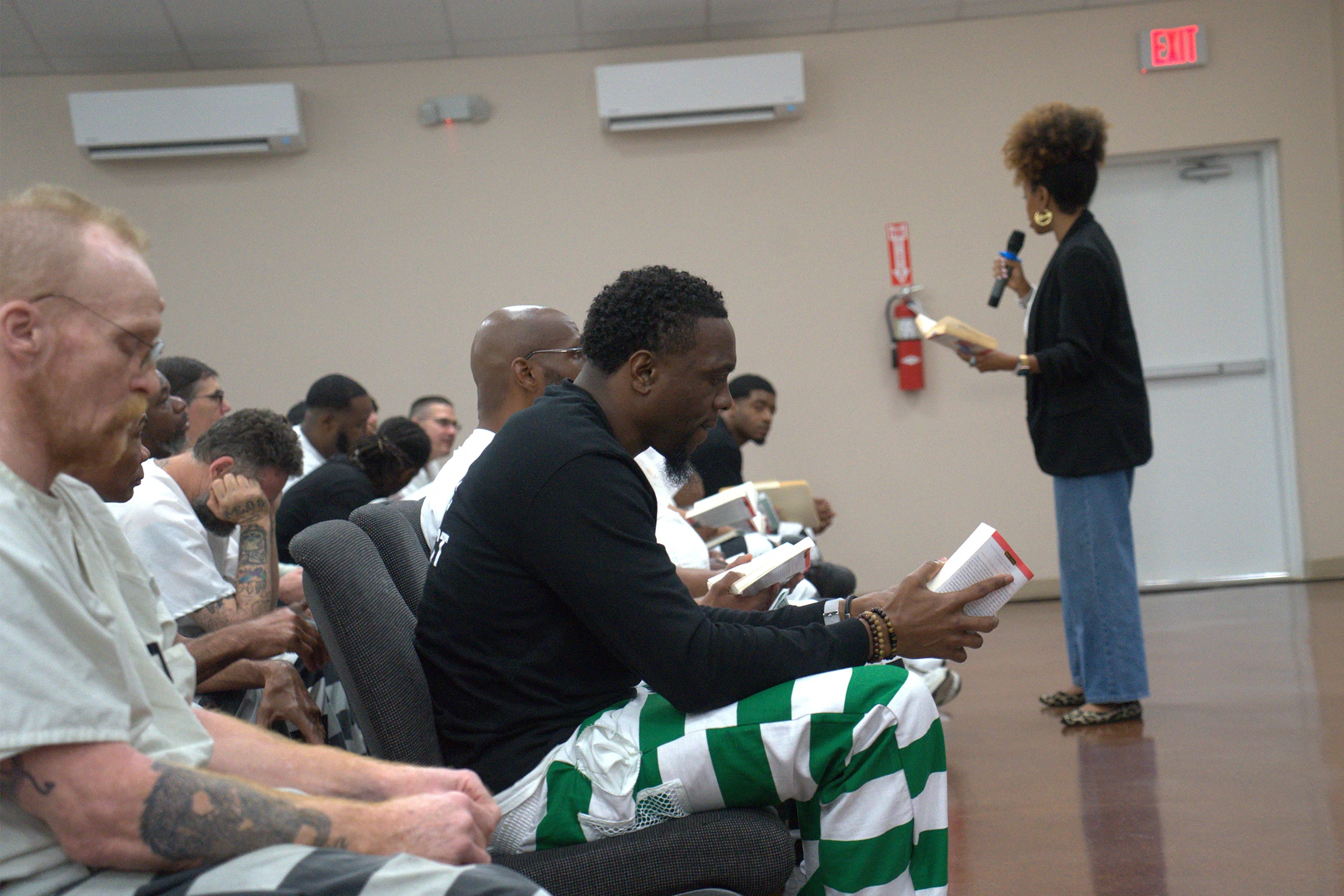
Each club is facilitated by a local author or humanities professor, and members inform the book selection. From nonfiction and memoirs to novels and short story collections, every selection invites readers to explore themselves and the wider world. Works like The Parable of the Sower by Octavia Butler and Sing, Unburied, Sing by Jesmyn Ward encourage members to engage critically with themes of resilience and justice—and invite them to reflect on their own experiences within the prison system.
For many members, these book clubs are more than a reading group. They create rare spaces of connection and respect within isolating environments.
“Prisons are dehumanizing places, and the book clubs—sitting in a group, having people listen to your ideas—that is humanizing,” said Carla Falkner, Project Coordinator for the Mississippi Humanities Council.
In 2023, elementary school students from five Philadelphia neighborhoods gathered to learn about haiku and write their own poems inspired by the Japanese form. Selected haiku were later installed on the grounds of parks and libraries using a special rain-activated solution that becomes visible only when the sidewalk is wet. The result: just-add-water poetry. Since then, Rain Poetry has expanded and traveled around Pennsylvania, inspiring young writers in Pittsburgh, Johnstown, Harrisburg, and Reading.
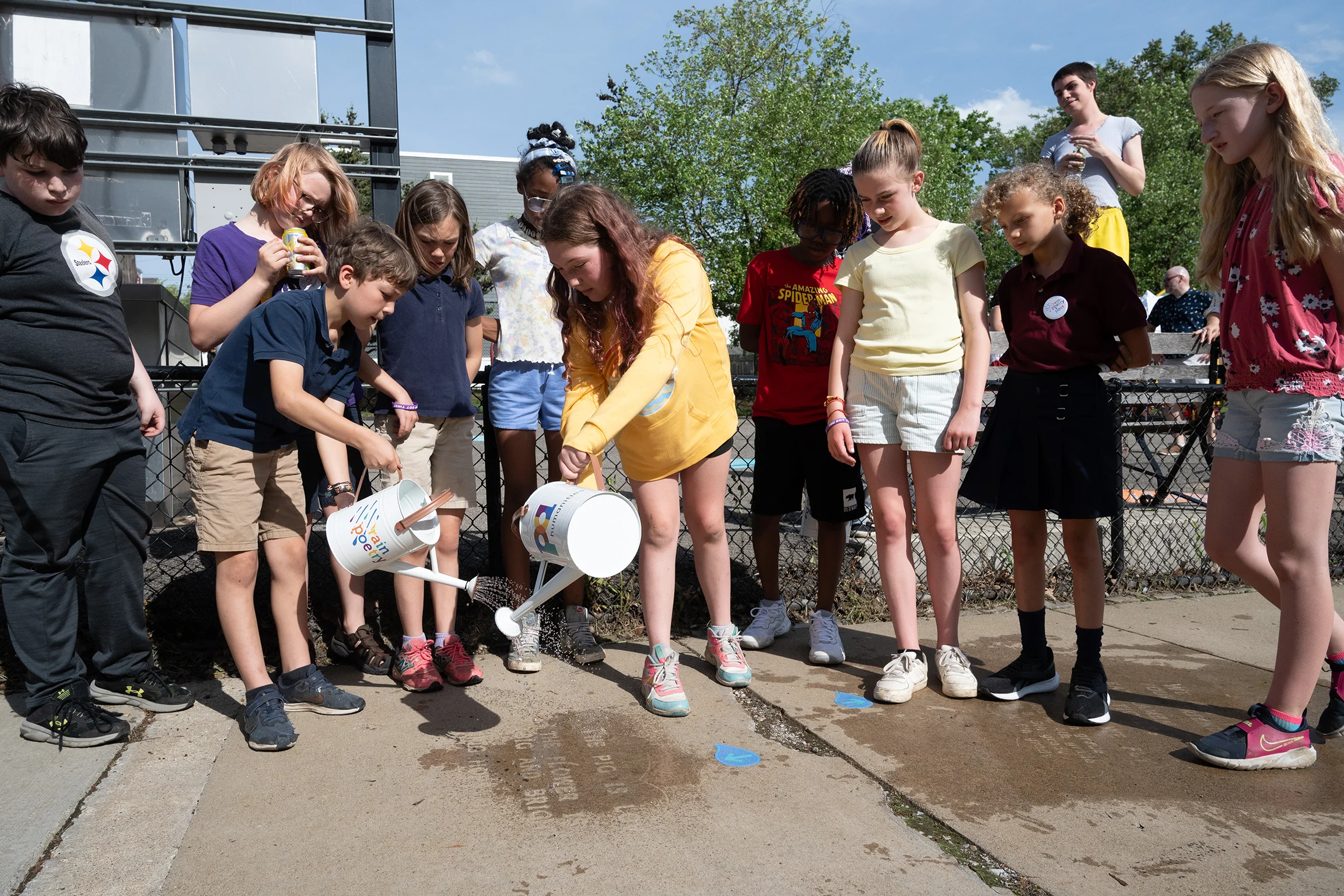
At each poetry workshop, students—from kindergartners to teenagers—respond to prompts like “What helps you keep growing?" or themes about the future, which spark creativity by encouraging reflection on their own lives. Many then see their haiku appear in their own neighborhood.
I was small
Then I grew like a
Lilac in summer
—Miller L, Grade 5
Johnstown, Pennsylvania
Rain Poetry has inspired adults just as much as the state’s young students. After leading a haiku workshop, David Jones—who was named Philadelphia’s third Youth Poet Laureate as a 17-year-old in 2015—said he left his finance job to pursue a career in teaching. Motivated by Rain Poetry’s belief in creative education, Jones continues to teach young poets while publishing his own poetry and essays.
What does the expression “rural America” mean? How have our small towns changed? These are the guiding questions of the exhibition Crossroads: Change in Rural America. Part of the Museum on Main Street traveling exhibition program—a long-standing collaboration between the Smithsonian Institution and state humanities councils—educational programming and displays travel to small towns across the country, inviting residents and visitors to reflect on the last century of economic and cultural change. Since 1994, Museum on Main Street has brought exhibitions to more than 1,900 communities with a median population of 8,000.
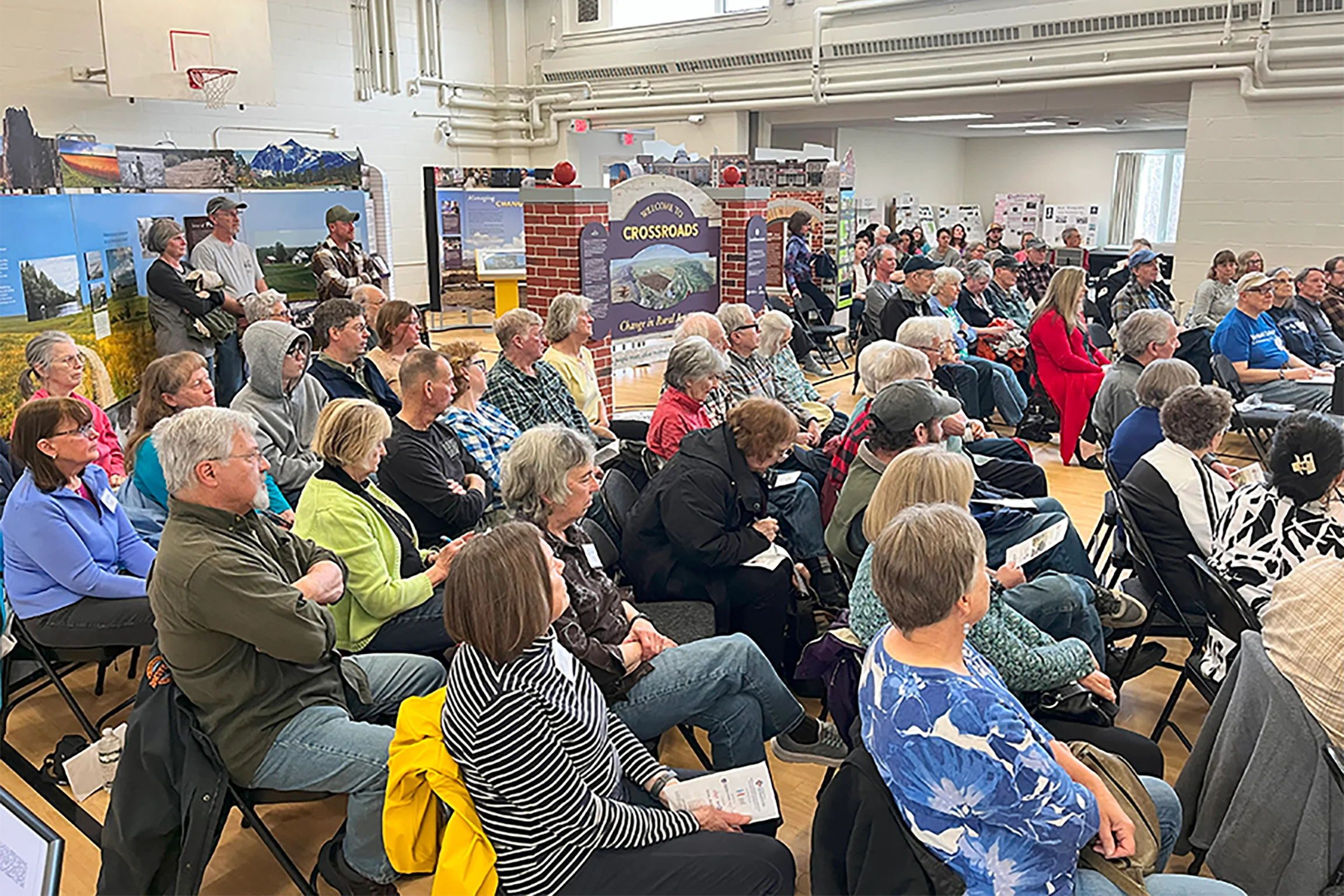
Throughout 2024 and 2025, Crossroads toured New Hampshire, taking up shop in local community colleges, small museums, and other gathering spaces. In Jefferson, New Hampshire (population 1,060), the exhibition was hosted in a former school gym turned community center and became a focal point for gathering and celebrating Jefferson's history. Students created complementary displays about New Hampshire's wildlife and Revolutionary War history as well as the town’s own history, presenting their work to younger students and neighbors.
“The Crossroads exhibition provides the opportunity for smaller towns to highlight their own histories and community members, to tell the story of how they continue to face the changes of the last one hundred years in America,” said Michael Haley Goldman, executive director of New Hampshire Humanities.
Since 2014, more than 1,500 letters have been exchanged between strangers across Oregon. Each one, beginning “Dear Stranger,” opens a small window into the life of someone you may never meet but can come to know through their handwritten letters.
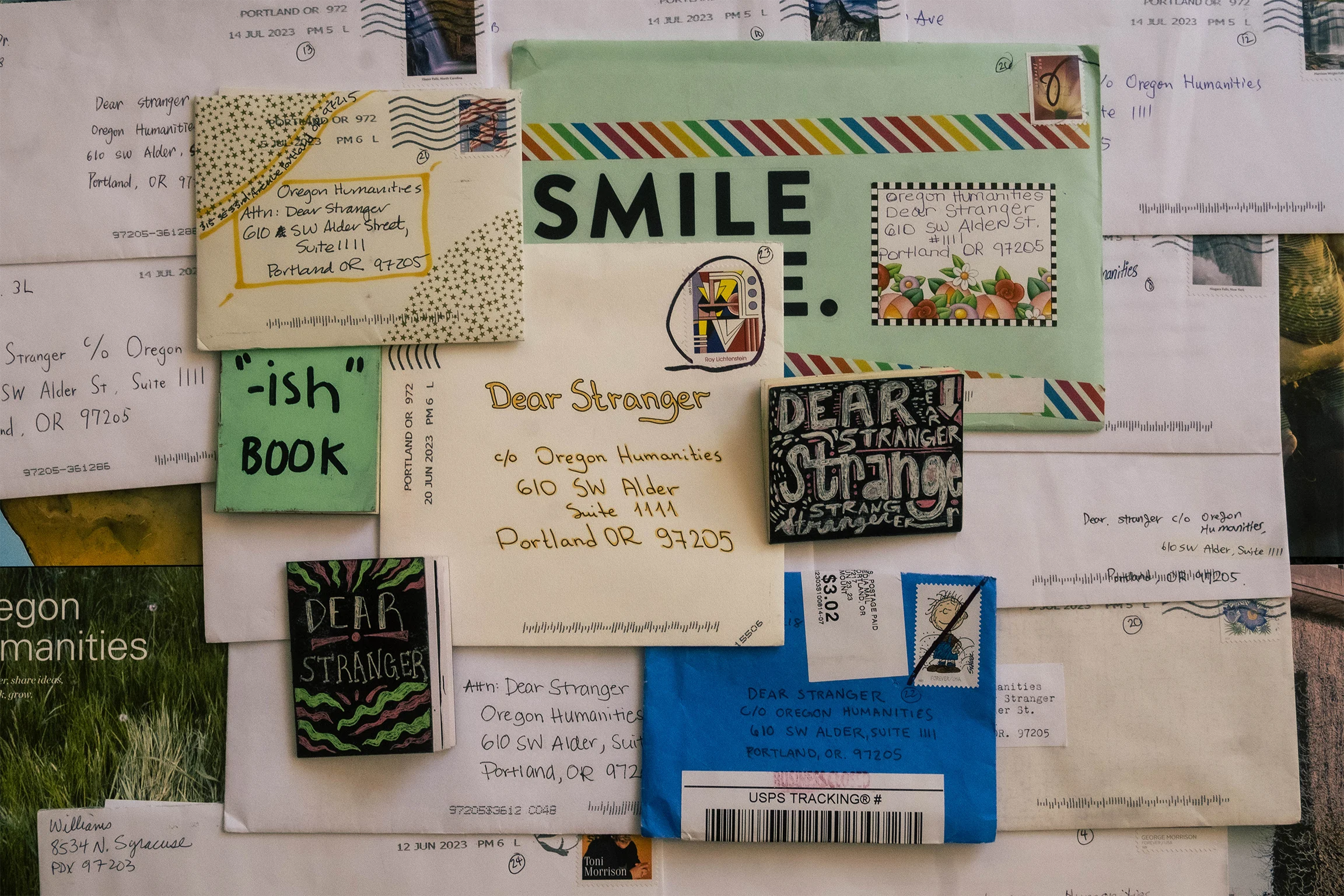
Created by Oregon Humanities, the Dear Stranger project fosters conversation and connection between people with different experiences and beliefs. Participants write letters that align with a chosen theme, mail them to Oregon Humanities, and in return receive a letter from another participant. The project runs three rounds of exchanges each year, each guided by a new question designed to spark reflection and dialogue. In one round in 2025, participants were invited to reflect on reality: “What is real to you? Where do you find truth?”
During the COVID-19 pandemic, Dear Stranger became a lifeline for many seeking connection in isolating times. “I decided to write a Dear Stranger letter just because we're locked up in the house,” wrote Rich Lufrano. “Like maybe many other Americans right now I was looking for some kind of feeling, a connection, or a way to feel closer to people.”
Since its start, Dear Stranger has reached every Oregon county, 35 states, and 4 countries—connecting people through the simple but powerful act of writing a letter.
Since 2018, thousands of comic book lovers around Puerto Rico have gathered for the annual comic book fair, Feria de Cómics. A weekend-long celebration of Puerto Rican identity and imagination, the fair shares the island's history through the vibrant world of comic books and beloved characters. In 2025, nearly 3,000 attendees filled the historic Ballajá Barracks in Old San Juan. Organized by librarian and comic collector Manuel Martínez Nazario, the event featured talks from six artists and authors on Puerto Rican comic art, along with 100 exhibitors sharing their artwork, collections, and passion for storytelling.
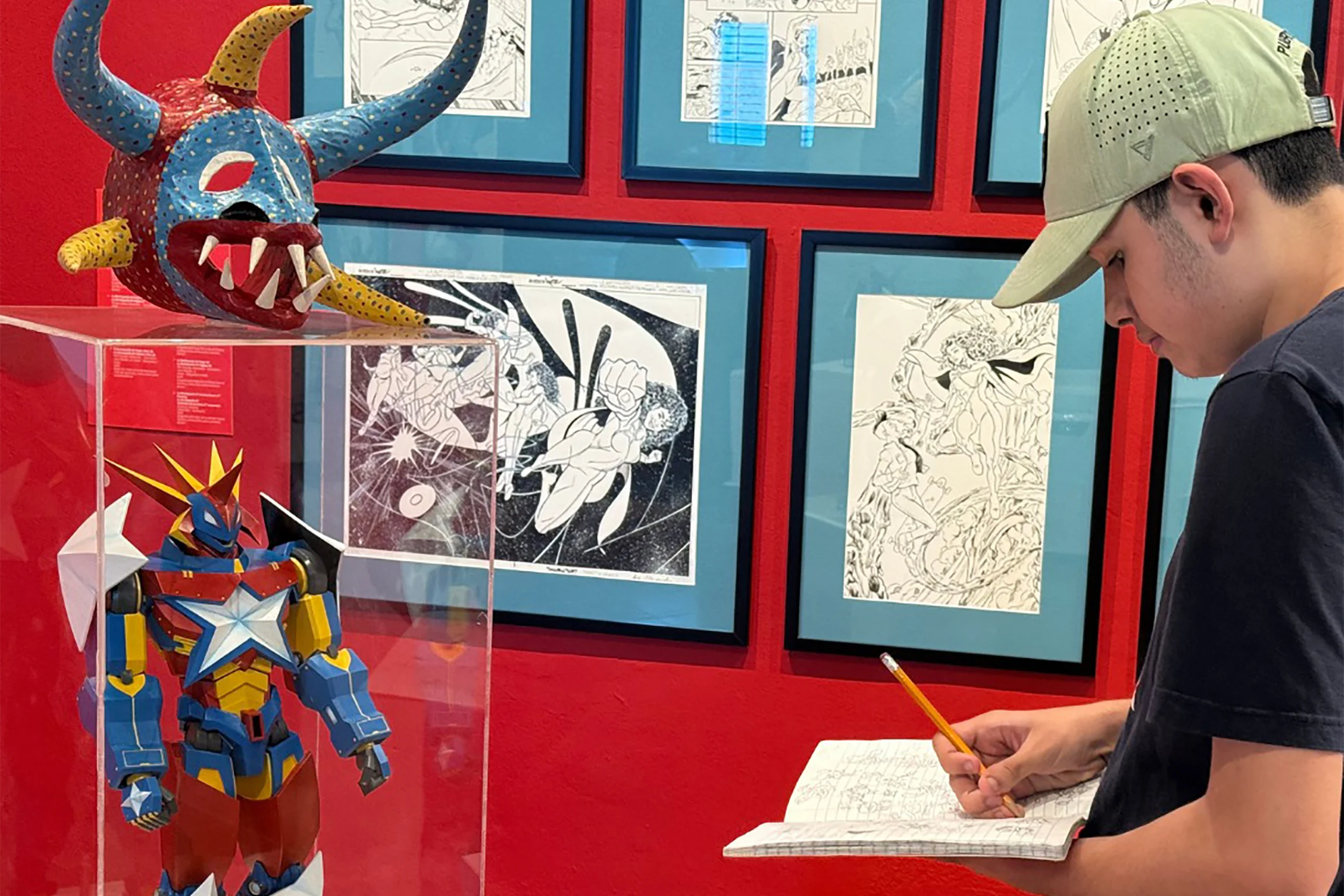
The 2025 fair also marked the grand finale of the exhibition Arte de La Borinqueña, a showcase of the acclaimed comic book series by Edgardo Miranda-Rodríguez. La Borinqueña—named for the Puerto Rican anthem and the Indigenous Taíno people—tells the story of a superhero whose powers are rooted in the island’s folklore, ecology, and mysticism. The exhibition invited new audiences to experience the artistry behind the series and its power as a creative vehicle for teaching Puerto Rican history.
"I hope all that visit this exhibition recognize the innate superpower that we all have to make a difference in each other’s lives every day,” said Edgardo Miranda-Rodríguez, writer and creator of La Borinqueña.