In focus
Wisdom from the Class of 2024
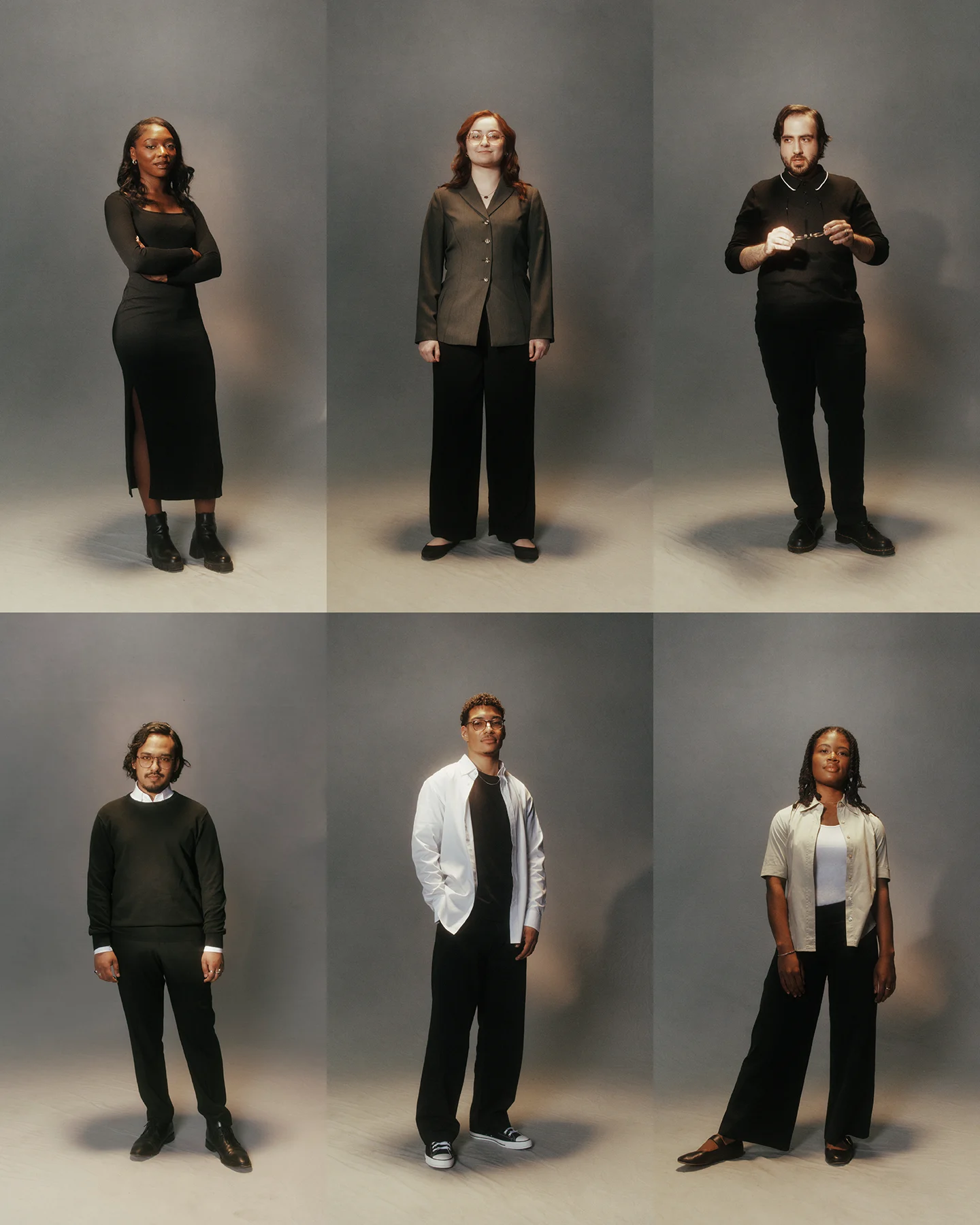
All five students had navigated a university experience like no other amid the COVID-19 pandemic. Forced to isolate through lockdowns, forge new friendships via Zoom, and navigate the rigors of remote class, this group emerged not just with degrees, but with a collective resilience and wisdom.
Here’s where they are now.
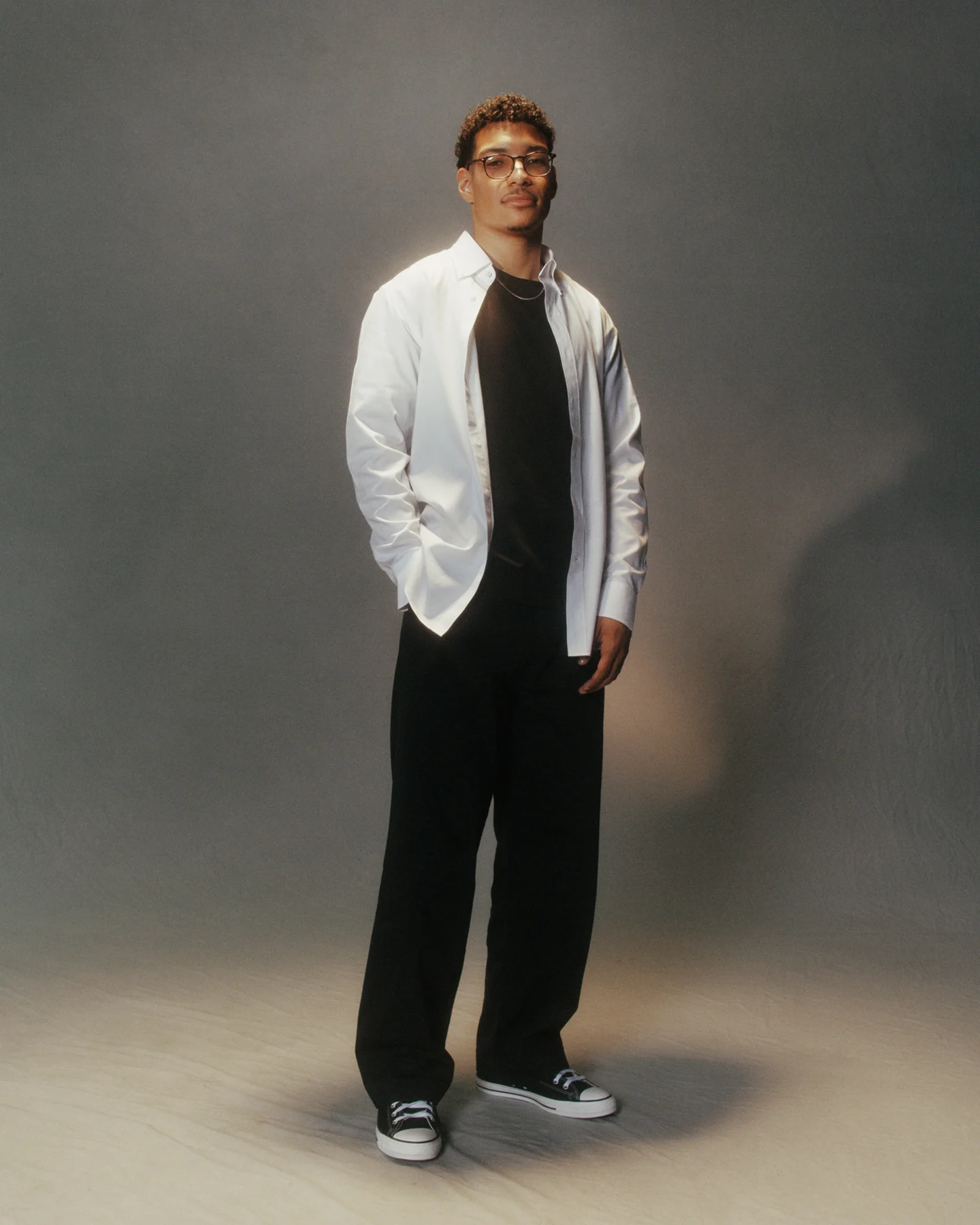
Randy Garcia
Berkeley, California
Asian Studies MA at University of California, Berkeley
“ You don’t have to be scared of being one of the only individuals in anything. You can break the mold.”
“Stressful... and fun” is how Randy Garcia sums up his time in California so far. After graduating from the City College of New York last spring, Garcia made the solo trek west to the University of California, Berkeley, where he’s pursuing his second MA in Asian studies. He misses his family back home in New York but has found a group of supportive new friends that have made the transition easier. He is also impressed by the efficiency of the BART train system—“it’s amazing how punctual it actually is compared to the MTA”—but finds the city’s car dependency frustrating. The Bay Area’s unpredictable weather can also catch him off guard.
The biggest adjustment for Garcia? The shift in diversity within his academic environment. “At City College of New York, it was people from all backgrounds, which made it nice to hear different perspectives and ways of thinking,” he says. At Berkeley, where student demographics—especially in his field—skew majority Asian, Garcia has found that discussions around topics like diversity, inclusion, and accessibility can sometimes feel one-sided. “A lot of these regional studies aren’t accessible to those outside of the culture or even specific socioeconomic classes,” he says. “Coming from one of these outside communities, I’ve witnessed firsthand what it feels like to be an outsider and struggle to even get in.”
And then there’s the uncertainty caused by the instability of his funding. As a Foreign Language Area Studies (FLAS) fellowship recipient, Garcia received federal funding to help cover his out-of-state tuition. The very real possibility that he might not receive funding next year has altered his timeline significantly. Typically, in a two-year program, students don’t begin working on their thesis until their final spring semester, but together with his advisor, Garcia agreed to start writing his early, just in case he has to complete his program quickly.
Balancing his coursework with this expedited thesis timeline has been challenging, but he’s trying to stay grounded by embracing mindfulness. “You don’t need to always be rushing,” he says. “It’s okay to slow down, breathe, and take in what’s happening around you. Taking a step back and letting your creative expression come out, even if it’s not something that directly ties to your work, is extremely important.”
Despite the uncertainty, Garcia is looking ahead and staying positive. He will be studying at the Inter-University Center in Yokohama this summer, and he is eager to access archival collections at Stanford University for his thesis. He’s also considering a potential research trip to Brazil next winter. But, most important, he’s looking forward to going home this summer to celebrate a major milestone—his little sister’s junior high graduation.
His advice for her—or any graduate—is also a sound reminder for himself as he pushes forward in his program: “You don’t have to be scared of being one of the only individuals in anything. You can break the mold. Do it and possibly inspire more people to end up doing it because you deserve to take up space in all these areas.”
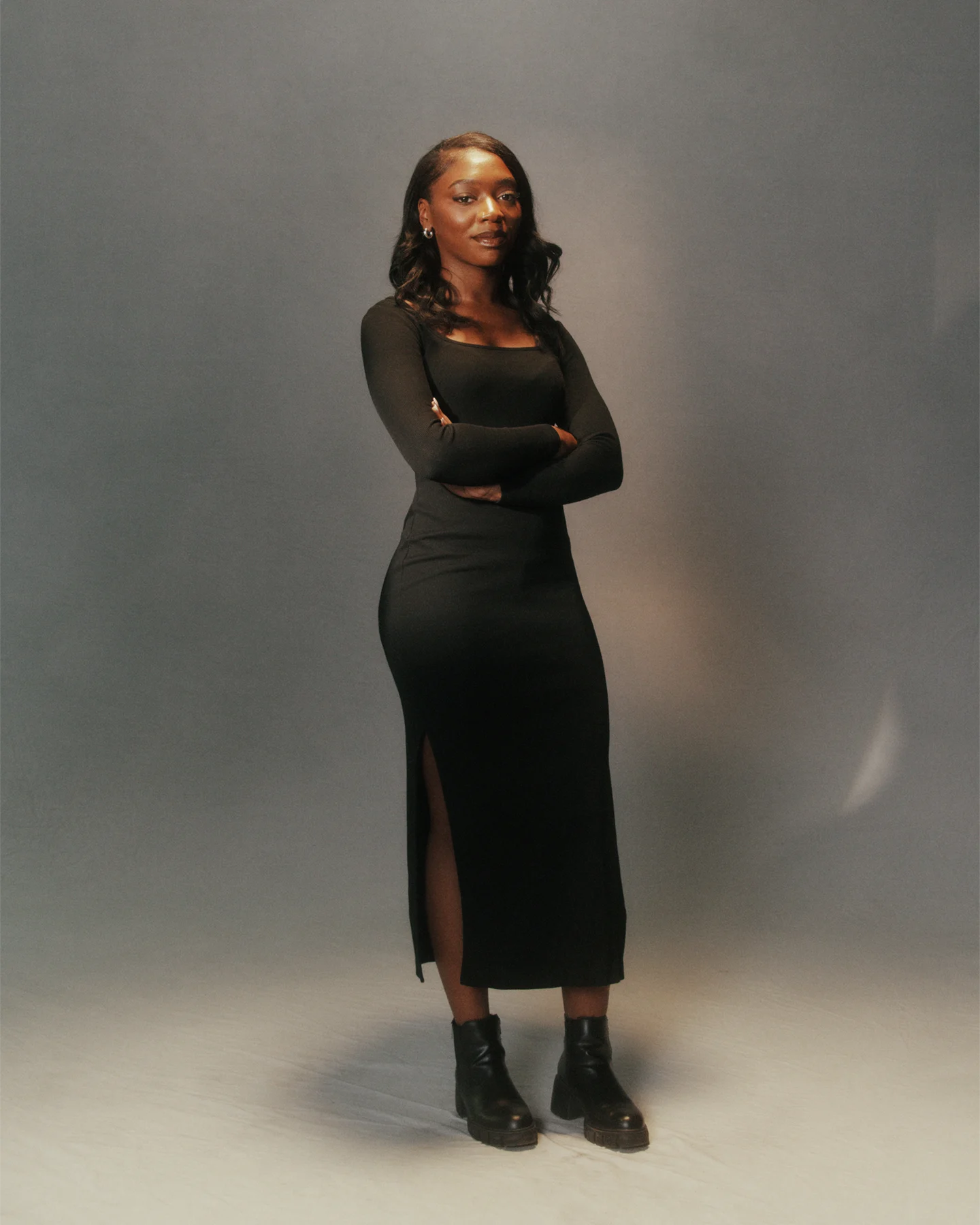
Roberta Hannah
Somerville, Massachusetts
Private Capital Consulting at Oliver Wyman
“Take some time to be selfish. So many things are changing in your life.”
Roberta Hannah knew that she needed time to decompress after graduating from Columbia University last spring. Her senior year and thesis had left her exhausted. Even when the consulting firm she had signed on with notified her that her start date would be delayed by nearly a year, she fought the urge to jump into the job search right away. Instead, Hannah took a six-week-long solo vacation to Europe. “I knew diving into adulthood was going to be a lot, especially since this is the first time I haven’t been a student,” she says. “So I was like, for once in your life, you’re going to sit down, you’re going to take a break. You can deal with things as they come when you’re back on US soil.”
Once back, and after spending a little more time with her mother in western Massachusetts, Hannah began job hunting in earnest and landed a client onboarding role at a Boston marketing agency. She made her move to the city and started her role in August.
In Boston, Hannah has focused on finding community—something that requires a little extra effort after leaving the college ecosystem. “I definitely really miss that community aspect of undergrad. Building community has been very difficult,” she says. “It’s forced me to step out of my box just because I’m a natural introvert. That’s definitely been a challenge, but it’s been really rewarding because of the fact that I’ve met some really cool friends.”
She likens this postgrad period to “going back through middle school” because, outside of work, she gets to explore her interests and curiosities without any restrictions. At the start of the year, Hannah prioritized trying everything that her childhood self wanted to do. She’s taken ice skating lessons and watercolor painting lessons, and even learned aerial hooping at a circus studio. Next on her list? “I might do tumbling classes, and I really want to learn how to do a back handspring,” she says.
There are more adventures to come. Hannah is excited to see how she will continue to learn and grow, both personally and professionally. She recently transitioned into a new consulting role at Oliver Wyman—the same position that was delayed after graduation—and is learning the ropes in the private capital division. Before starting, Hannah gave herself another break to travel to the Bahamas with her college roommates and to El Salvador by herself.
“Take some time to be selfish,” she advises other graduates. “So many things are changing in your life. Within that first year, take that time to really relearn yourself and develop yourself. This period post-grad is probably the most free that you’ll get within the rest of your adulthood.”
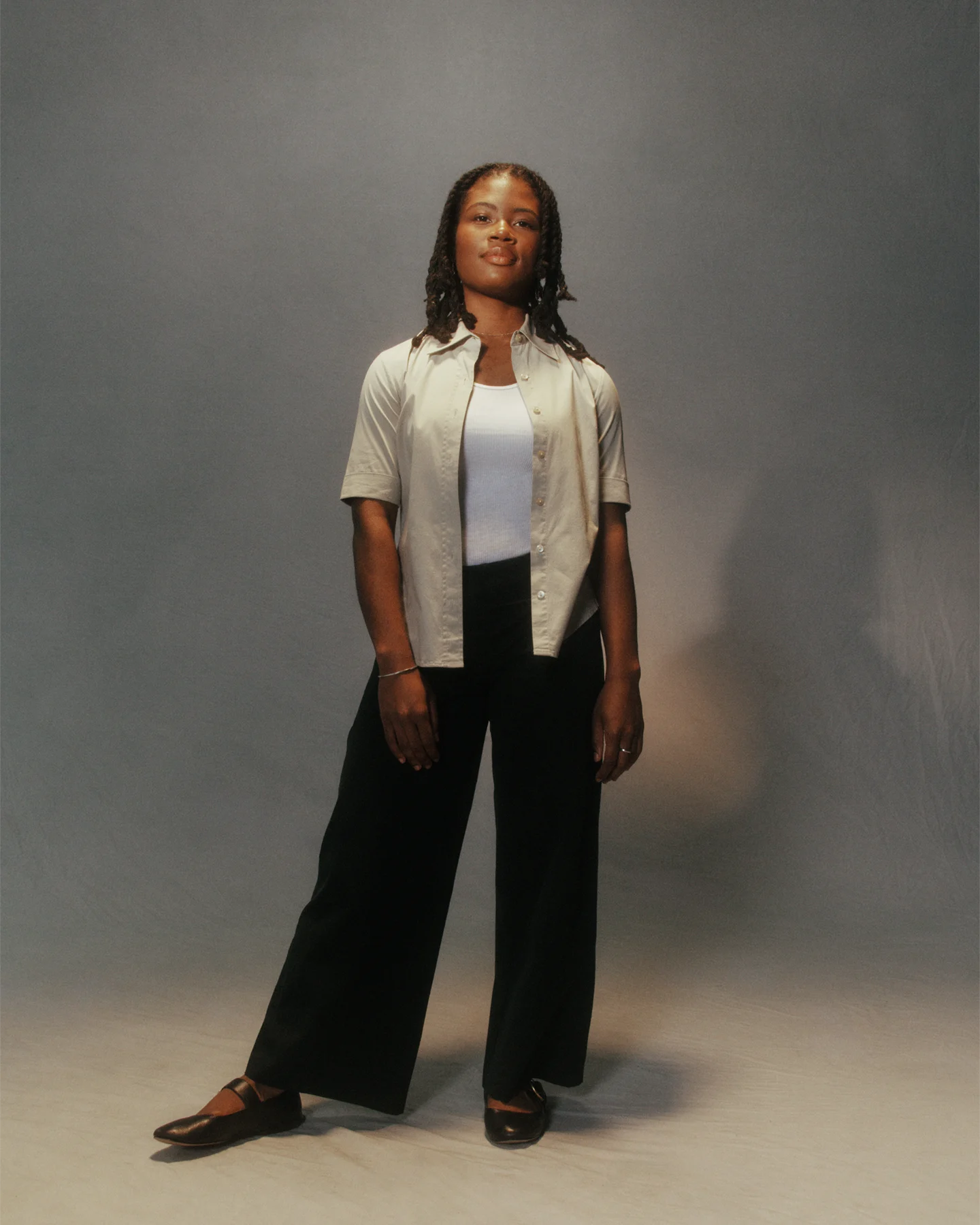
Mikayla “Mika” Moaney
Atlanta, Georgia
Impact Coordinator at Girl Talk, Inc.
“Allow yourself the space to move toward goals, understanding that the journey of becoming whatever you see for yourself may not be linear, and that’s not a sign of failure or misdirection.”
Mikayla “Mika” Moaney didn’t take a lot of time after graduating from Barnard College to make her next move. After celebrating commencement last spring, the Maryland native immediately headed south, going on trips to Savannah and Louisville to relish time with family and friends. Just days later, she returned home, packed up all her belongings in a U-Haul, and drove down to Atlanta—without a job offer in place, but with a strong resolve that she would figure things out.
“It was a whirlwind,” Moaney explains. “I really bet on myself and the community that I had built here in Atlanta.” She was familiar with the city from a summer internship at Access Reproductive Care‒Southeast, so when considering where she wanted to end up after college, Atlanta felt like a natural choice. “I realized that I really, really enjoyed my time in Atlanta. It was more a sense that there was more for me to discover about myself in this space,” Moaney says.
It took a couple of months, but, by the end of the summer, she had secured a role as an impact coordinator at a national girls’ leadership nonprofit. Now she leads the organization’s impact reporting and communications, and finds it especially rewarding when she can draw from her anthropology background to connect with the girls that they serve. “I have had the opportunity to utilize my background in semi-structured interviewing to connect with the girls that I serve. Being an integral part of an organization that is dedicated to girl and girlhood, it’s all just kind of full circle.”
Beyond her 9‒5, Moaney has been intentional about deepening her connection to birth work, building community with a vibrant network of Black and Indigenous birth workers in Atlanta. She helped organize and moderate a couple of panels at the inaugural Motherhood Healing Festival in April, a celebration of Black maternal health that brought together doulas, midwives, wellness workers, and others in the Black birthing community. This is Moaney’s passion, and she’s excited to keep learning.
With so many things going on, one of her biggest adjustments has been balancing the urge to always be productive with the need to listen to her body and simply rest—what she describes as “sitting in the stillness of everyday life.” For months following graduation, she would wake up feeling exhausted, even after a full night’s sleep. Now that she’s finally out of the classroom and “letting [her] foot off the gas for the first time in 13 years,” Moaney is learning to navigate a new rhythm that makes space for both ambition and rest.
She’s also come to accept that the world is an uncertain place. She got a crash course on that during the pandemic at Barnard. Now, instead of fearing the unknown, she chooses to be forward-thinking and flexible. Her advice for others? “Allow yourself the space to move toward goals, understanding that the journey of becoming whatever you see for yourself may not be linear, and that’s not a sign of failure or misdirection. Be open to alternative possibilities and find solace in the fact that those possibilities might be even better than what you planned.”
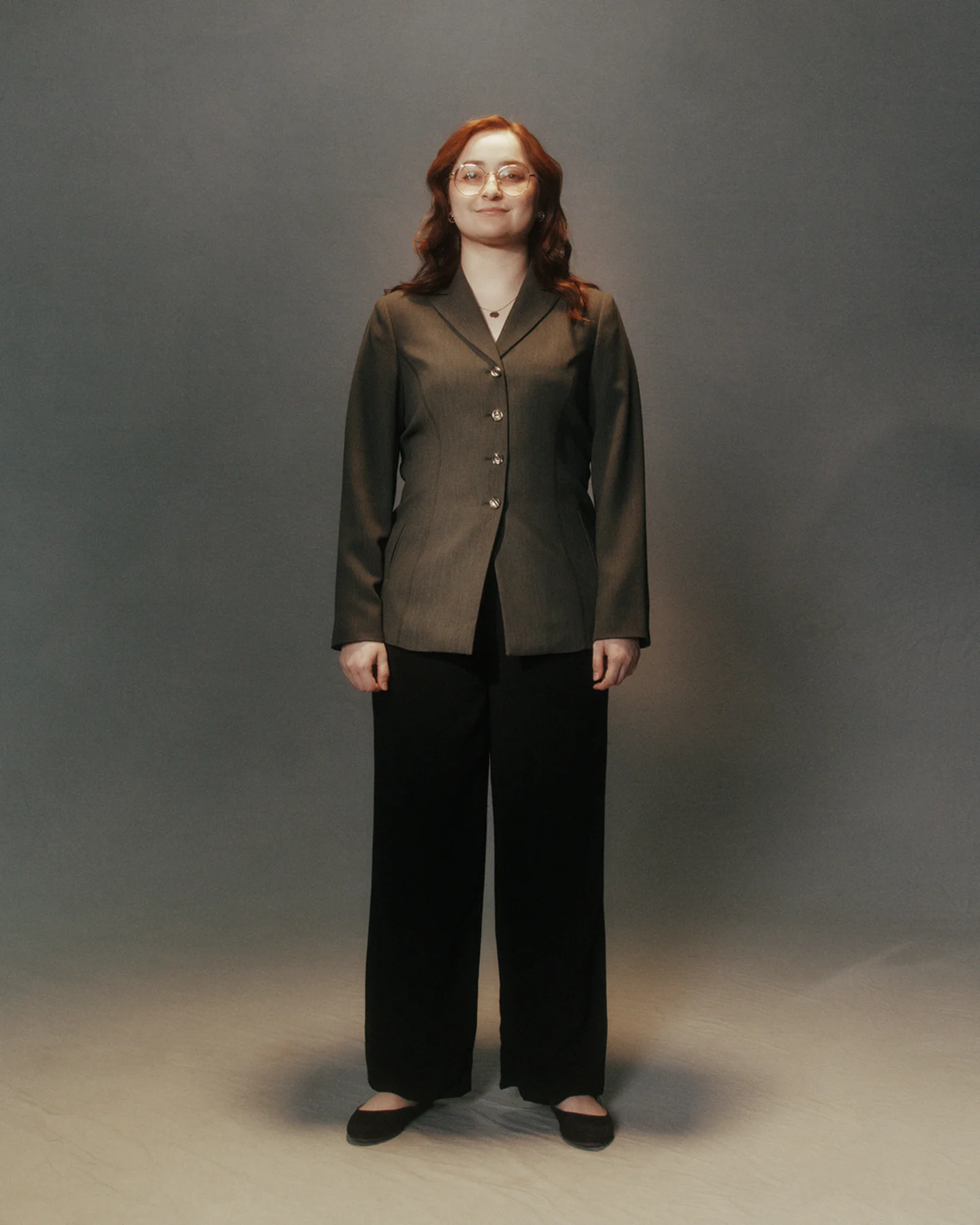
Melissa “Eli” Andrade
Houston, Texas
PhD Candidate at University of California, Berkeley
“When you know where you might want to go, make a goal, and make imperfect steps toward that goal.”
Ever the planner (she had started keeping an agenda as early as elementary school), Melissa “Eli” Andrade mapped out a gap year after graduating from Columbia University last spring. She knew she wanted to take time to apply to graduate school and pursue her English PhD, but, despite her preparation, postgraduate life still held some surprises.
After leaving New York, Andrade returned to Texas, setting up her new base in Houston. Then she began her travels. First to Spain for her graduation trip, followed by visits to Japan, Taiwan, and Mexico. Being back in Texas has given Andrade the opportunity to spend valuable time with her mother, who raised five children as a single parent. “Since her children are leaving the nest, my mother has been going on this self-introspective journey,” she says. “This lady sacrificed the entirety of her 20s and 30s, and a good portion of her 40s, for her children, so I am ecstatic that she’s finding her own way.”
Graduate school was always part of the plan, but Andrade also set personal goals for her gap year—cooking more, going to the gym regularly, reading books, and carving out a steady creative writing practice. Still, adjusting to the unstructured time outside of school was not easy. “Being in the bubble of college and suddenly not being there anymore was a hard reminder that this is real life,” she says. “It’s daunting to know that you could do everything, but at the same time, not really. You need resources, you need time, you need your own well-being, and you need to prioritize the people around you. Balancing all these things has been the hardest challenge.”
Even though she’s confident in her decision to return to academia—“I miss going to class and having a good discussion on a book so badly,” she confesses—Andrade still struggles with doubts. Many of her friends in Houston have corporate jobs, and she sometimes wonders if she should be pursuing financial stability instead of a doctorate degree. But deep down, she knows that the academic environment is what she loves. “I feel like it’s the only place that I can see myself being able to think. Maybe for peanuts, but maybe I’m okay with peanuts,” she quips.
After visiting open houses on both coasts and in the Midwest, Andrade finally made her decision. She has accepted an offer from the University of California, Berkeley, and will be heading west this summer. “Thinking about Latino literature and where that might lead me, the West Coast seems like a prime intellectual harbor,” she says.
This time has taught her to give herself grace when things don’t exactly go as expected. She had high expectations for her gap year but has made peace with what she was able to accomplish. She’s also surprised by how she’s learned to accept uncertainty, slow down, and take things a little more day by day. Andrade still stresses the importance of having a plan, though. “The transition is easier when you have a direction,” she advises. “When you know where you might want to go, make a goal, and make imperfect steps toward that goal.”
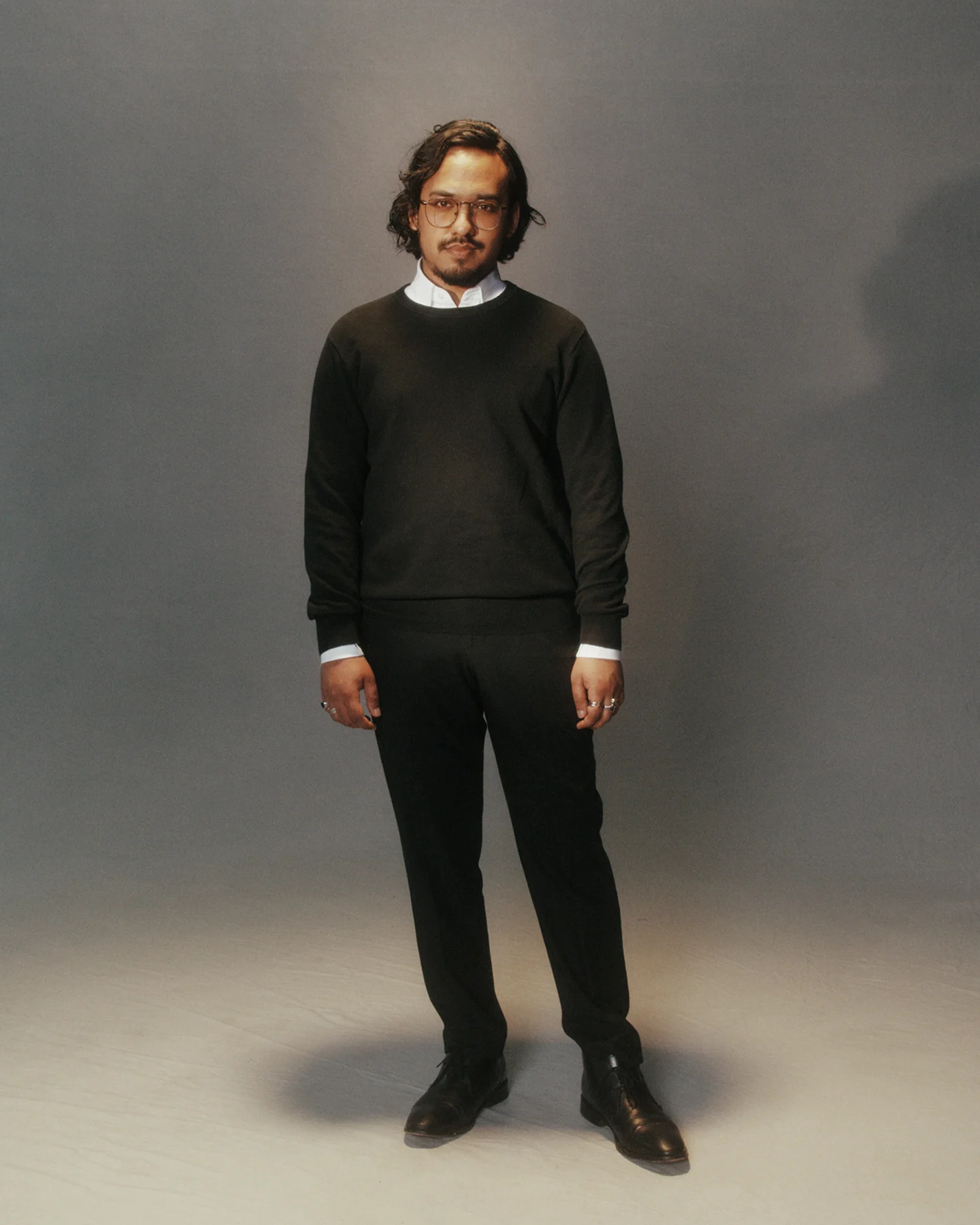
Huzaifah Islam-Khan
New York, New York
Adjunct Professor at LaGuardia Community College and Co-Founder of the Islamic Institute of Burma
“Don’t doubt yourself. If you can get a degree, then you can get other things done too. You just have to put in the work.”
For Huzaifah Islam-Khan, graduation last year didn’t seem like an endpoint, but just the beginning. The Queens College graduate was ready for more studies and academic rigor—he had his sights set on ultimately applying to Islamic studies PhD programs.
While many of his peers enjoyed a short postgrad stint at home, that wasn’t an option for Islam-Khan. The ongoing political instability in his home country of Burma means he hasn’t been able to go back since he left for school in 2017. He really misses his family but has found community, connection, and mentorship in the academic space.
Last fall, Islam-Khan started teaching an introductory critical philosophy class as an adjunct professor at LaGuardia Community College. Being on the other side of the classroom podium has given him a valuable shift in perspective. “When you study something, you learn it,” he says. “But when you teach it yourself, you’re forced to learn it in a way you didn’t before, and you appreciate the information much more.” As a recent student himself, he is able to empathize with the challenges his students are navigating.
In addition to teaching, he’s stayed busy with projects for the Islamic Institute of Burma, an organization he co-founded to educate and empower young Burmese Muslims back home. Islam-Khan is developing online courses that blend traditional religious teaching with a more academic approach, “bringing the taste of academia to the Burmese Muslim public.”
Now, Islam-Khan’s primary focus is getting his master’s thesis published. With guidance from his supervisor, he’s been diligently revising and expanding his research, and hopes to get sections published in journals or ideally as a monograph. Publication would represent something bigger than a professional milestone. “I’m trying to prove to myself I can do this, I can actually write a publishable work that’s worth reading,” he says. Once he reaches that benchmark, he thinks he’ll feel more equipped to reach the next—applying to PhD programs.
Though he didn’t submit his applications for fall 2025 as intended, Islam-Khan is preparing for the next round. He still struggles with feeling like he’s behind, even though his laser focus continues to propel him forward. “The one thing that I constantly struggle with is self-doubt about what you can accomplish,” he says. “Don’t doubt yourself. If you can get a degree, then you can get other things done too. You just have to put in the work. I know what I want to do. I know exactly how I want to do it, and I try to get it done.”