The Vonnegut House in Cape Cod
Kurt Vonnegut Memorial Library, Inc.
‘A Fellow Traveler on the Planet’: Kurt Vonnegut’s Daughter on his Parenting Style
LocationBarnstable, Massachusetts, and Indianapolis, Indiana
Grantmaking areaHumanities in Place
AuthorBlythe Roberson
PhotographyColin Dodgson for Mellon Foundation
DateJune 18, 2026
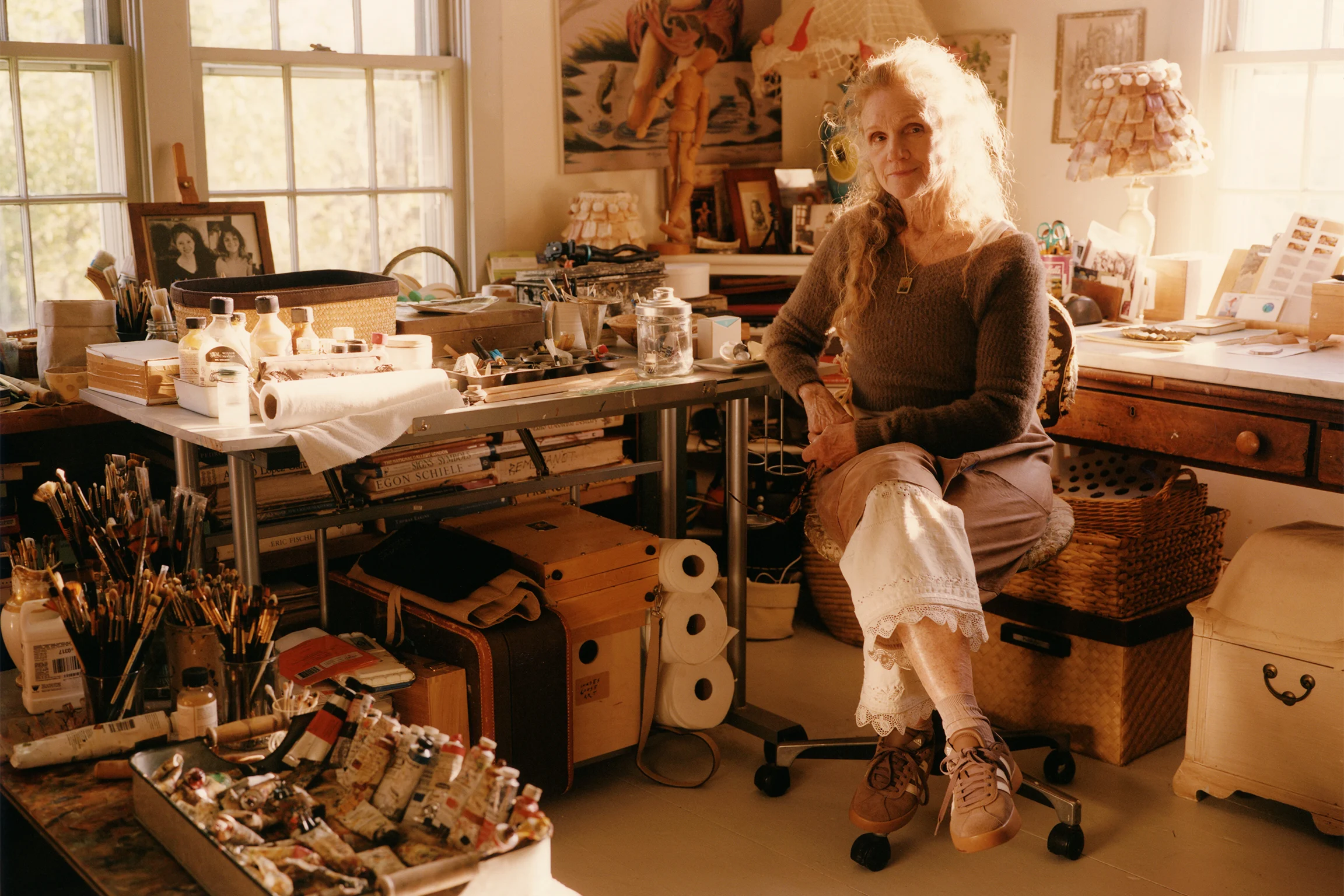
Edith in the painting studio in the barn on the property where she was raised by Kurt Vonnegut and Jane Marie Cox.
What was it like to be raised by Kurt Vonnegut? After all, this is the author who famously said, “There’s only one rule that I know of, babies — ‘God damn it, you’ve got to be kind.’” Now, thanks to the Kurt Vonnegut Museum and Library in Indianapolis, where the American author was born, KV fans have a chance to get insight into Kurt the dad as well as Kurt the writer. While the museum, which has received funding from the Mellon Foundation, makes contemporary his legacy of writing and views of constitutional freedoms, an assortment of Vonnegut’s notes, belongings, and letters offers an intimate look at his approach to art, activism, and family.
One key contributor to the archive? His daughter, Edie Vonnegut.
I talked to Edie about her father’s legacy and her childhood in the Vonnegut household, all while running around a property where she, after many years away, once again lives and paints today.
Edie, a nickname for Edith, is Kurt’s second child, born in 1949 in Schenectady, New York, during a period when her father was doing PR for General Electric. After he sold a couple of short stories, he quit that job and moved the family to Cape Cod to pursue writing.
There were seven kids in the Cape Cod house—Edie, her brother Mark, her sister Nanny, and her cousins Jim, Steven, Kurt, and Peter, who were taken in when Kurt’s sister Allie died of cancer, two days after her husband was killed in a train accident, leaving the children orphaned. “We were aged 2 to 14,” Edie recalls. “We were not helping.” And yet, for the next ten years, Kurt was on fire, writing a handful of books that seem destined to endure in American culture, like Slaughterhouse-Five and Cat’s Cradle.
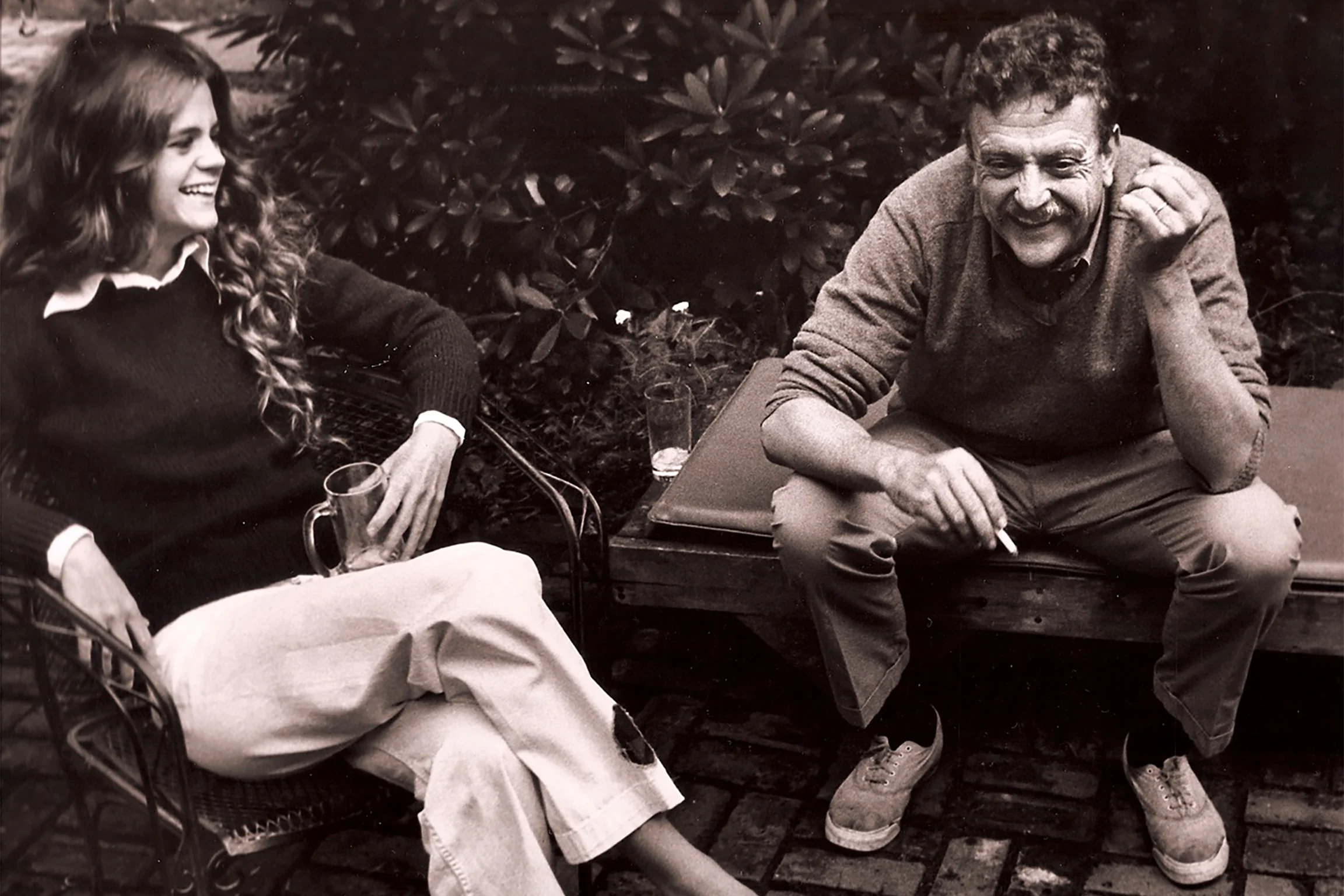
Kurt and Edith Vonnegut at home. Photo: Courtesy of Edith Vonnegut
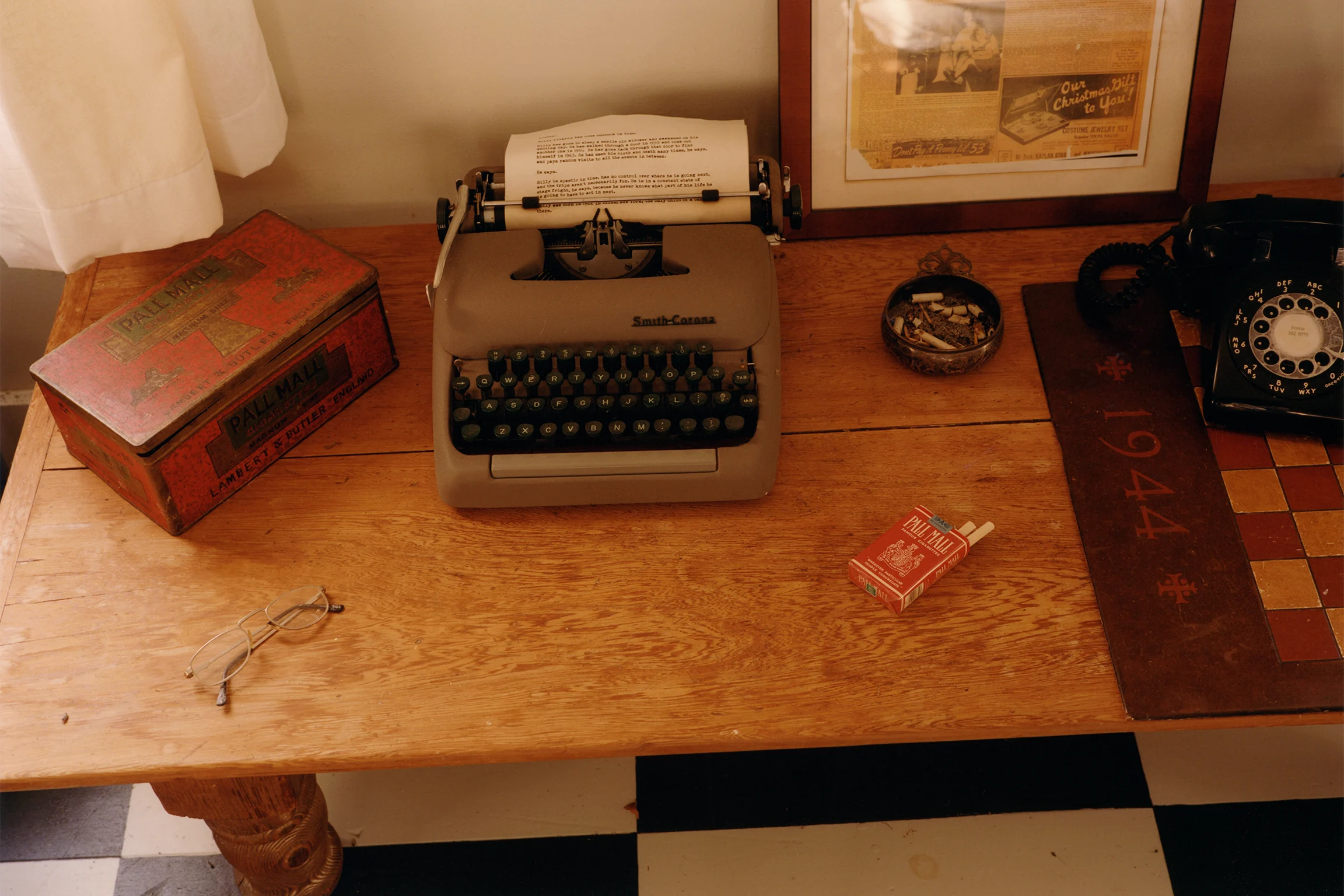
The kids weren’t allowed in the part of the house where Kurt wrote, but they could hear his typewriter and smell his cigarettes. When he needed fuel to keep going, he’d emerge and make a “sandwich” of nothing but mayonnaise between two slices of bread. Every once in a while, when a cigarette wouldn’t do, the kids would catch Kurt chewing on a Kleenex (Kleenex: when there’s no gum within arm’s reach). “He was in his own world,” Edie says. “That’s all I can really remember, and just … don’t get in his way.”
Sometimes Kurt would ask Edie or Nanny to read something he’d written, waiting in the next room until he heard a laugh and then running over to ask what had caused it. Mostly, though, Edie says she didn’t know what her dad was working on; she just knew he was writing something. It wasn’t until she was about 12 that she read one of Kurt’s books, The Sirens of Titan. “I loved it,” Edie says. “And I felt, okay, this guy lives downstairs, and he’s special.”
What was happening outside of the writing room? Absolute chaos. The kids played hard. The Adams cousins orchestrated crazy practical jokes, random neighborhood children ran around the house with no supervision, porcupines were brought inside to be trained, nearby marshes were tromped around and sunken into. Upstairs was the kids’ world, where Edie’s mom, Jane, and Kurt never ventured (laundry was thrown down). “It was just mania,” Edie recalls. “I don’t know how Dad got anything done.”
All over the house, everyone was making art or appreciating art. Jane, who studied Russian literature, made sure the kids were aware of poetry. Kurt would emerge after his writing was done—“He would say that people are only smart for three hours a day, after that they just go sideways or backwards,” Edie says—go for a walk with the dog, and spend some time painting or carving or, as Edie puts it, “trying to play the clarinet.” (Years later, finally famous, Kurt would share a limo with Benny Goodman after a party at Norman Mailer’s and tell Goodman, “I used to play a little licorice stick myself.”) Some days Kurt would plant flowers, up to his elbows in dirt, even if he happened to be wearing his best clothes; some days he would play in the ocean. “Everyone thought he was so grumpy,” Edie says, “but he really was quite playful. I mean, he was grumpy, but he was equally completely playful and silly.”
For the children, making art was always encouraged. If the kids wanted to put on a play in the yard and Edie needed a rug, Jane would whimper a bit and then let the kids destroy it. When Kurt and Jane saw Edie drawing in all her books, they gave her a book of great art for young people. Kurt started taking Edie’s drawings, painting them in himself, framing them, and hanging them up. “So, then I thought,” recalls Edie, “I must be good.” One of those drawings Kurt hung in his writing room. “That’s something that meant a lot to me,” she says.
Vonnegut and his family were all involved in activism in their own ways. Jane ran the Cape Cod office of Eugene McCarthy’s presidential campaign; Kurt gave a speech on the first-ever Earth Day. When Edie would go out to protest, her dad told her, “Die if you have to, darling.” Edie laughs. “I thought that belonged on a t-shirt. He just loved that I was going to battle for things.”
As for whether his writing was as politically effective, Kurt doubted it. In an interview with AlterNet toward the end of his life, he recalled that during Vietnam, “every respectable artist in this country was against the war: It was like a laser beam. We were all aimed in the same direction. The power of this weapon turns out to be that of a custard pie dropped from a stepladder six feet high.” And as a father, Edie tells me, Kurt never positioned himself as a moral authority figure. “He felt more like a fellow traveler on the planet than a father a lot of the time,” she says.
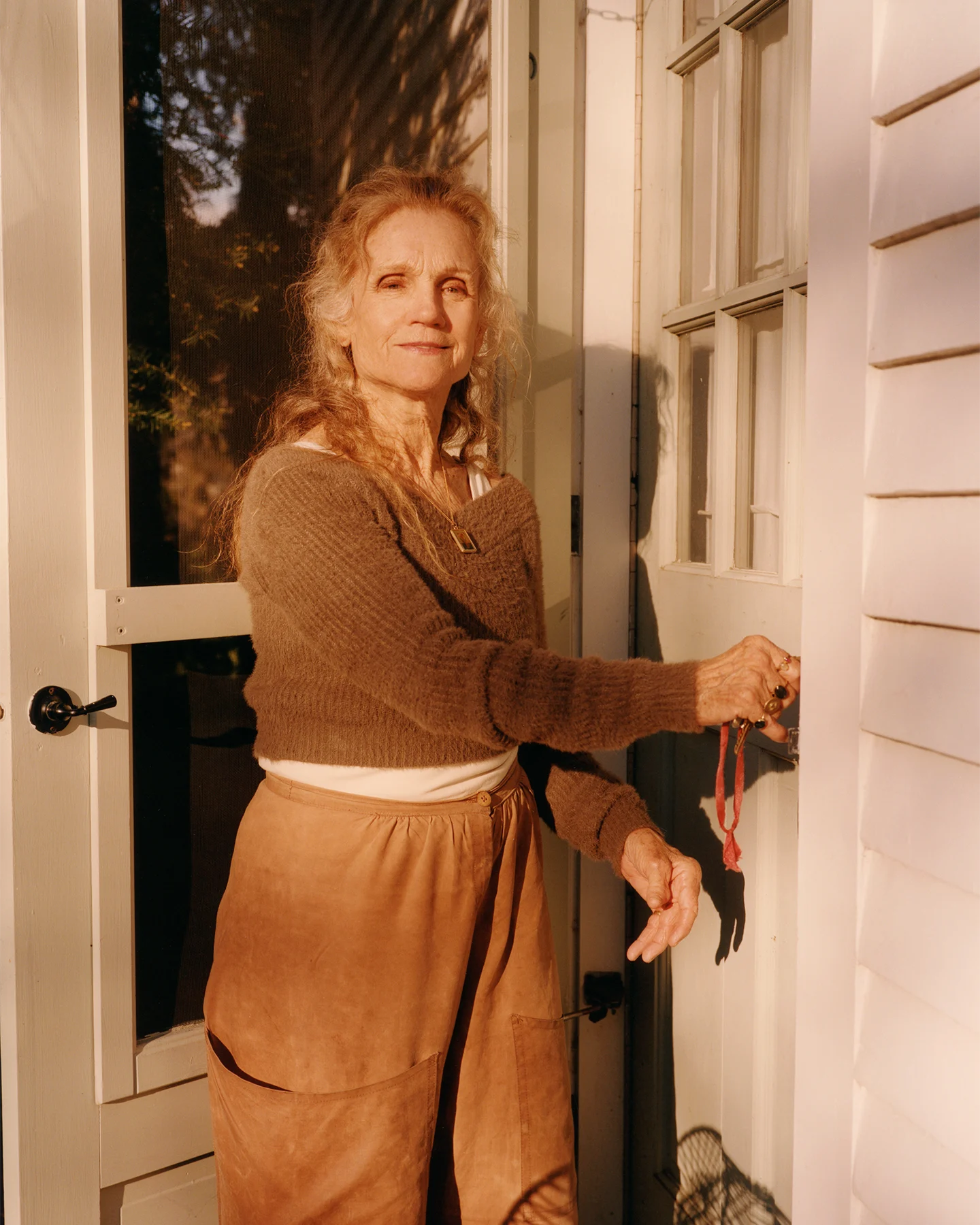
Edith Vonnegut outside her father’s writing room. It has been left largely as it was when he lived there.
The whole Vonnegut clan also got involved in local theater. At the Barnstable Comedy Club (the “comedy” is perhaps the fact that it was actually a theater), Jane would act in plays, and Kurt would build sets or direct or write plays. Now, in your private speculations on what it was like to be raised by Kurt Vonnegut, you have likely theorized it might involve sitting inside a cardboard box pretending to be a computer that has fallen in love with a woman—here you are correct. At age eight, Edie was tasked with doing just that in a stage version of what would become “EPICAC,” one of the short stories that Kurt would publish in his book Welcome to the Monkey House. As she sat in the box pushing out ticker tape, she remembers thinking, “I’m such a star. I’m the star! I am!” Edie is still involved with the Barnstable Comedy Club. “I feel like I’m kind of trying to live the way he did then,” she says.
Kurt wrote for his high school newspaper and wanted to study the humanities in college, but, scarred by the Depression and seeing science careers ascend, his parents insisted he study chemistry at Cornell. This did not go well, though Kurt’s familiarity with science clearly informed his writing. Later, lamenting the public denigration of science fiction in The New York Times Book Review, Kurt would say, "The feeling persists that no one can simultaneously be a respectable writer and understand how a refrigerator works."
He did not make the same career demands he had experienced when it came to his own children. Edie went to multiple art schools and now paints full-time. “I was never told to forget it, and that I'd be better off being a secretary or getting a job-job. None of us were pushed that way.” That’s why, she says, it doesn’t really make sense to her that one of Kurt’s most famous quotes is, “The arts are not a way to make a living...”
Edie Vonnegut
Artist
“He was grumpy, but he was equally completely playful and silly.”
But! The quote continues. “They are a very human way of making life more bearable. Practicing an art, no matter how well or badly, is a way to make your soul grow, for heaven's sake. Sing in the shower. Dance to the radio. Tell stories. Write a poem to a friend, even a lousy poem. Do it as well as you possibly can. You will get an enormous reward. You will have created something.” That seems to sum up the role art played in the Vonnegut household. Art, for Kurt, did end up being a career path, but that was never its highest purpose. That purpose was to be the foundation for a worthwhile existence. “It was just part of life,” Edie tells me. “It’s just what you do. You just use your hands and make stuff. That's the way I was raised, and it's all I've done.”
The Cape Cod property where Edie grew up and once again lives serves as a kind of living museum to the Vonnegut family ethos. Back at the Kurt Vonnegut Museum and Library, 1,000 miles away in Indianapolis, some of the most significant belongings now live there. There’s the Purple Heart he was awarded after surviving the firebombing of Dresden, the typewriter he hunched over for his three good hours every day, the “licorice stick” he would try to play when his writing was done. It’s an agent of activism—die if you have to, darling—running a youth writing program and offering copies of Vonnegut’s books to students in school districts that have banned them. And it, too, represents the passing of art from one generation to the next: founder Julia Whitehead came up with the idea for the museum in 2008 as she rocked her newborn to sleep; that newborn now mans the cash register of the museum gift shop.
Edie tells me she loves that the museum and library exist, especially because when Kurt did book events in Indianapolis during his lifetime, “often no one would be there, and the few people that did come were relatives who didn’t actually like or read the books but would show up to show familial loyalty. It now feels like he is finally appreciated in his hometown.”
Kurt Vonnegut once said, “A plausible mission of artists is to make people appreciate being alive at least a little bit.” It was something he instilled in Edie, who says she sees the paintings she now makes as “hopeful prayers” that she wants to “help you along.” But making art in the Vonnegut household wasn’t just to make other people appreciate being alive: it made the artists appreciate it, too.
Kurt Vonnegut Memorial Library, Inc.
The Kurt Vonnegut Memorial Library received a grant of $60,000 in August 2025 through Mellon’s Humanities in Place grantmaking area.
Related
Grantmaking history
Cultivating humanities in place

September 21, 2021
Humanities in Place Program Grants $15M+ to Organizations Doing Place-Based Work, Connection in Public Places