The West Virginia Mine Wars Museum
The West Virginia Miners Whose Stories Build a Museum
LocationMatewan, West Virginia, United States
Grantmaking areaPresidential Initiatives
AuthorMitra Bonshahi
PhotographyKristian Thacker for Mellon Foundation
VideoClara Haizlett for Mellon Foundation
DateAugust 25, 2026
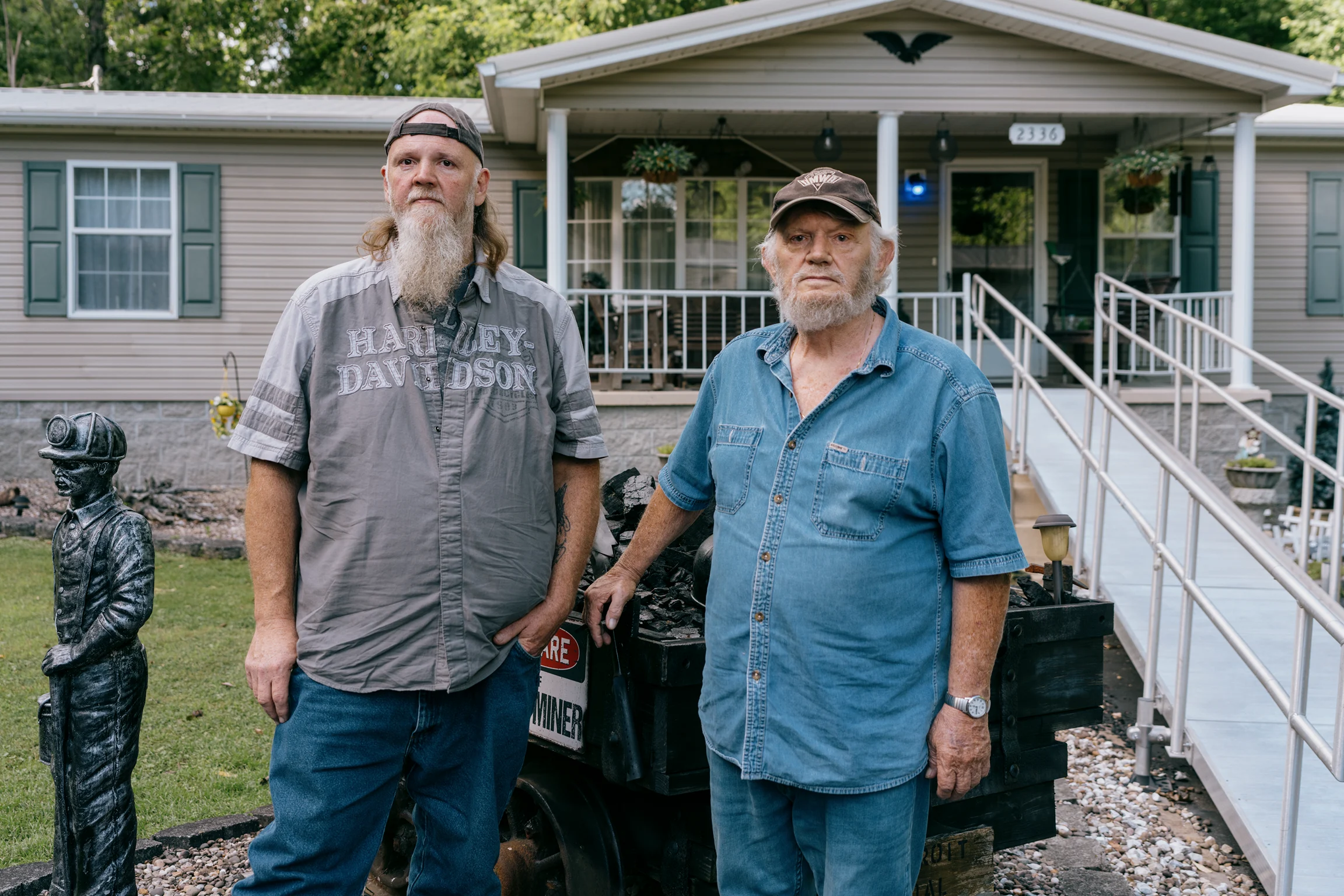
Robbie (left) and Jackie Berry, standing outside Jackie’s home in Racine, West Virginia. Their stories have been memorialized in the nearby West Virginia Mine Wars Museum.
Matewan, West Virginia, a city designated with multiple historical landmarks, holds the story of a battle that is often undertold in the teaching of American history, but is kept alive by people in the region.
In West Virginia near the Kentucky border, the Appalachian Mountains loom over the historic town of Matewan, a constant reminder of the vast, coal-rich earth of this area that once fueled an entire nation. At its height in 1940, there were more than 130,000 coal miners in West Virginia. Now, amidst a shifting industry, environmental change, and evolving energy needs, there are only about 21,000 mine workers left in the state.
Although the industry has declined, mining is still at the heart of daily life in Matewan, a town of about 400 people, where generations of miners still live. It’s also the site of a historic battle that erupted in May 1920 after a series of violent disputes across the region between coal companies and miners over workers’ rights and conditions. These so-called “Mine Wars” ultimately helped lead to mass labor reform in the US, impacting the lives of workers far beyond the hills of West Virginia.
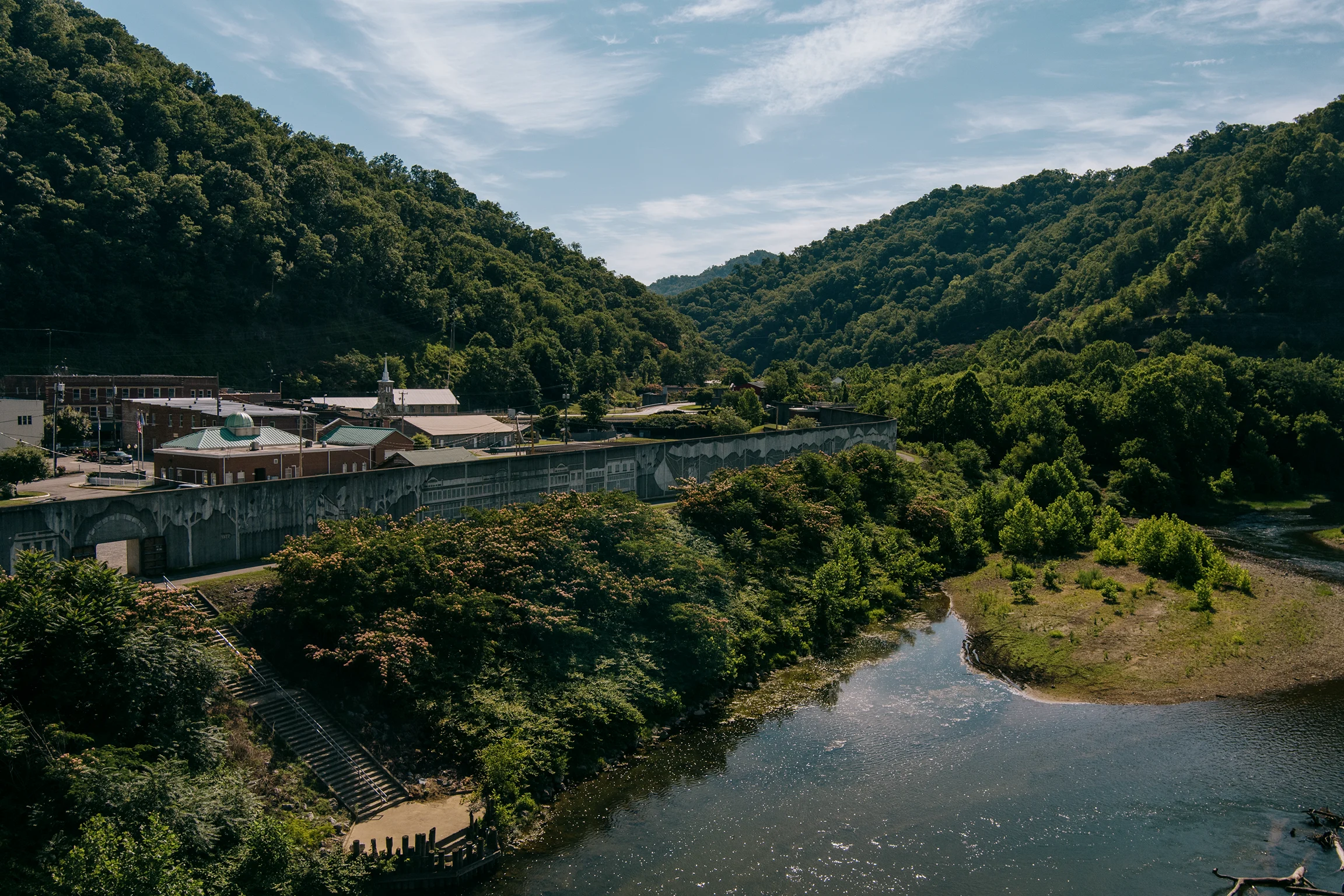
The town of Matewan, which sits next to the Tug Fork River.
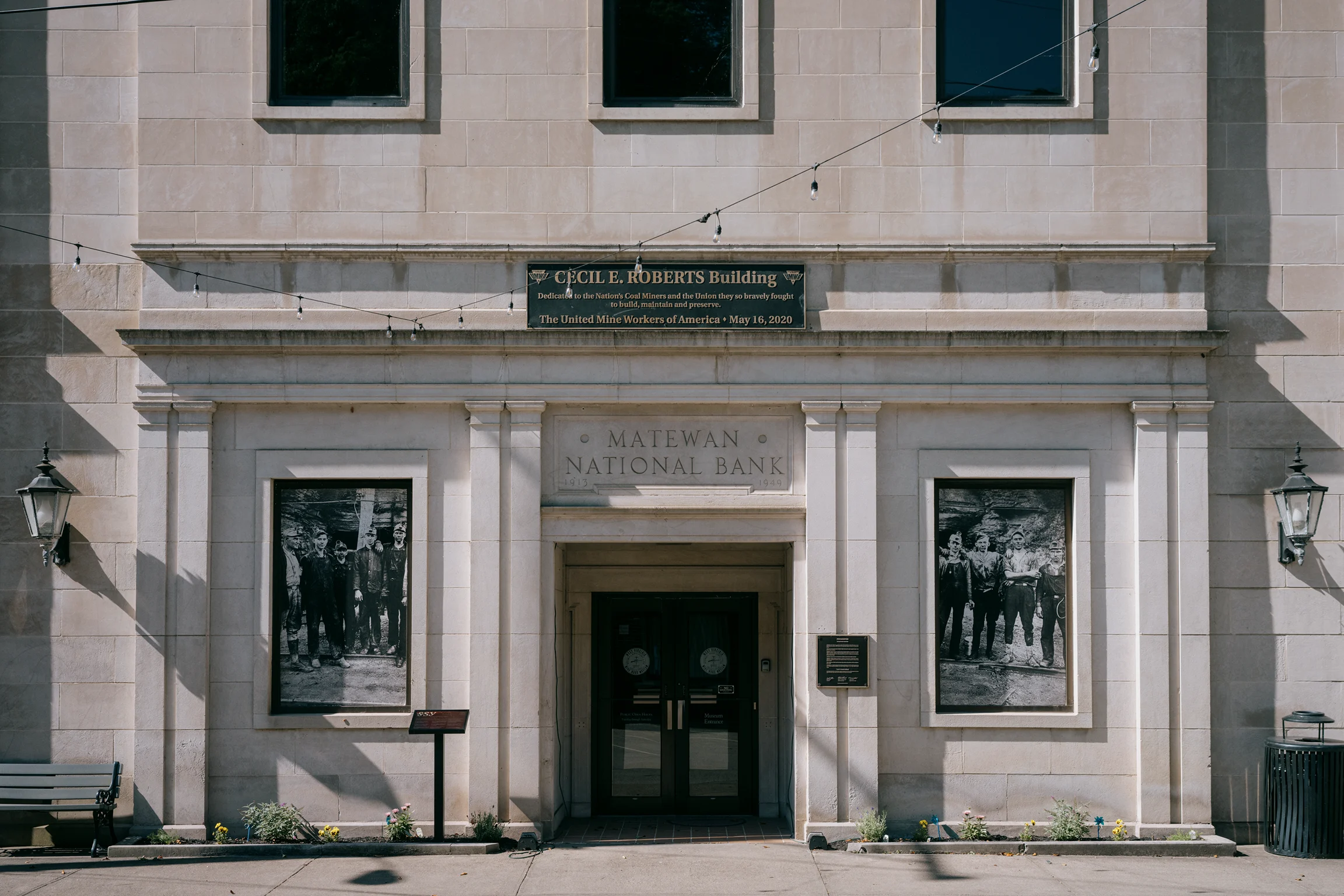
Today, just off the main road, Matewan has its own museum dedicated to preserving the stories of the region’s coal miners, the history of their unions, and their contribution to America. The West Virginia Mine Wars Museum, which is supported by Mellon, highlights an era not too long ago that was defined by union protection and the high-risk skill sets held by workers that were passed down through bloodlines. Founded in 2015 on the first floor of a building that once served as the town’s bank, it’s the first thing you see as you drive into town. Inside is the largest exhibition of Mine Wars history anywhere in the United States, featuring exhibits of archival photos and videos, first-person accounts, and historic artifacts donated by the hardworking miners of the community. It's the real-life stories of those who have lived and worked in the area that the museum wants to highlight.
One of its founders? A miner himself.
‘A Local Boy’: Terry Steele
Terry Steele is a fourth-generation coal miner. Along with his wife, educator Wilma Steele, and a grassroots group of historians, Steele co-founded the West Virginia Mine Wars Museum in 2015. After entering the mines on his 19th birthday in 1971, he spent 26 years navigating 11 different jobs, from general laborer to utility man, before retiring in the late 1990s. He now considers himself a hardened activist and an advocate for miners’ rights, especially given the health risks and dangers that come with the work. “Coal was never my friend,” Steele bluntly states. “I knew it would kill me. The graveyards are full of people who’ve been killed by coal.”
Steele understands that even if a miner dodges a fatal accident, the occupation extracts a toll through medical conditions like Coal Workers’ Pneumoconiosis (CWP), commonly known as black lung disease. It’s a progressive, disabling, and at times fatal illness caused by the long-term inhalation of toxic coal mine dust. According to the National Institute for Occupational Safety and Health (NIOSH), one in ten underground coal miners who have worked in mines for at least 25 years has the disease. Miners from central Appalachia, which Matewan sits in the heart of, have the highest rates of black lung in the nation.
Steele’s father, Alfred, died of black lung on his 71st birthday, just five years into his retirement after working 45 years in the mines. He spent his final two months on a respirator.
“It's like a fish being out of water. You’re just gasping for breath,” Steele says. “A lot of the families in the area have suffered the same thing that I had with my dad … people have made a big sacrifice for the rest of the country.”
Steele says he’s lucky. He was able to mine under better conditions because of his father’s generation, when unions fought for the right to speak up against workplace hazards without fear of retaliation. For that reason, Steele remains fiercely loyal to the brotherhood that kept him alive. A dedicated member of his union, the UMWA Local 1440 for over 50 years, he says: “I owe everything I have to the union. The regulations that people died for kept me alive.”
That sense of debt is exactly why Steele donated his own hard hat to the Mine Wars Museum, placing it alongside the broken helmet that once belonged to his father. These belongings join those of other miners, who, like Terry and his father, are steeped in the community’s rich history of mining work, passed down through generations.
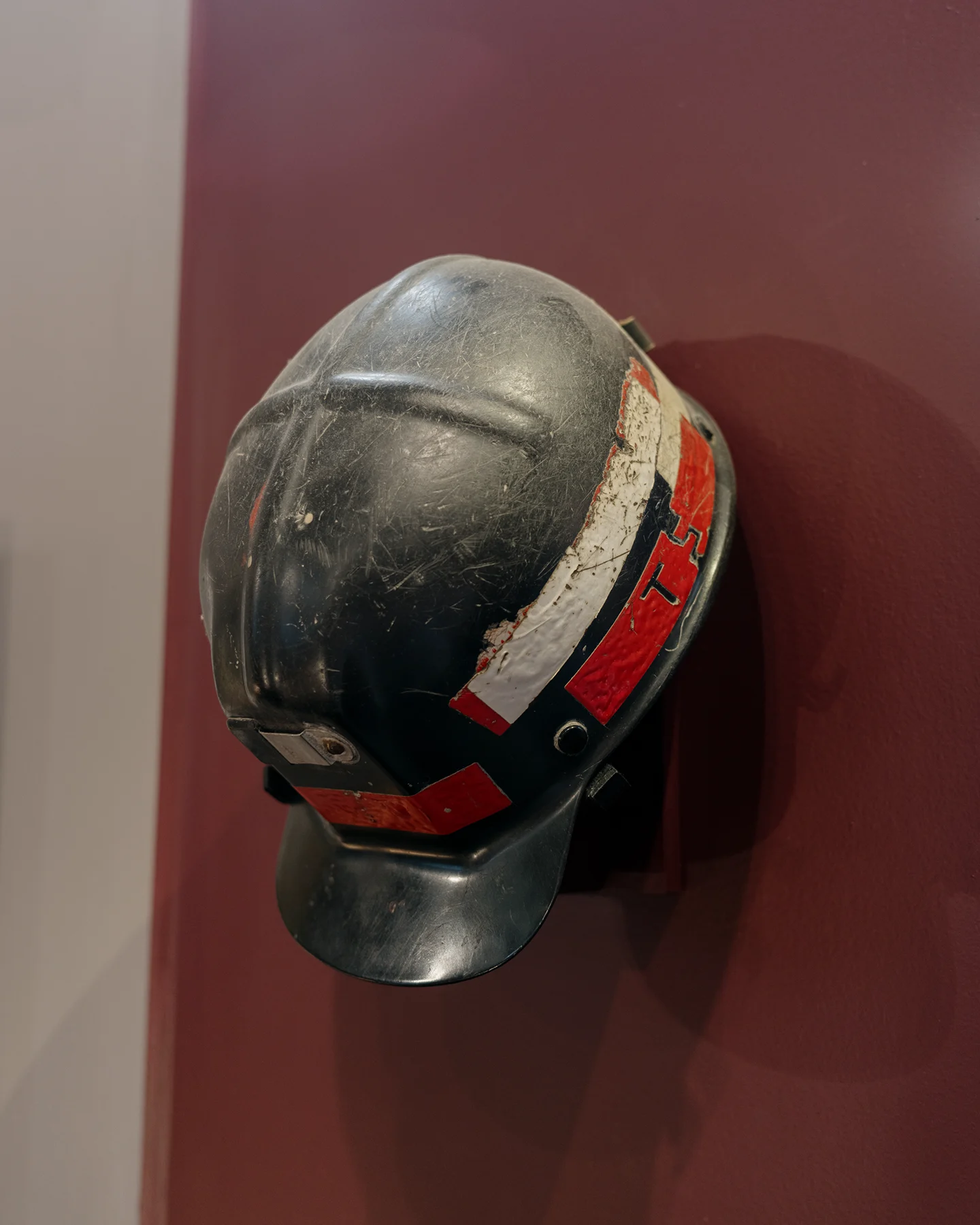
Terry Steele’s mining helmet on display at the Mine Wars Museum.
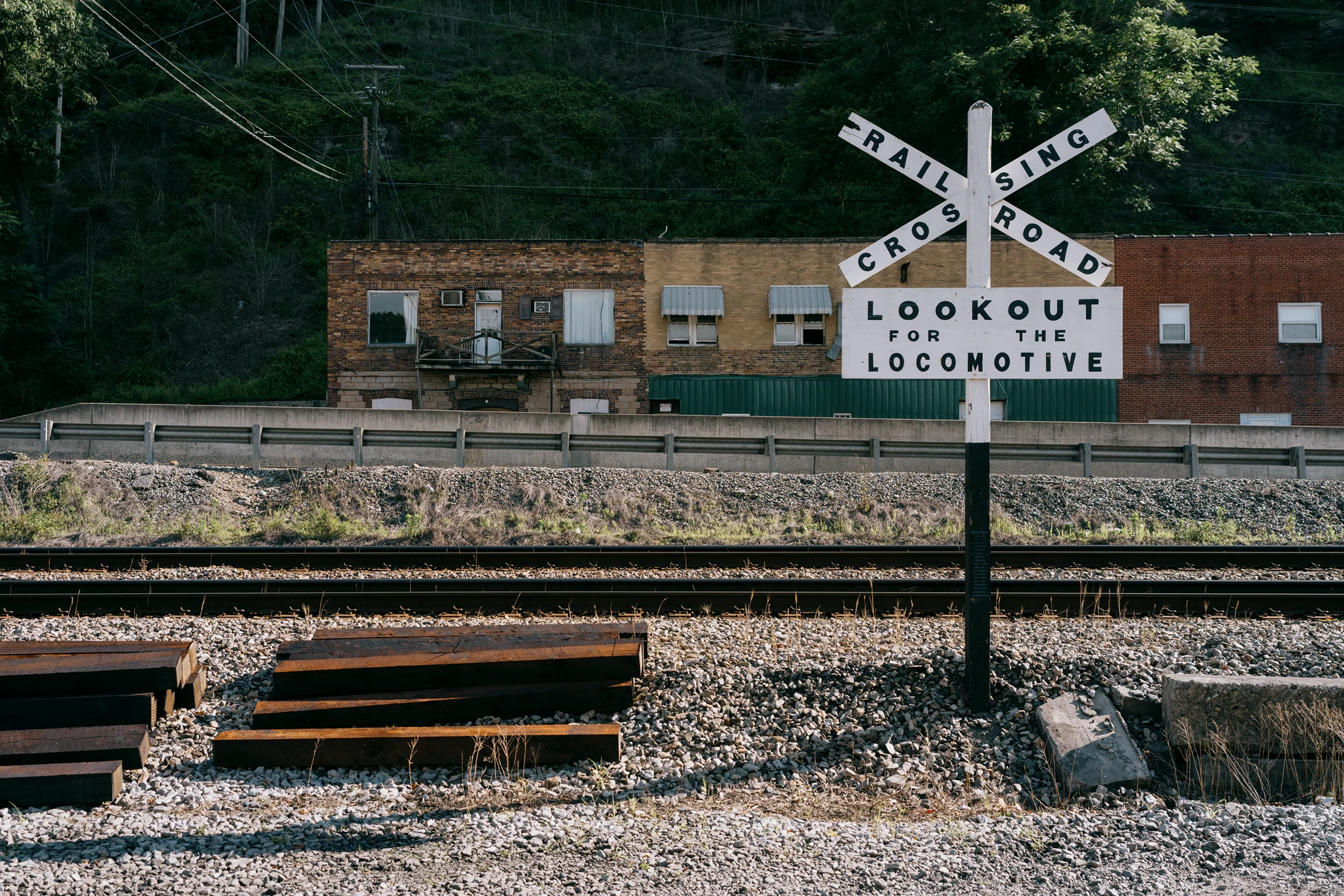
A railroad warning sign next to the train tracks in Matewan.
Father and Son: Jackie and Robbie Berry
Fathers and sons, like Jackie and Robbie Berry, tell a story of the toll of mining. Jackie is a retired 73-year-old former underground miner who began working on the mines in nearby Whitesville in 1973. Outside his home sit two decorated coal trucks that his son, Robbie, gifted him for his birthday. As a child, Robbie, 49, vividly remembers his father returning home after a long day of work underground. “He would always be wet and coal muddy,” Robbie says. “I can still hear him showering, blowing his nose … the coal dust coming out black.”
For 31 years, Jackie worked exclusively in union mines. Before the union, he says miners were often treated as expendable, working long hours and in unsafe conditions. Workers often stayed in unfit company housing and were dependent on company stores, which often charged higher prices. Being a “union man” changed everything. It meant Jackie was part of a powerful collective that had spent over 80 years fighting for the 8-hour workday, for time-and-a-half, and for the right to safety without fear of retaliation.
Jackie spent his final two decades in the mines as a roof bolter, a physically demanding job that required holding his arms overhead for 8 to 10 hours a day, a repetitive strain that eventually wore out both of his rotator cuffs.
“A lot of people didn’t like it. It was hard work. It was a dangerous job. But it was a high-paying job.”
Back then, he didn’t know the first thing about black lung. But years of drilling into the mine's roof exposed him to toxic coal dust, ultimately leading to his being diagnosed with the condition.
Yet he still remembers the work with fondness. “I just enjoyed it. You stayed busy and your time went quick. A lot of guys are way worse than I am. I’ve seen them with oxygen bottles, with wheelchairs. I’m one of the lucky ones,” he says. He thanks his local union for fighting for his pension, health insurance, and black lung benefits.
By the time Robbie graduated high school in 1996, the number of available jobs in the coal industry was already in decline. But in 2006, as his dad’s generation started to retire, Robbie was finally offered a spot in a “red hat” apprentice class. Robbie says he was lucky to be sent to his father's mine—a union operation. He worked the evening shift, often passing Jackie in the dark tunnels as he headed home. But the stability was short-lived. Robbie later bounced among different non-union mines until the last one shuttered its doors. Eventually, he took up carpentry; to keep working as a miner today, he says, he would have to drive a hundred miles a day for a job with no security.
Yet, just like his father, Robbie says he remains proud of his lineage and of what miners gave to the country. “I ain't no history buff,” he says, “but for your 40-hour work week, you can thank a coal miner. Your time-and-a-half, your Social Security disability, you can thank a coal miner.” Both father and son have not missed a single union meeting since they left, still choosing to show up to be among the men and women who spent their lives keeping each other safe.
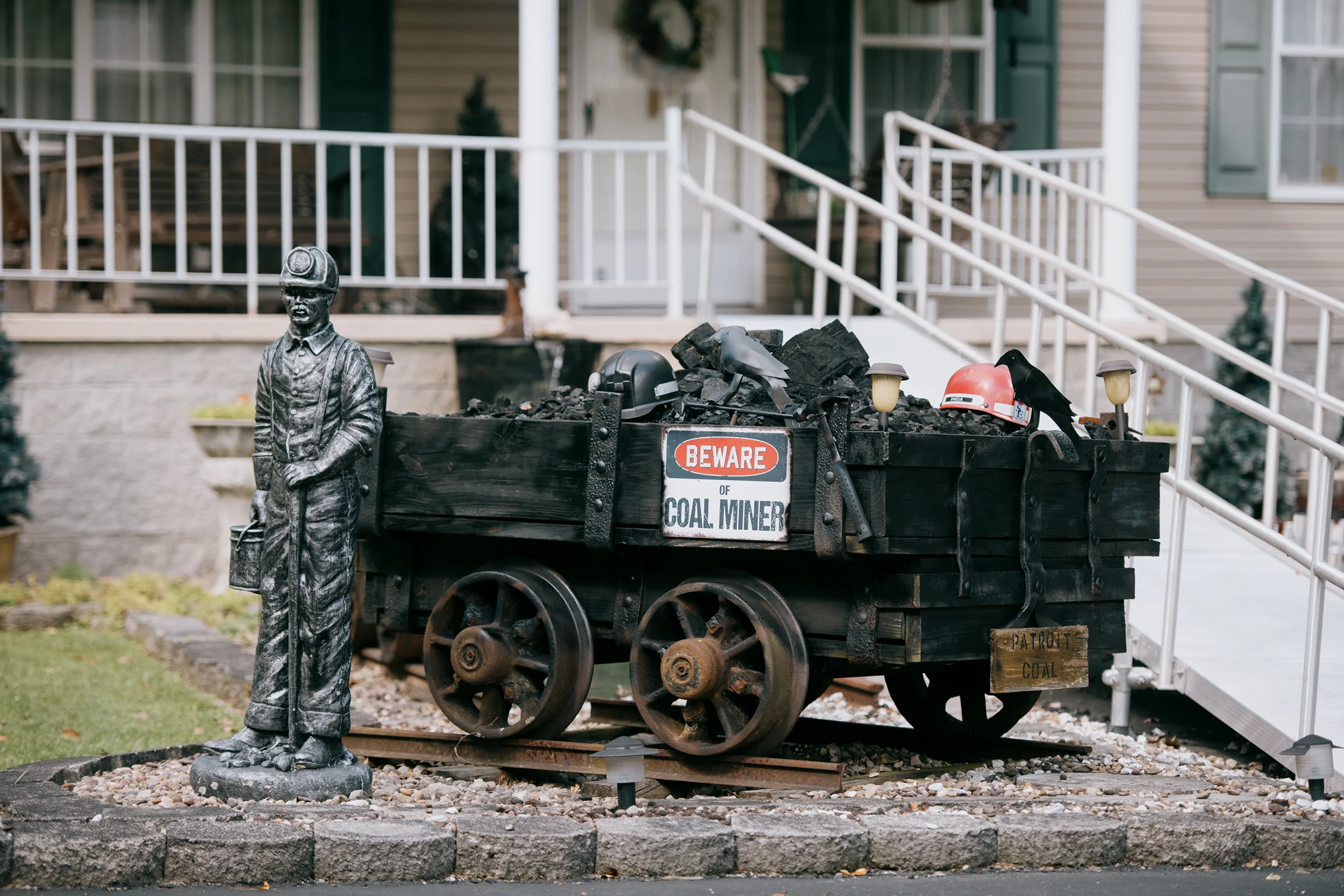
A restored coal cart that was given to Jackie Berry by his son Robbie Berry, sits outside of Jackie’s home.
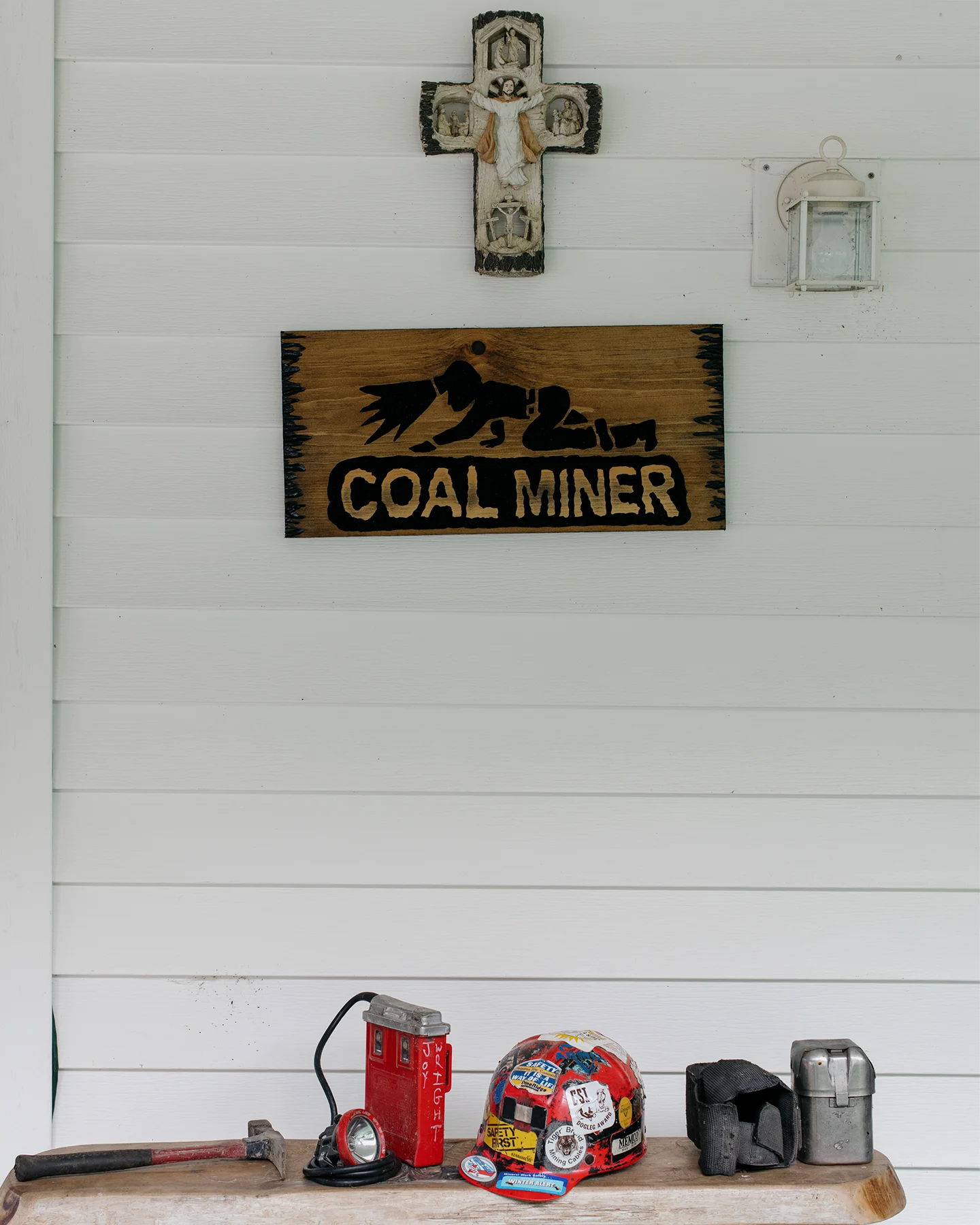
A selection of Joy Wright’s tools, including her hammer, light, “red hat” miner's helmet, and a self-rescue respirator.
‘Grandma of the coal mines’: Joy Wright
Joy Wright, 67, lives a ten-minute drive away from Jackie Berry; she joined the same mine as him in 1979, when she was 21. Then, a mother of a three-year-old, she was eager to join the workforce to make ends meet.
It was rare for women to work underground, but Wright, like her father before her, was driven by the promise of a decent wage. “I was making $7.50 an hour,” she recalls. “Now, that was good money. We got paid every week.” She followed her father’s path despite his initial disapproval. “He didn't like it a bit,” she admits with a sly smile, “until he started seeing my paydays and I was drawing more than him.”
The reality of the work hit her on her first day, when the roar of a dynamite blast deep in the mine shaft left her questioning her choice. “I can't handle this; I can't do this,” she remembers thinking. But when she saw that some of her male coworkers doubted if she’d ever come back, she held her ground: “I said, I need this job and I will be here after y'all are gone.”
Wright worked hard and, within six months, she traded her apprentice “red hat” for a “black hat,” which identifies an experienced, certified miner, taking great pride in painting it herself. She embraced the physical toll of the job, able to haul 100 pounds of coal without breaking a sweat. When she became pregnant with her second child, she worked the line right up until the day she went into labor.
Underground, she found a different kind of family, spending holidays at the local union hall, where she earned the nickname “the grandma of the coal mines.” But as the years went on, the stability she worked for started to erode. The medical benefits and reliable raises vanished as union mines disappeared.
Today, Wright is relieved that none of her children followed in her footsteps, though she keeps the mementos of her time working the coal seams—including her first hard hat—to pass on to them.
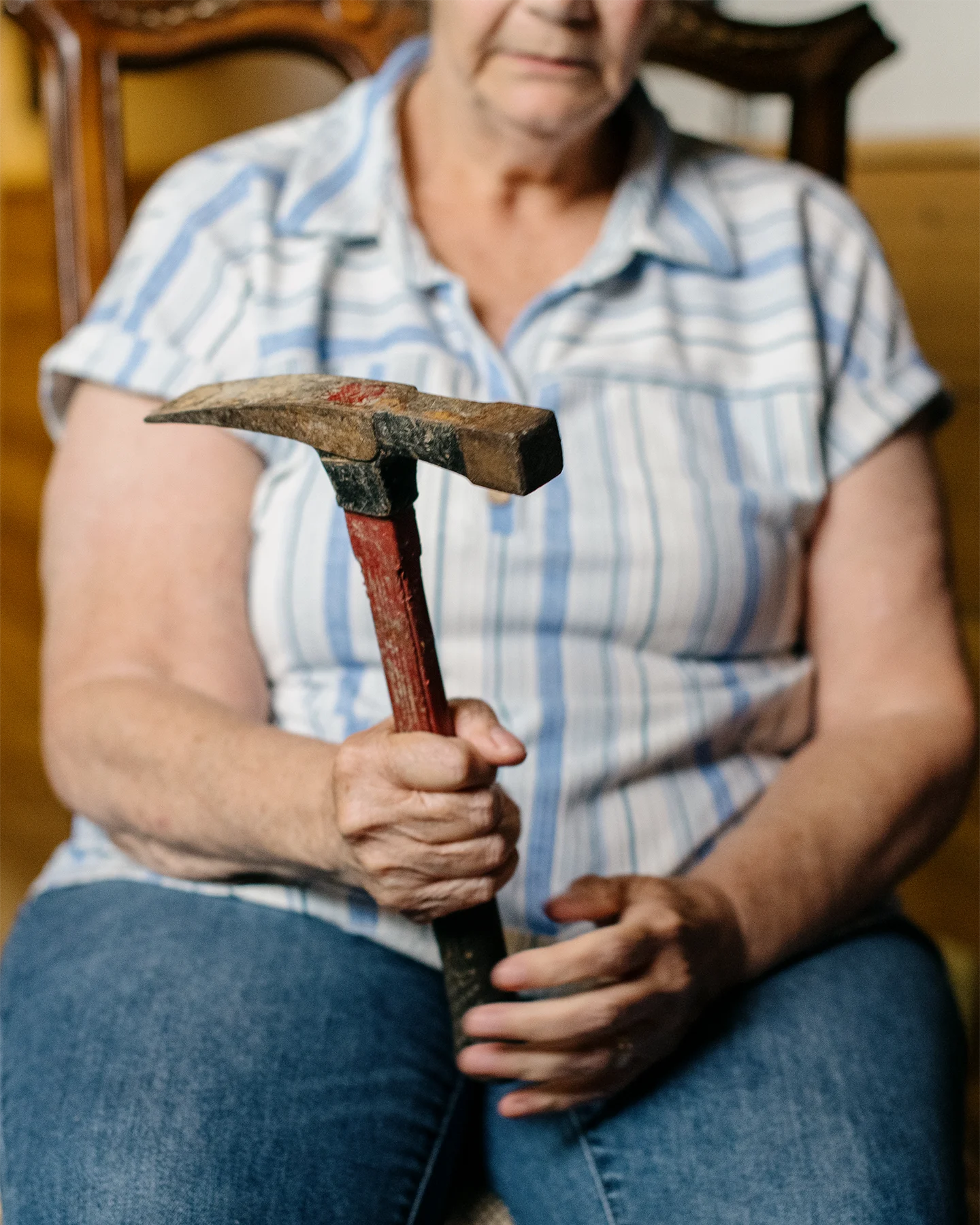
Joy Wright holds the hammer that she used every day in the mines.
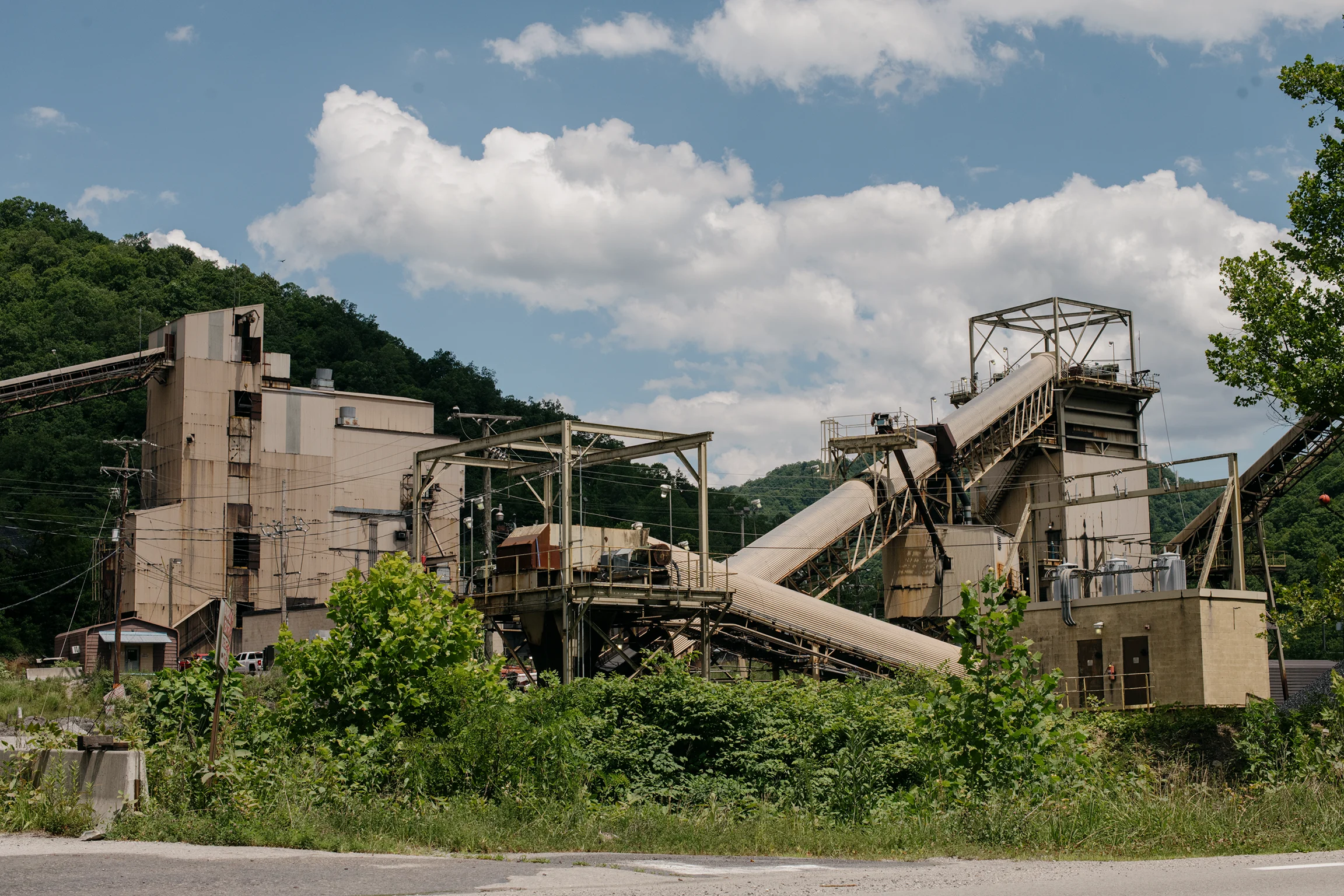
The Delbarton Preparation Plant, in Delbarton in Mingo County, West Virginia. Here mined coal is prepared for shipment.
Visitors from across the country can visit the West Virginia Mine Wars Museum in Matewan. “They need to teach it to the kids … what their grandparents or great-grandparents went through,” says Jackie Berry, who is particularly heartened by younger visitors.
Yet also on any given day, there are old-timers walking the floors, trading stories and reliving their days underground. The museum is a place to catch up, to look back, and to ensure that the next generation hears how it really was. That, says Steele, is why he and others worked so hard to bring this place to life.
“In order to grow and change,” he says, “you’ve got to break that wall down. … This is your history. Be proud of it.”
West Virginia Mine Wars Museum
The West Virginia Mine Wars Museum was awarded $1,500,000 in June 2025 through the Presidential Initiatives grantmaking area.
Related
Presidential Initiatives
The Monuments Project
America’s History and Future
July 1, 2026