Arts and Culture
Frontera Culture Fund

In October 2024, Mellon announced the Frontera Culture Fund, a $25 million initiative that will amplify the voices of artists and cultural leaders who continue to shape the borderlands as a place of beauty, radical imagination, and collective action.
Program Associate Casandra Hernandez Faham details the new fund, outlining how an “unbordered” approach to arts and culture funding can sustain greater creative expression and facilitate stronger transborder cultural networks.
_________
What is your personal connection to the US-Mexico borderlands?
I come from generations of people who made their lives in the rural borderlands of Sonora, México. My family on both sides is from Magdalena de Kino, about an hour south of the border, and I spent a lot of time there visiting my grandparents when I was growing up. I was born and raised in Hermosillo, and my family immigrated to Phoenix when I was 18. Before joining the Mellon Foundation in 2020, I was a culture worker and arts producer in Arizona, where I organized artistic and cultural collaborations in the Sonoran Desert borderlands for over a decade.
The Frontera Culture Fund focuses on projects in the US-Mexico borderlands. Can you speak to the current state of philanthropy—especially for arts and culture work—in this region? How is the Frontera Culture Fund additive to, or different from, funding to date?
The US-Mexico borderlands are one of the regions least funded by arts and culture philanthropy in both countries, despite an abundance of artistic production and cultural practices. Public funding for the sector is also very minimal. Historically, many philanthropies in the US have invested in a trickle-down model of support that has neglected a vast ecosystem of small organizations and artist-led projects that often do not intersect with the nonprofit arts sector. Lacking sufficient government and private support, many artists and culture workers finance their work through community-led fundraising, mutual aid networks, commercial sales, and—as is often the case—their personal income. This financial precarity affects not only their livelihoods but also their ability to sustain cultural spaces and projects in the long term.
One of the central questions that we’ve been asking since the start of our work with the Frontera Culture Fund is: What would it take to care for the alternative and adaptive structures—the artist collectives, community cultural anchors, and informal networks—that sustain and renew imagination in the borderlands and beyond?
The Frontera Culture Fund is designed to provide multiyear funding to artists and cultural leaders to sustain their practices, to organizations and projects to deepen their work in their communities, and to networks and coalitions to constellate ideas regionally and across the border. The fund supports projects both in the US and in Mexico, and we’re working to increase binational fiscal sponsorship so that more artists and culture workers can access funding.
Casandra Hernandez Faham
Program Associate, Mellon Foundation
“[Our grantees] are reclaiming lands, cultures, and languages. And they’re imagining and enacting “unbordered” ways of being that have relevance beyond the border region.”
The US-Mexico border holds a perennial place in the national news cycle and is therefore top of mind for many across the country. Are there misconceptions or misrepresentations that organizations supported through the fund are trying to address or counter? What would grantees say people should know about the border that they don’t already?
The US-Mexico border is one of the most militarized borders in the world. It is a manifestation of centuries of colonization, land theft, and discriminatory policies that continue to define who is worthy of protection and belonging. And yet, as our grantees know well, the border region is not just a site of transit shaped by immigration policy and hateful political and media stories. It is also an actual place, where people have deep cultural histories rooted in a land that was once boundless.
Many of our grantees are part of a lineage of artists, culture workers, and community organizers who have long shaped the borderlands as a place of radical imagination and collective action. They’re fighting oppressive ideologies and power structures. They’re reclaiming lands, cultures, and languages. And they’re imagining and enacting “unbordered” ways of being that have relevance beyond the border region.
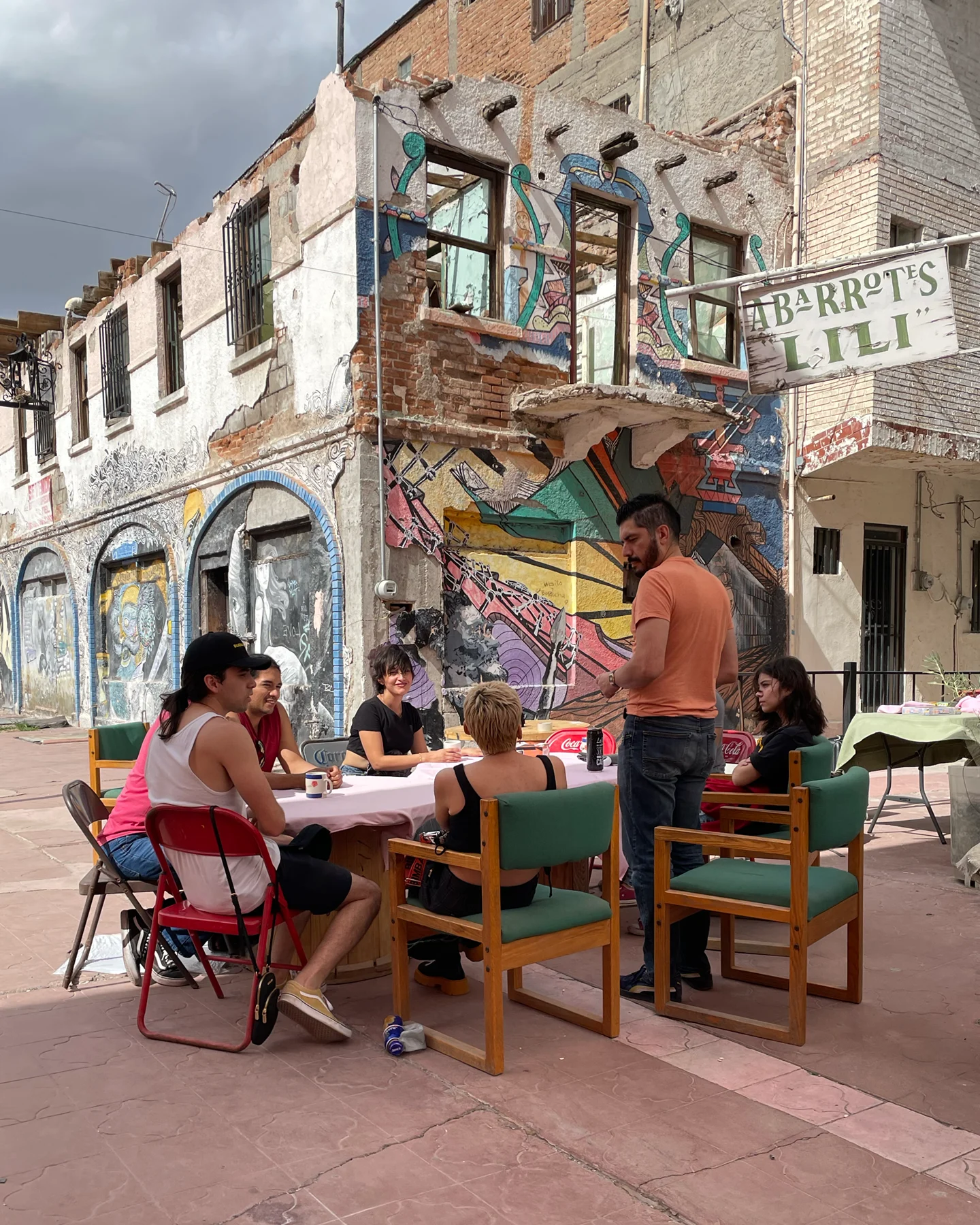
For example, grantees like the Haitian Bridge Alliance (HBA) are creating a culture that values and defends Black migrant lives. The Rio Grande International Study Center is using artistic and cultural strategies in the binational Laredo/Nuevo Laredo community to protect the Rio Grande. The Carrizo Comecrudo Nation of Texas (Esto’k Gna) is standing in opposition to the extractive industries and border militarization that are destroying their sacred lands, burial grounds, and critical ecological landscapes near Port Ysabel and Boca Chica. Edificio de los Sueños, a cultural center and solidarity economy project in Ciudad Juárez, is using the concept of ’the right to the city‘ to reclaim public space in the face of state-sanctioned violence and gentrification. And artist-led projects like Azul Arena (Ciudad Juárez), Planta Libre (Mexicali), and the MexiCali Biennial (California/Baja California) are vital platforms that provide critical support for binational multidisciplinary research and contemporary artistic production.
How is the Frontera Culture Fund structured, and what are its main priorities?
We’re committing $25 million to this fund and working to build long-term relationships on both sides of the US-Mexico borderlands and in tribal communities. Our main priorities are to support the builders and keepers of borderlands imagination and culture, to invest in organizations that serve as community anchors for the cultural life of border communities, and to nurture regional and transborder collaboration.
We’re providing multiyear grants to a diverse range of organizations and projects that integrate the arts with important community needs—such as racial and climate justice, Indigenous cultural sovereignty, migrant and refugee rights, LGBTQ+ rights, public memory, and more. As we do this work, we’re attentive to the transnational racism that continues to erase and exclude Black and Indigenous histories and cultural contributions in the borderlands.
Casandra Hernandez Faham
Program Associate, Mellon Foundation
“[The border region] is also an actual place, where people have deep cultural histories rooted in a land that was once boundless.”
Because the Arts and Culture program area is supporting organizations across states and across the border, there is a network-building component to the fund. What is the value of a stronger network of organizations on the border?
Many of our grantees work perpendicular to the border, nurturing cultural flows that move through increasingly militarized and surveilled spaces. And they’re constellating ideas and sharing resources regionally and across the border through diverse networks. Some of these networks are organized around specific outcomes or projects; others are looser and more difficult to map. The question of how to support regional and transborder networks is a very important one because there’s a need for more knowledge exchange along the border. Something that we’ve learned from our conversations with artists and culture workers is that many of them sustain strong binational networks but find it challenging to organize horizontally along the border.
For example, our grantees include the Art Fund Transfronterizo/El Fondo Transboder, which provides grants and mentorship to Mexican and US artists who work binationally in Ciudad Juárez and El Paso. We also support La Red de Agentes Culturales Comunitarios del Norte, which is a network of artists and culture workers from the Mexican border states of Tamaulipas, Coahuila, Durango, Nuevo León, and Chihuahua that are shaping new forms of regional collaboration, knowledge exchange, and cultural production in the Mexican borderlands.
What did it look like to develop this fund? Who was engaged in the process?
Mellon’s Frontera Culture Fund is co-led by staff and collaborators from the region, working in relationship with borderlands artists and cultural leaders. Mellon Program Officer Deborah Cullen-Morales and I have benefited tremendously from working with two brilliant cultural organizers, Raquel de Anda and Leilani Clark. Raquel is an independent curator and cultural producer from Laredo who has supported cultural organizing for immigrant rights and climate justice. Leilani is an Afro-Indigenous (Santa Clara Pueblo/Diné-Navajo) filmmaker, poet, and performance artist from Tucson who has been organizing for immigrant rights and cultural education in Arizona public schools since her youth.
We’ve designed the fund in conversation with artists and culture leaders through site visits and convenings in communities along the border, from Mexicali to Brownsville. We’ve been learning about ecosystems of cooperation, about local priorities and struggles, about power relations and absences in the discourse, and about what it would mean to truly support the people and places that make borderlands imagination and culture thrive.
How can organizations inquire about receiving support from the fund?
We will announce a call for proposals in 2025 that will be open to organizations, projects, and networks in the US and Mexico who are not already Mellon grantees. They will be able to apply for flexible multiyear funding.