
Report
What’s in a Place? More than Geography
For decades, the story of America’s historic places has been told in bits and pieces. Information about them sits scattered across agency hard drives, historic commission meeting minutes, and decades-old surveys. While thousands of properties have been formally designated as historic, we lack a nationwide understanding of what they are, where they are located, and what rules protect them.
That’s why we’re building the National Preservation Atlas (NPA): the first-ever consolidated, public repository of information about the country’s historic places.
In addition to mapping historic properties, we’re documenting the regulatory frameworks and place-based incentives that govern them. Without this information, we can’t craft good policy. We can’t adequately communicate preservation opportunities. We can’t even understand where our history is located. The NPA is working to change that.
Last month, we launched our interactive map displaying all of the mappable properties on the federal, state, and local historic registers in Connecticut and Nevada. Right off the bat, the data has exposed the two states’ stark difference in approach to preservation. Though Nevada is twice as large as Connecticut, its acreage designated historic is less than half of Connecticut’s. In Connecticut, there are more than 4,800 designated historic properties, but fewer than 500 are mapped in Nevada. As we spend the next several years expanding our geographic coverage, we’re eager to uncover new findings like these.
To build the NPA, we’ve utilized many of the same strategies our organization has used to build the National Zoning Atlas, which digitizes information about zoning in more than 30,000 American zoning jurisdictions. In both projects, we apply a rigorous, standardized methodology to intake, clean, and georeference data that comes in many different formats. For the NPA, we collect information about properties’ location, relevant time period, type (building, structure, site, object, or district), and historical significance.
Sounds straightforward, right? Not so fast. Our work so far illustrates the challenge. To understand historic properties’ significance, we typically review nomination forms that explain why the property deserves to be placed on a register of historic places. These forms are often handwritten or illegibly scanned, which makes it hard for us to identify why a place was deemed significant in the first place.
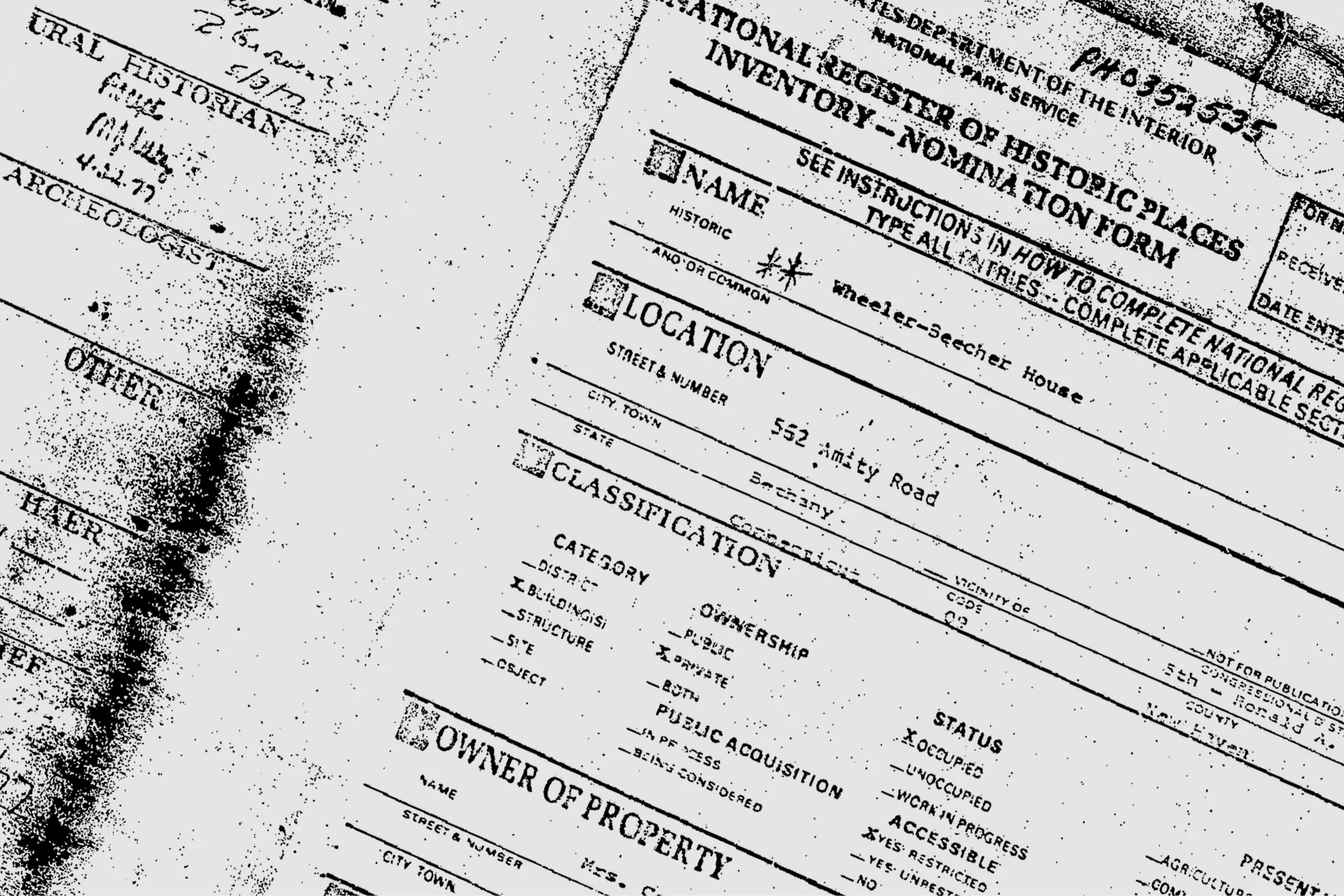
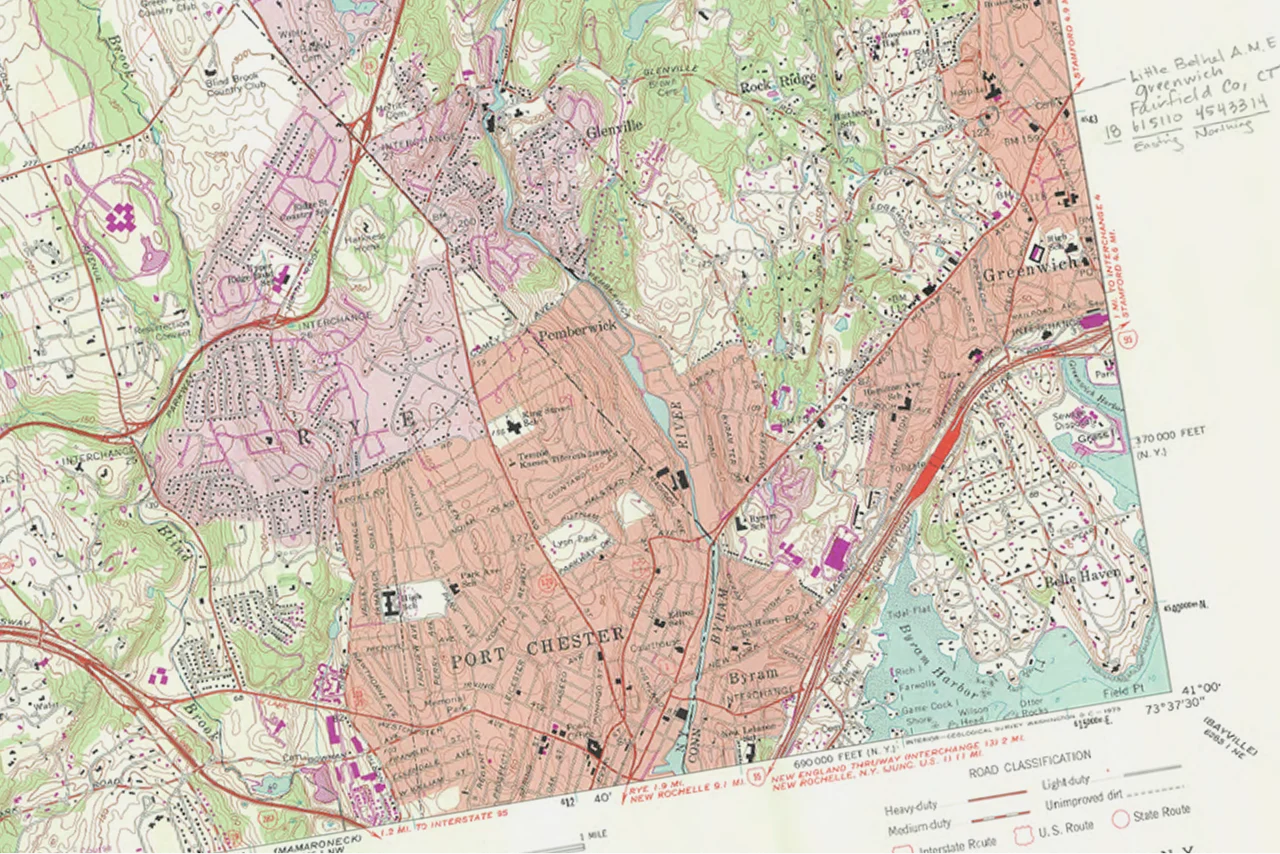
As for the maps necessary to digitize the property’s location for the NPA, these, too, are sometimes hand-drawn and difficult or impossible to read. Sometimes, a map doesn’t exist at all. We can usually work out the boundaries when the nomination form includes a “metes and bounds” section describing the property in words using distinctive landmarks, topographical features, water bodies, or streets. But there are situations where we have to be more creative—or even give up. Case in point? The nomination form for the Cream Hill Historic District in Cornwall, Connecticut, says “400 acres nominated… some confusion as to what area should be nominated. Otherwise fine.”
So far, we have uncovered—and either noted or corrected—hundreds of issues: deciphering initially illegible text; ascertaining accurate locations from online searches and secondary sources; and culling properties erroneously included in a historic register. We have also identified many buildings that have been demolished but not delisted from their registers. In a way, we’re starting the long-overdue process of systematic quality control on the data about designated properties, which forms the foundation of the historic preservation movement.
In addition to mapping the properties, we’re also mapping where laws protecting historic places apply. That means homeowners wondering if their home qualifies for a state tax credit can go to the NPA and apply “advanced filters” to find out.
People interested in history can pull up a specific property’s “significance card,” showing the type of property, register(s), time period, designation year, and statement of significance. And elected officials can see exactly how much land is subject to designation or various legal protections within a chosen jurisdiction—and use that information to inform their policymaking.

Sara Bronin
Founder, National Preservation Atlas
“The NPA will show that history isn’t just in Washington D.C. or colonial New England. It is everywhere, and it belongs to everyone.”
The hope, too, is that the NPA can serve a vital utilitarian purpose. For architects, planners, developers, and government agencies, the current lack of data is an enormous source of inefficiency. When a new infrastructure project is proposed, or a housing development is planned, the identification phase for historic resources can take months of manual research.
By providing a synthesized map of the location, number, and nature of most historic resources, the NPA can facilitate protection before the bulldozers arrive. We recognize that the NPA cannot substitute for Tribal consultation; nor will it map vulnerable archaeological sites or sensitive cultural properties associated with Indigenous peoples. But it can still help preservationists move from a reactive posture—scrambling to save a place at the eleventh hour—to a proactive one.
The NPA can also help property owners take advantage of the billions of dollars available in federal and state tax credits and grants designed to support the rehabilitation of historic structures. Often, property owners don’t know they are eligible for these incentives. They may not realize their 1920s bungalow or old factory qualifies for funding. The NPA notifies owners of potential eligibility with a click of a button. It has the potential to spur more preservation activity, employing more tradespeople and benefiting local economies.
As the NPA grows, we will learn more about how historic preservation works. We will be able to review housing production in historic districts from San Francisco to Raleigh to Chicago. We will analyze flood zones already shown on the NPA public map to assess risk in downtown Annapolis or the French Quarter. We will understand whether designated assets cluster in richer, less diverse areas, as some say they do.
Using our textual, geospatial, and legal analysis, we can combine geographies and compute acreage, grounding our findings in the real world. We can also create a clear, national picture of whose history is being protected and—just as importantly—who has been left out. During our work in Connecticut, we have found more recent nominations recognizing Black history. But for decades this history went unacknowledged in nomination forms—or, worse, enshrined classist biases, like the nomination we found that says “more important is the fact that the use and occupancy of the area has remained much the same since its period of peak development… largely inhabited by families whose social and economic status parallels that of the original occupants.” The NPA will enable us to surface the way our “official” registers tell stories, and understand how to make those stories more complete.
Finally, and importantly for me as a legal scholar: the NPA will enable systemic assessments of preservation law itself. By mapping not just the sites, but the legal protections they receive, we can analyze the nature, utility, and impact of preservation-related regulations across different places and landscapes. That data will allow for more honest, nuanced conversations about how preservation works, and how we can better align it with present-day needs.
Preservation is often perceived as an elitist or exclusionary practice—something that happens behind closed doors. By mapping where history happens in a clear, accessible interface, we can invite the public into the conversation. Through the NPA, we are making our history visible, our regulations transparent, and our future more grounded in the stories that made us who we are today. The NPA will show that history isn't just in Washington, D.C., or colonial New England. It is everywhere, and it belongs to everyone. I invite you to follow our progress as we fill in the map—and we use it to expand public understanding of our shared heritage.