Behind the scenes
Rescuing the Nation’s Stories One Tape at a Time
Public radio and television have become a treasure trove of culture—and an ongoing record of the American story. But decades worth of content is now at risk.
Today, longtime public television affiliate GBH and the Library of Congress are working together to safeguard an astounding collection of public programming for future generations.
An early milestone in public media was in 1949 when a Pacifica-run radio station by the name of KPFA in Berkeley, California, began operating as the first listener-supported station in the US.
At the same time, some 2,000 miles away, New York City’s flagship radio station, WNYC, started shipping story reels to other public radio outlets in an early example of news syndication. In 1953, public television followed suit when KUHT launched its first broadcast at the University of Houston as the first noncommercial educational station in the country.
Public media has grown exponentially ever since. There are now hundreds of public radio and television stations nationwide that have produced upwards of 100,000 hours (and counting) of original programming each year on everything from civil rights to education to climate change to culinary innovation—all national topics as vital today as they were in the mid-century when broadcasting began.
From Maine to Alaska to the Gulf of Mexico, public media has also produced compelling and important stories by local reporters who’ve highlighted how residents have engaged with contemporary issues and challenges through the years.
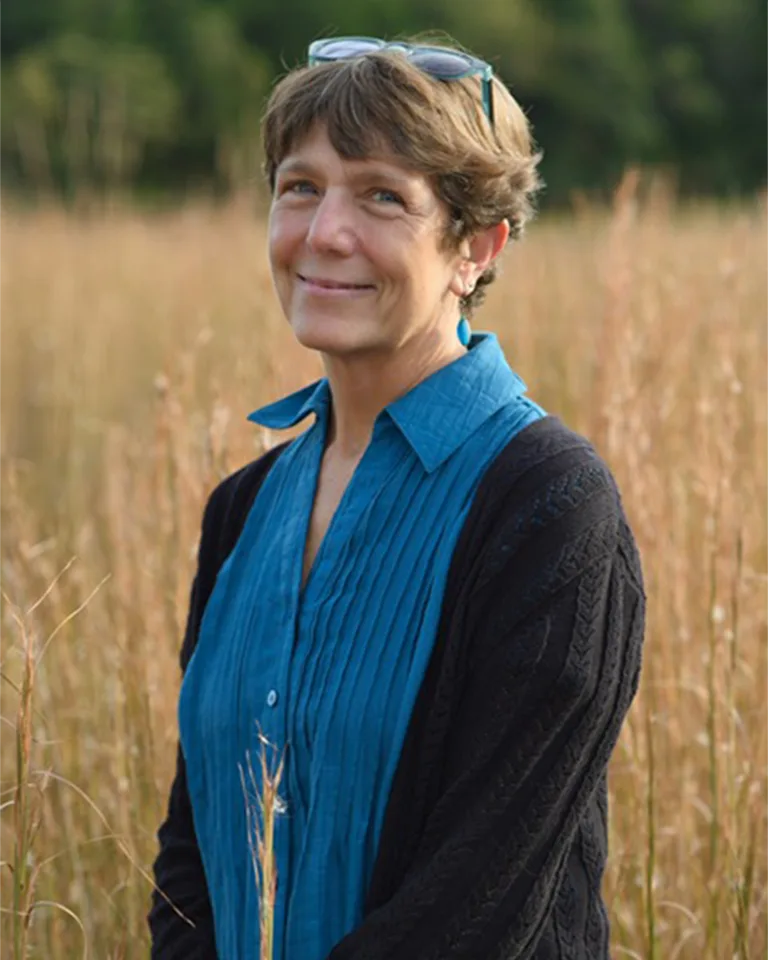
Karen Cariani
Project Director, American Archive of Public Broadcasting
GBH Boston
“When I look at the Archive, I really do think that it represents a quilt work of our communities across the country.”
“History is cyclic. We’ve got a lot of the same social issues that we’ve had for the last forty years,” says Karen Cariani, director of GBH Archives and project director of the American Archive of Public Broadcasting (AAPB). Referencing the breadth of materials in the Archive, she explains, “Local presentation is different, but the issues are the same.”
Until recently, there were startlingly few ways of accessing the troves of public media material that have helped shape our national identity and our understanding of America’s cultural evolution. That began to change when, in 2013, the Corporation for Public Broadcasting (CPB) designated GBH and the Library of Congress as the permanent stewards of the AAPB, authorizing these partners to take up the gargantuan task of digitizing and preserving collections supplied by public media organizations from across the country.
Alan Gevinson, project director for the AAPB at the Library of Congress, says much of the broadcast content they are working to preserve was groundbreaking for its time, and is still revelatory today. In the late 1960s, for example, the Kerner Commission, established by President Johnson, called out mass media for failing to “analyze and report adequately on racial problems in the United States.” In response to the commission’s report and to public pressure, over the next decade urban and rural public broadcasting stations across the nation began to create an array of programs produced by, for, and about Black, Latinx, Chicano, Puerto Rican, and Native American communities, among other underrepresented groups.
Adding to the challenges associated with the sheer quantity of material they need to acquire, Cariani, Gevinson, and their colleagues must contend with the switch from analog to digital recording, which has rendered old tape formats—already vulnerable to decay and deterioration—completely obsolete. Meanwhile, limited personnel, space, and funding resources have imposed additional barriers to making the archives of even a single station accessible in perpetuity.
If these materials remain undigitized and are simply left to time, historians and archivists won’t be the only ones who will lose.
Jordan Rhym was not unfamiliar with today’s public media when she became an intern at the Library of Congress. Currently a graduate student who is earning a master’s degree in science information at the University of Michigan, Rhym has a particular interest in digital archives, and was eager to dive in.
That interviews with civil rights icons like Stokely Carmichael and James M. Lawson Jr. would be included in the archive didn’t surprise Rhym. What came as a welcome shock was an hour-long 1967 documentary produced by New York City’s Thirteen WNET called “Where Is Prejudice?” which features a group of twelve college students of different racial, religious, and ethnic backgrounds discussing their own assumptions about prejudice.
The students in “Where Is Prejudice?” spoke with a candor and fearlessness that struck Rhym as powerful—and unusual in today’s context.
“It captures language at the time—how people were spoken about, and opinions. It became such a focal piece in my internship.” The young people featured in the documentary made remarks to each other that may have felt harmful, says Rhym, but what she saw from a conversation among young people living nearly sixty years ago was a willingness to push through the discomfort and meet somewhere in the middle.
“Where Is Prejudice?” left Rhym feeling hopeful. “This is exactly what needs to be in these archives.”
In California, Radio Bilingüe has been capturing Latinx voices and stories for over four decades. “We were one of the first stations founded with the express purpose of giving a voice to people in our communities,” says Samuel Orozco, the news and information director of the Hispanic public radio network, which first began broadcasting under the name “La Voz que Rompió el Silencio/The Voice that Broke the Silence” in 1980.
Radio Bilingüe had participated in an earlier archiving project with support from the Corporation for Public Broadcasting. Now, says Orozco, they are seizing this new opportunity to expand his network’s output through the American Archive so that others can utilize and learn from Radio Bilingüe’s cache of original material, which amounts to a significant national legacy.
“Latino pioneers—Kika de la Garza or Willie Velasquez, who were the champions of voting rights. Federico Peña, who became the first Latino in Clinton’s cabinet, or Antonia Novello, the first Latina surgeon general.... Those were some of the voices that we were able to tape,” says Orozco. “By bringing those voices to life again, we were able to hear part of the story of the rise of Latinos in the US—from the days when we used to be a few million, to today, when we are more than 65 million.”
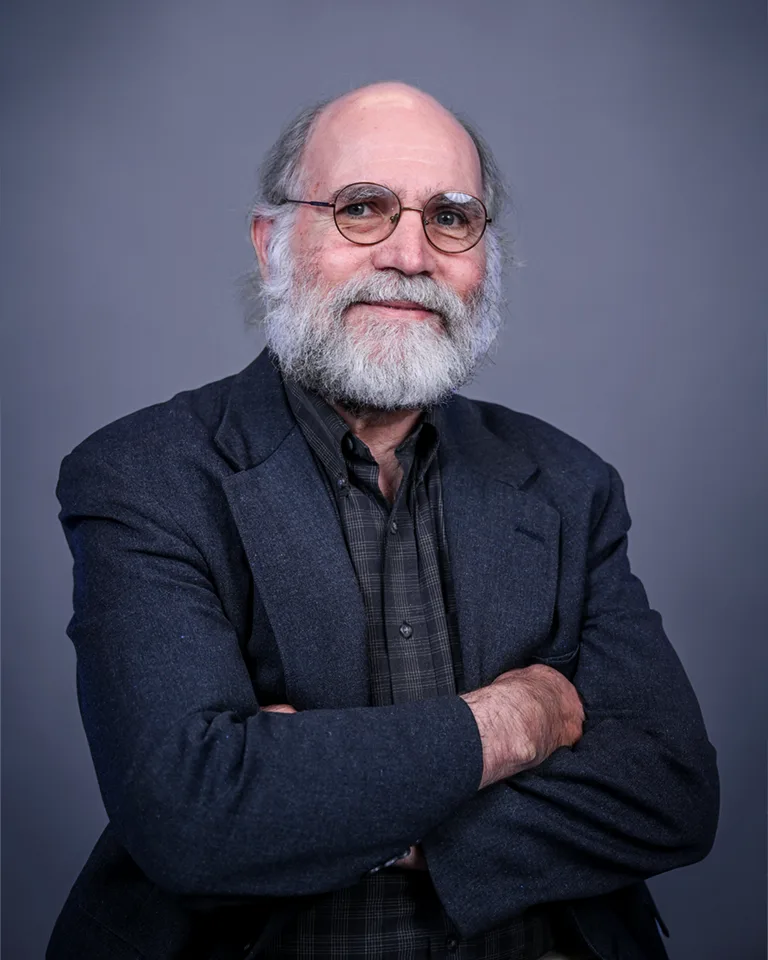
Samuel Orozco
Founding director of national news and information
Radio Bilingüe
“We’re going to find so many voices from the ’80s and early ’90s, from the cultural, social, and civic worlds. They were captured in those tapes.”
Still, those voices represent a fraction of the programming Radio Bilingüe has produced over the decades. Like so many public media organizations nationwide, a number of practical and technical issues have limited its efforts to preserve and archive essential programming.
“In the early days, buying reels was a little costly, so in times of need, what we used to do is basically recycle the tapes. Instead of saving [them] for the future, we recycled for future broadcasts,” Orozco explains. “[For] quite a few years that’s what we used to do—destroy the programs or interviews. Many survived, but many, many more were just erased.”
Every time an old tape is transferred to a digital file, another swatch of what Cariani said she thinks of as an American “quilt work” is rescued. She says the goal is to digitize 150,000 pieces of content over the next four years, adding, “We want material that‘s unique. We want material that was impactful in your community. We want material that represents your community.”
All video is used with permission. Say Brother, NOVA, Elliott Norton Interviews, and ZOOM courtesy of the GBH Archives; Moyers & Company courtesy Doctoroff Media Group; Oregon Story courtesy Oregon Public Broadcasting; Sousa on the Rez: Marching to the Beat of a Different Drum, 2012, courtesy of Vision Maker Media; Eyes on the Prize; Interview with John Lewis, courtesy Henry Hampton Collection, Washington University Libraries; PBS NewsHour clip courtesy of NewsHour Productions LLC; Realidades, NET Journal, Perspectives, and New Immigrants, courtesy of WNET.
Grant insight
WGBH Educational Foundation
WGBH Educational Foundation (also known as GBH Boston) was awarded $16,000,000 to support the The American Archive of Public Broadcasting in December 2022 through Mellon’s Public Knowledge grantmaking area.