Monuments Summer
July 11, 2023
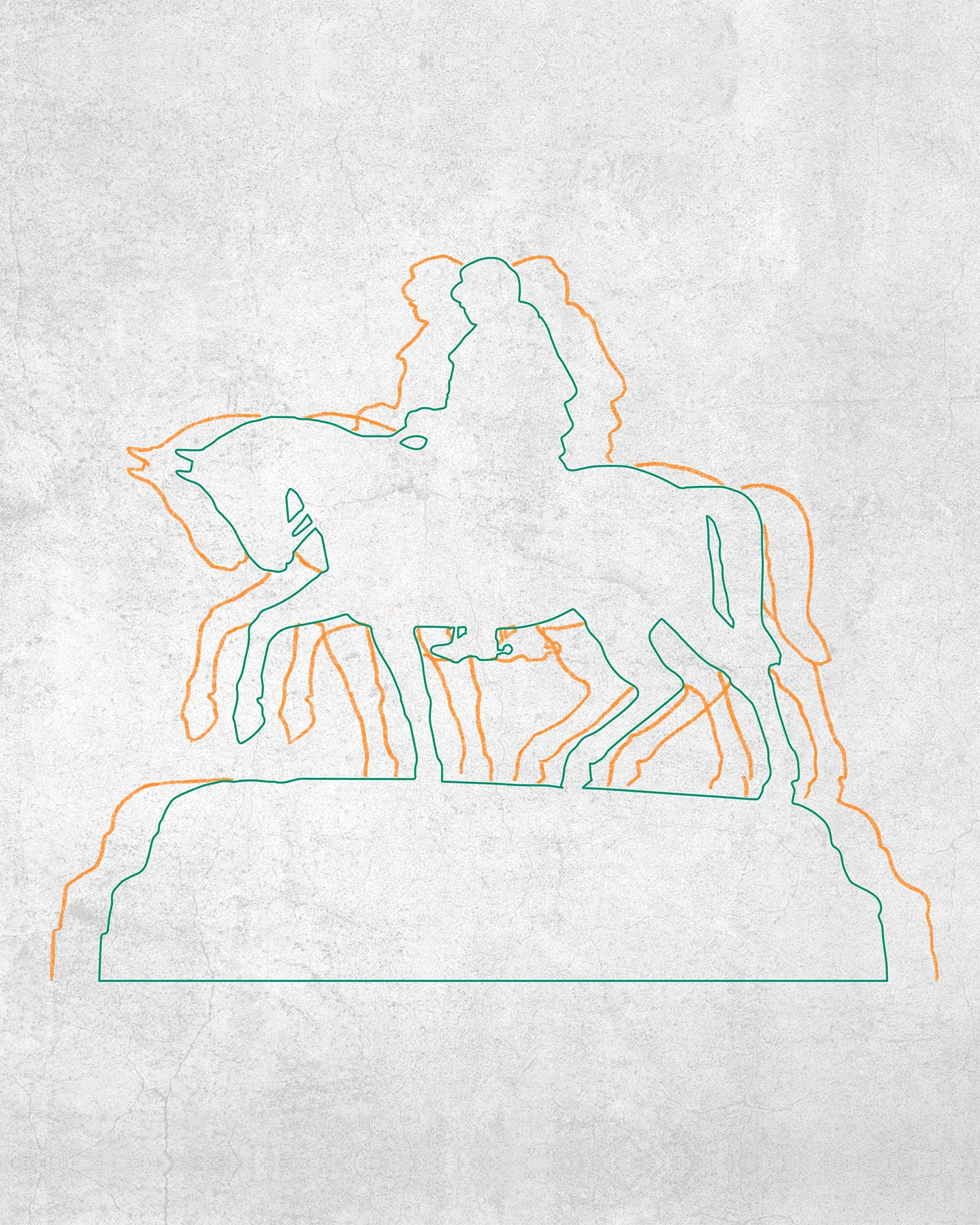
The landscape of the United States is shaped by monuments. From towering statues carved from stone to modest plaques beside the road, from the names of fallen soldiers etched on metal monoliths to vibrant murals painted in protest. The monuments and memorials that surround us often go unnoticed, fading into the background as we go about our daily lives. But the stories they disproportionately celebrate, and the multiplicity of voices that are missing, can shape and misrepresent our collective history.
Monument Lab’s National Monument Audit examines and asks questions of the existing monument landscape in the United States. It lays the groundwork to build broader awareness of our commemorative landscape and provides a means to continuously self-evaluate how we represent ourselves as a nation in our public spaces. The audit challenges us not to accept monuments as permanent fixtures, but to remember that our civic landscape is and has always been in a state of flux. The National Monument Audit is a call to action—if we are to move toward a more just and equitable future, our monuments must change.

Dr. Paul Farber
Director of Monument Lab
“Monuments are not mere facts on a pedestal—they can suppress far more than they summon us to remember.”
In partnership with Mellon, the National Monument Audit was produced by Monument Lab, a Philadelphia-based nonprofit art and history studio that cultivates and facilitates critical conversations around the past, present, and future of monuments.
To better understand the current monument landscape, the Monument Lab assembled a team of researchers from around the country. They scoured almost half a million records that included objects commonly referred to as monuments—statues or monoliths constructed with stone or metal, installed or maintained in a public space with the authority of a government agency or institution—as well as nonconventional monument objects like buildings, bridges, streets, historic markers, and place names.
Monument Lab and its research team created a final study set of nearly 50,000 monuments and mapped that information into a single, standardized data set. Since so many of the monuments identified commemorate individuals, the team compiled a Top 50 list of individuals for whom we have the most recorded monuments in the United States.
The research explored major themes, trends, case studies, and dynamics underpinning the monument landscape. The key findings of this work are summarized below, and detailed information can be found in the full report and on the National Monument Audit website.
The National Monument Audit represents just one step forward in the work to understand, question, and change our commemorative landscape. As we look to the future, the report offers four calls to action that can help us facilitate broader expressions of the multiplicity of stories in our public spaces.
The National Monument Audit, produced by Monument Lab in partnership with the Mellon Foundation, is a first-of-its-kind report assessing the current monument landscape in the United States. Monument Lab’s research team spent a year scouring almost a half million records, ultimately focusing on a study set of approximately 50,000 conventional monuments across every US state and territory.