Presidential Initiatives
The Monuments Project
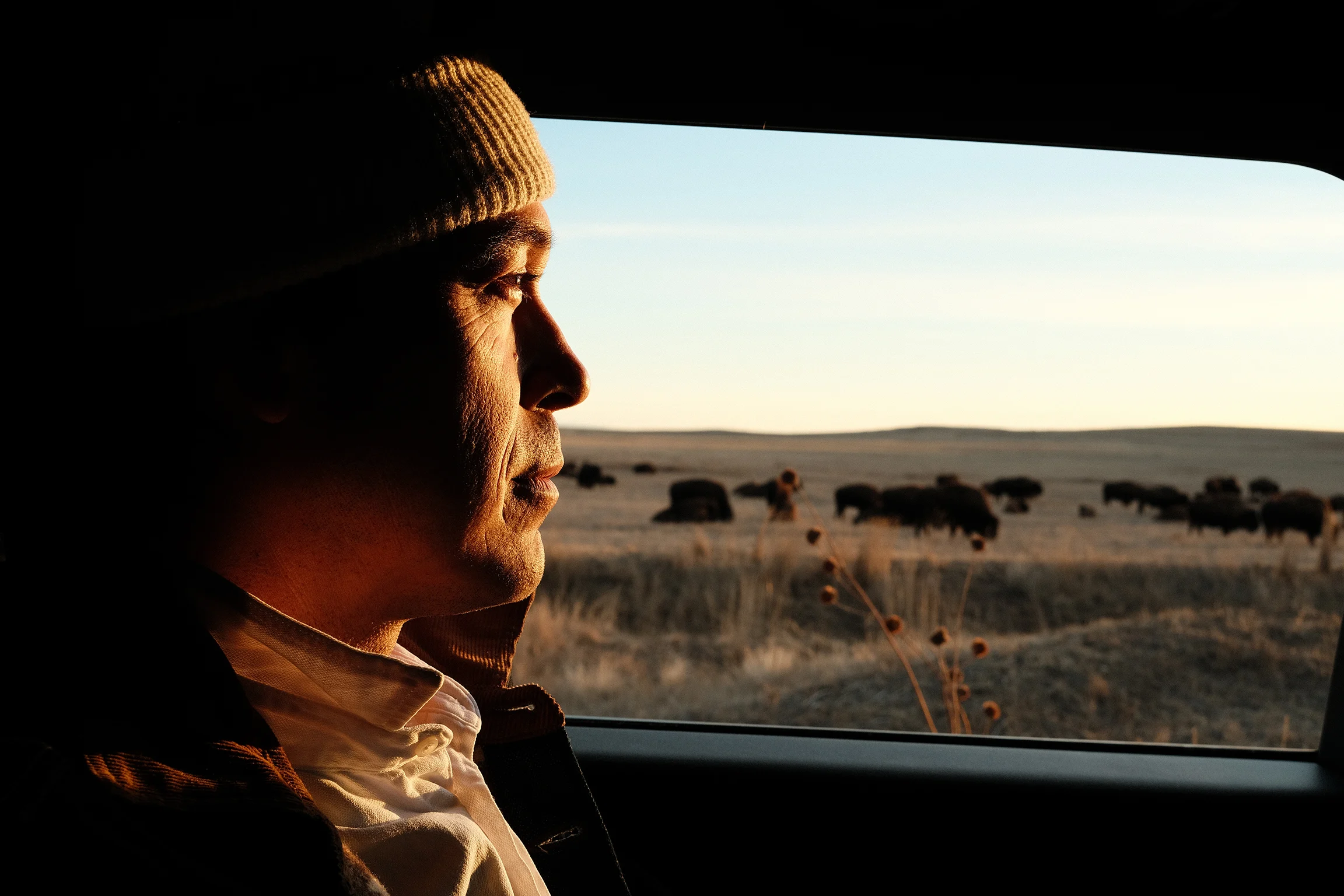
Luger’s vision for the Buffalo Nation Memorial Project is of a work that is part monument, part memoria and part landform – one that commemorates buffalo not only as victims but as the fallen heroes of the American Indian War. Although the ultimate location of the piece is unknown currently, Luger envisions it as both a historic marker and an active site for celebration and mourning.
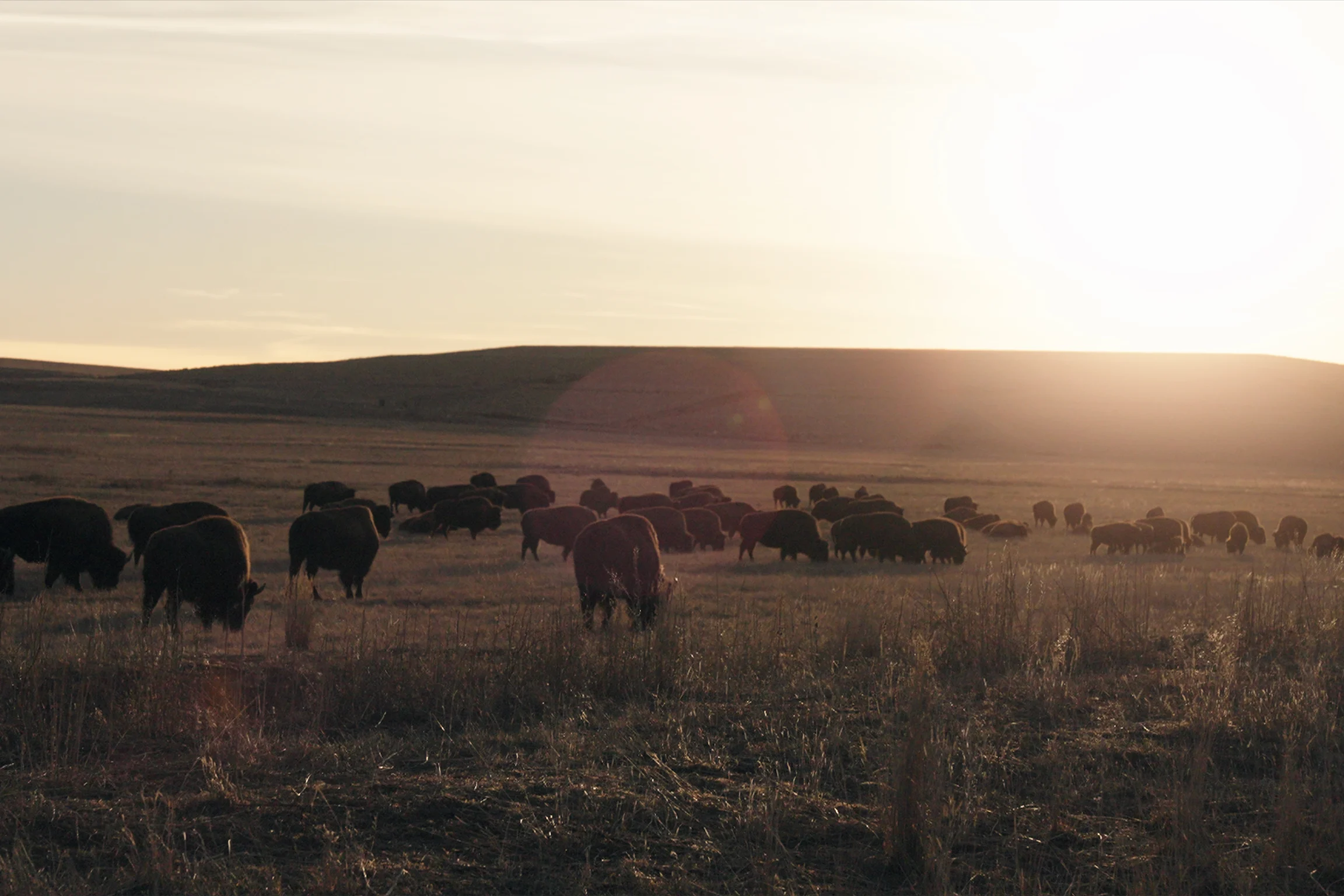
Far beyond recorded or oral history, buffalo have been central to the lives, cultural identity, and spiritual connections of Native peoples in North America. Throughout the 1800s, the population of buffalo was brought to near extinction due to multiple forces, including commercial overhunting by European- American settlers, as well as deliberate extermination of the animals by the US government as a way to undermine the survival of Native communities and clear the way for seizing their lands. Once tens of millions, the population of American buffalo fell to fewer than one thousand by the 1890s. Today, as buffalo return to the North American Plains, Indigenous communities are working to honor their past and protect their future.
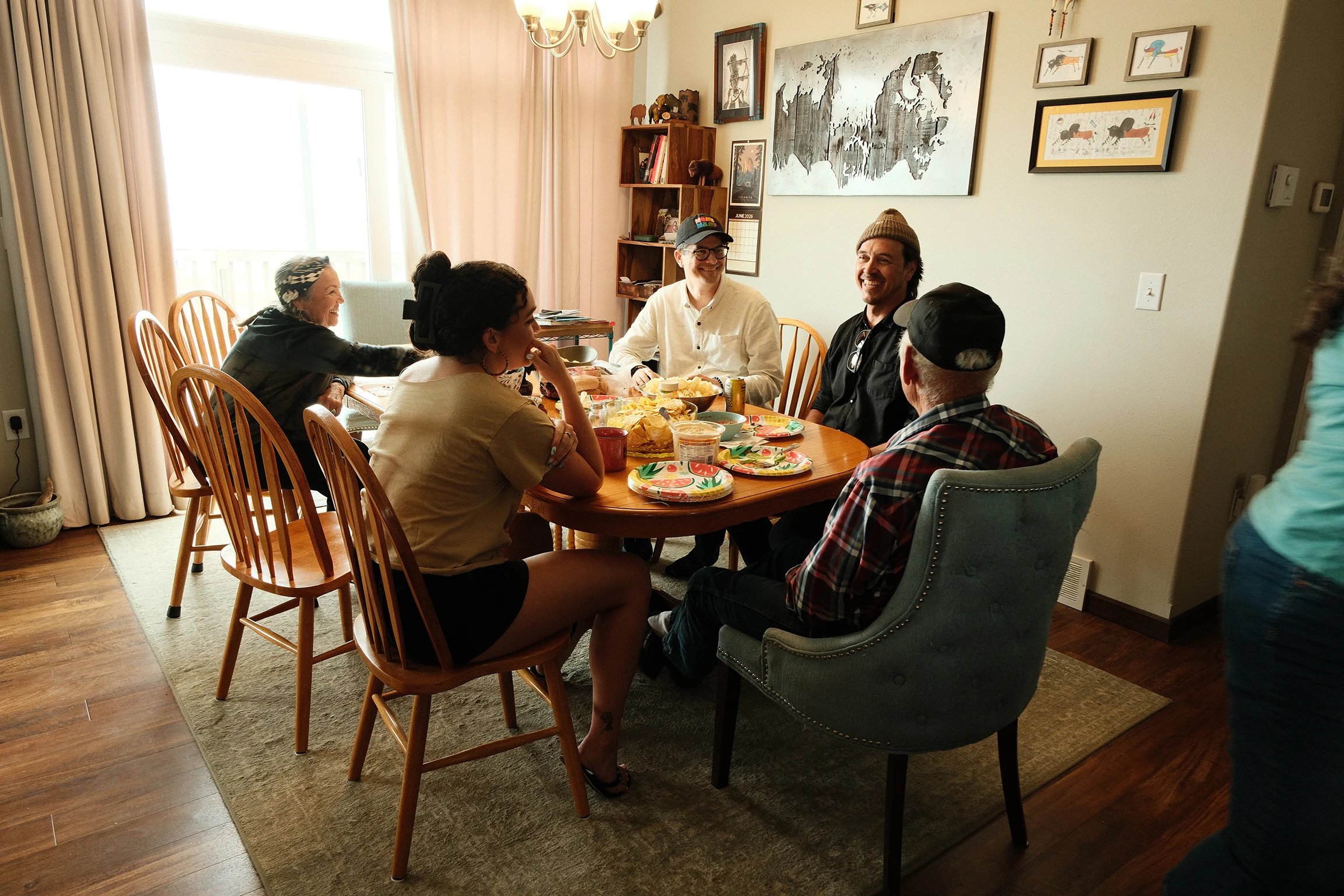
With this legacy in mind, Luger, whose interest in buffalo has been a long-standing theme in his work for over a decade, chose not to begin work on the monument in his New Mexico studio. Instead, he packed his bags and went on the road. Over the past year, he’s driven thousands of miles, meeting with Native scholars, cattle ranchers, and community leaders. He’s gotten his hands dirty in Oklahoma stockyards, shared meals with urban Native communities in Tulsa, and watched buffalo roam across Yellowstone National Park.
Everywhere he went, he listened.
Buffalo Nation, which will be designed and built in the coming years, begins with the history of buffalo extermination but looks beyond loss. It asks what buffalo have given, what they continue to give, and what it would mean for the United States to recognize buffalo as relatives whose lives have shaped the nation.
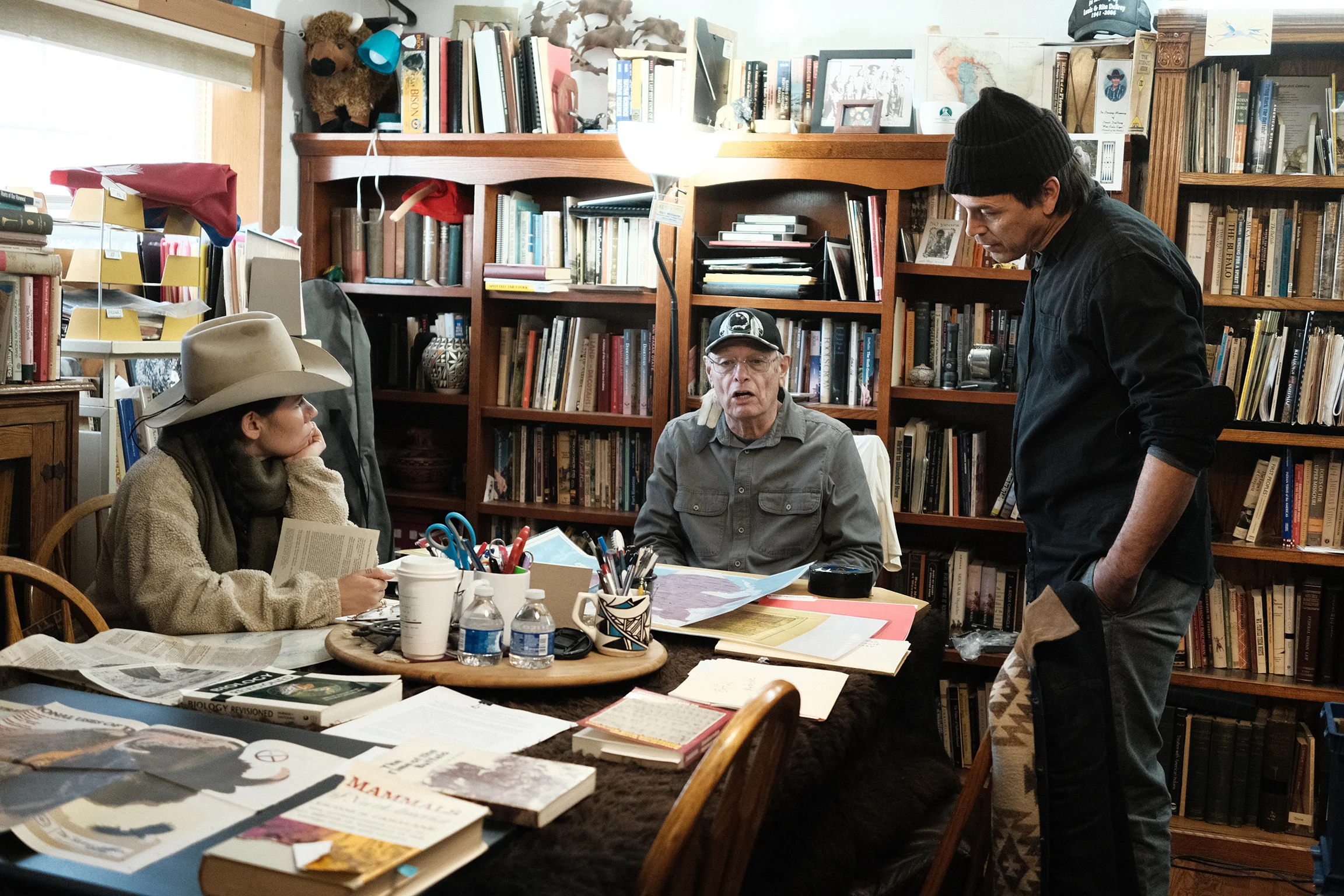
Luger recently sat down with Dr. Jill Falcon Ramaker, Native scholar, assistant professor at Montana State University, and director of the Mellon-funded Buffalo Nations Food System Initiative. In an interview for the Mellon Foundation, they discuss Luger’s recent travels, the questions guiding Buffalo Nation, and why a monument to buffalo is ultimately about our relationships with one another.
This conversation has been edited for length and clarity.
Jill Falcon Ramaker: When we talk about the Buffalo Treaty, we talk about us coming home to buffalo. It isn't the buffalo that went away. It's us who went away. Tell me what you knew about buffalo growing up.
Cannupa Hanska Luger: I'm Mandan, Hidatsa, Arikara, and Lakota.
My grandfather was a part of the delegation to protect MHA (Mandan, Hidatsa, and Arikara) Nation from a dam that flooded 42 percent of our reservation. Prior to that flooding, there was a village now underneath Lake Sakakawea [in North Dakota] called Like-A-FishHook and a town called Elbowoods. The land along the river was very fertile, and that made us not reliant on the US. [After] this dam flooded that entire valley and broke up our communities, a lot of people were relocated to urban centers. My grandfather realized at that time that there was no level of legalese that would save our people. There was nothing that we were expected to assimilate into that would protect our land and us as an extension, except what existed before: our ceremonies. Come 1978, [with the signing of the American Indian Religious Freedom Act (AIRFA)] it was legal for us to practice our ceremonies again.
My grandfather did a lot of work to bring these back, and he most focused on the Okipa. It recognizes the entire universe as a gift, and a major component is a buffalo-calling ceremony. A few years after we restarted this ceremony, which was banned for nearly a hundred years, buffalo came back.
We’re buffalo people.
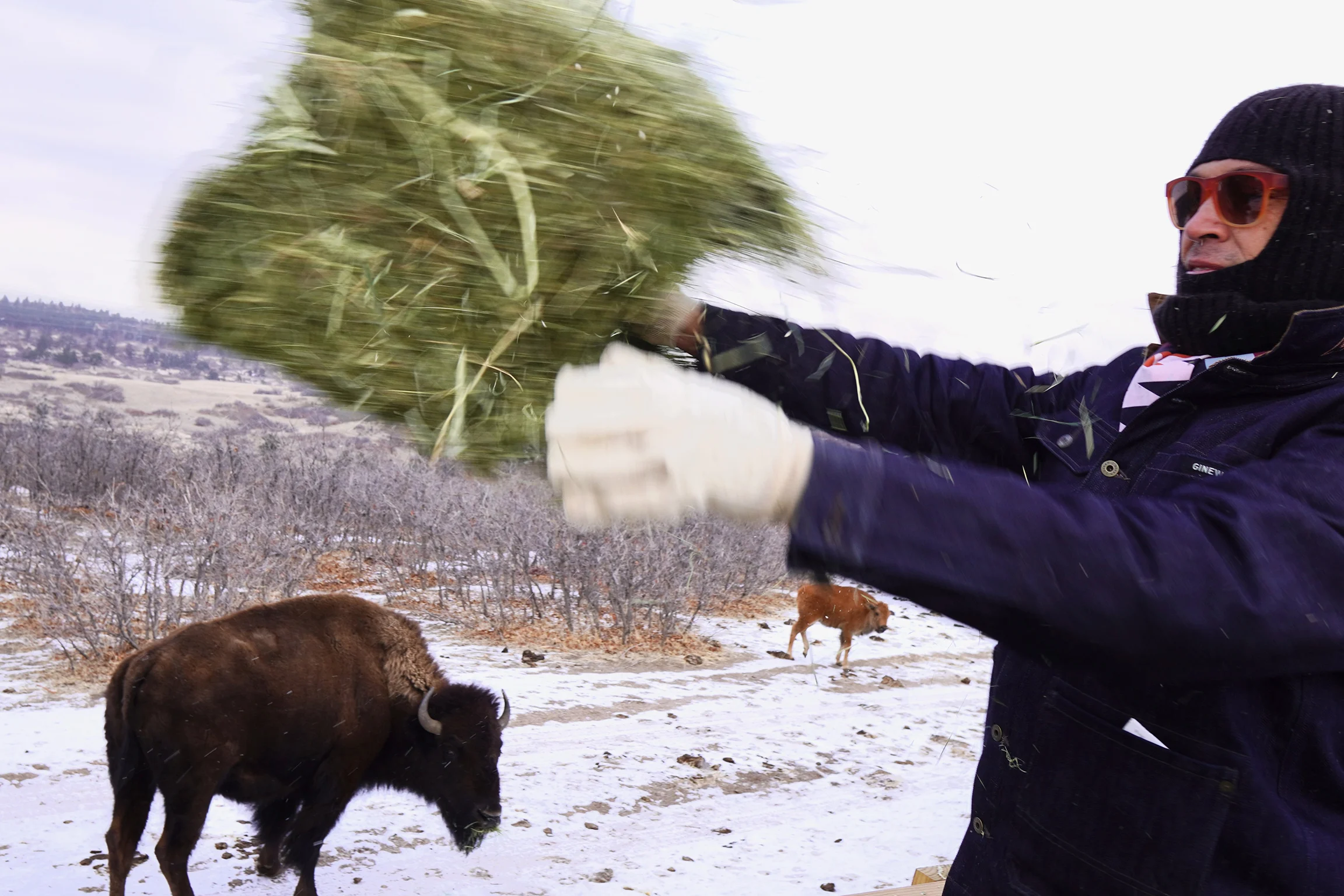
I remember down in Fort Yates, when I was old enough to be interacting with buffalo, I was in the back of a pickup, throwing out mineral cakes. We were calling them. You just hit on the roof of your truck and say, “Come on, come on, come on.” And you drive around the prairie doing this, calling “come on, come on” so many times that it doesn’t even sound like a real word anymore. But the buffalo remember: They know you have been there, that you come through.
I remember seeing this cow over the hill. She dipped her head with her horn, caught a salt block like 35 pounds, and flung it into the air as a game. And I remember being like, “These are not cows. They move like deer, they’re as big as cattle, but they are not cattle.” These are the things that put in motion a great interest in communicating the experience of bison in North America.
JFR: We’re talking about two species—buffalo and people—who were both colonized. Whether that’s behind fences or in Western schools. From your perspective, what do we need to share, as Native people, to help put it all back together?
CHL: I was fortunate enough to grow up with these ceremonies in my community. My grandparents were of that generation who, out of pure survivance, were like, “We’re going to put all of that aside for now.” In the process, a lot of things got lost. I hear what you’re saying about people coming home to buffalo, but we’re surviving in the aftermath of home being disrupted.
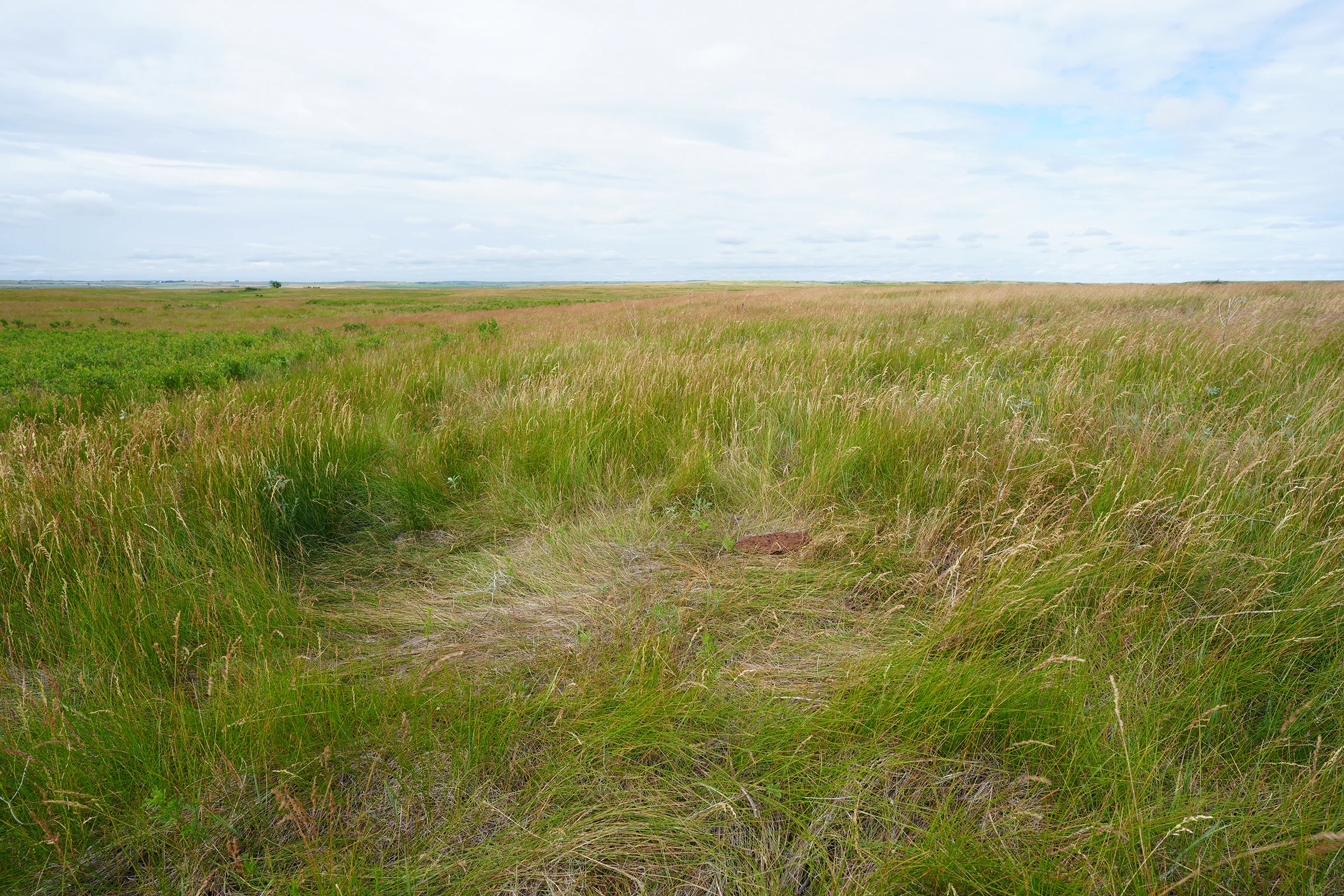
I think what would profoundly shift our global population is to see other species as close to familial as possible. There’s something lacking. It takes great and continuous effort to maintain the sensibility of separation—we buy our food in small packages, separated from the dirt from which it grew, the water from which it’s cared for. There is a longing deep inside of us to belong. My hope and effort is to get a general population to understand that there is not a hole in you. There is a hole the shape of you in the land. That’s exactly where you belong.
JFR: You’re talking about a buffalo monument for the country, but a monument to buffalo has something to remind us about who we are as humans.
CHL: Yeah, I feel like what’s driving me is, unfortunately, survivor’s guilt. I know the industrial application of genocide took place on buffalo to rid the land of my people. Full stop, that’s American history. We barely survived it; they barely survived it.
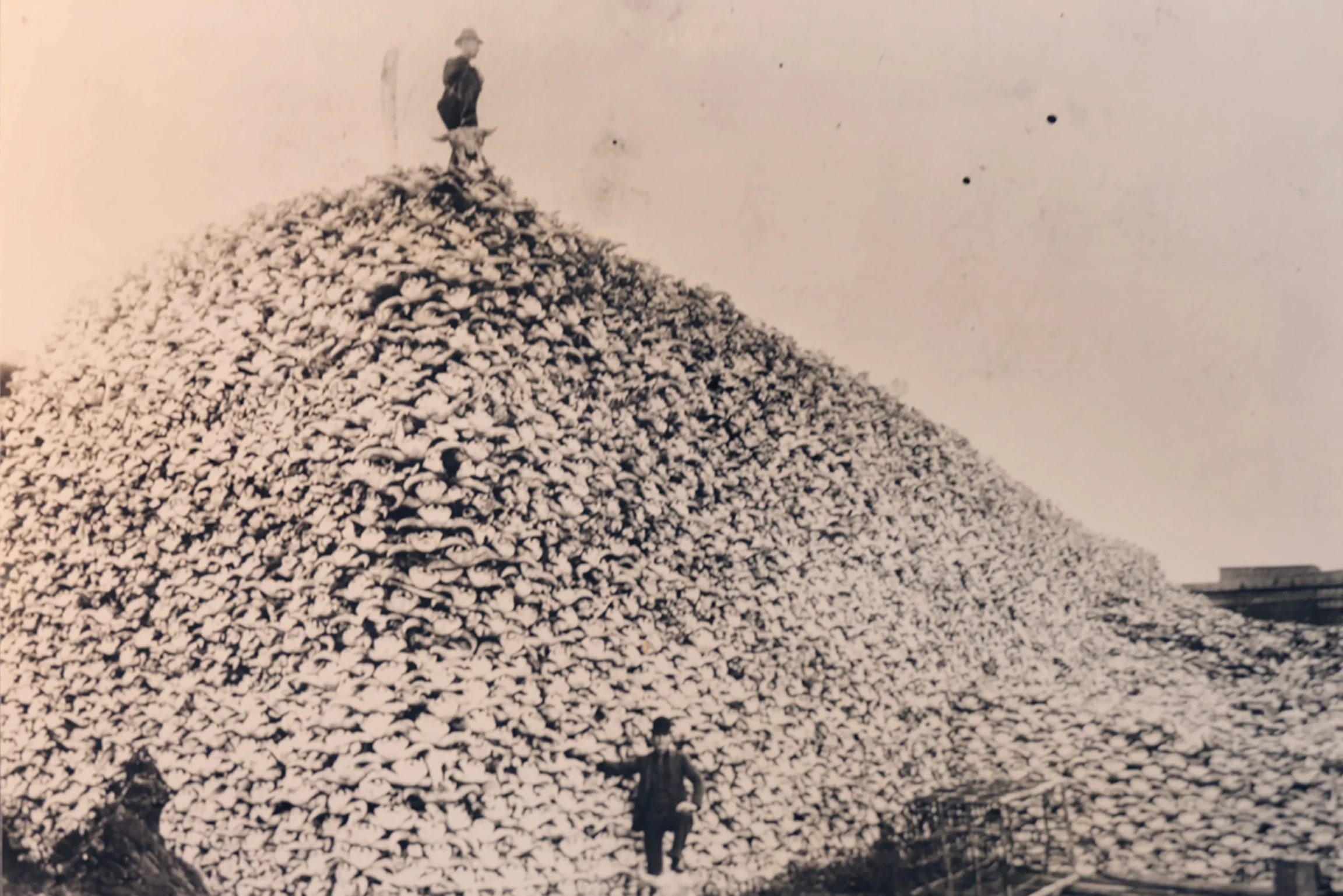
My process began by seeing those sepia photographs of buffalo skull piles. When I was young, I could only imagine it was a monument to destruction. As I got older, I recognized that that pile is nowhere near the total scale of loss. I also recognized that that's work, stacking those skulls. Somebody got hired, and somebody paid for it.
The vast majority of those 60 million buffalo bones were along train routes, left to rot and turn to bone. I read letters that said, “As far as the eye can see, it looks as though it is a winter's frost, and yet it is June. Buffalo bones litter the plains.” Programs were put in place to collect bones, and they were packed on trains, shipped back east, and turned into calcium carbonate and bone black.
Calcium carbonate by and large was used as a fertilizer. There is a thin layer of buffalo still on the land as their bones, and they’ve gone into all of the breads and grains that feed everyone.
Calcium carbonate was also used in early steel production: trains, bridges, buildings, the infrastructure that is this country. Our industrialization made us a global player on the planet—all because of what buffalo gave. And steel is the most recycled material on the planet, so how far have buffalo contributed on a scale like that?
My interest in building a monument to their loss is so that we can comprehend the scale of how many buffalo there were and how much went into the growth of this nation.
Once you embody the scale of loss, it allows you to embody that loss. In catalyzing empathy, we can look at buffalo on the land as more than another gross national product.
JFR: I think you just told us not only why the country needs a monument to buffalo, but why buffalo need the country to have a monument. You're telling us about buffalo futures as well as buffalo people's future.
CHL: We’ll never be the buffalo people that we were. But it starts at honest conversations. That’s why I’m talking to people who are working in close proximity to buffalo. I’m hoping that the variety of voices can voice buffalo for a population who forgot how to listen.
Talking to people on the East Coast or deep on the West Coast, they're like, “Oh, there were no buffalo here.” I'm like, “You bet there were buffalo here.” There's always been buffalo here.
Dr. Jill Falcon Ramaker (Anishinaabe: Turtle Mountain Ojibwe) is the Assistant Professor of Community Nutrition and Sustainable Food Systems and the Director of the Buffalo Nations Food System Initiative at Montana State University.
Cannupa Hanska Luger (Mandan, Hidatsa, Arikara, and Lakota) is a multidisciplinary artist who creates monumental installations, sculpture, and performance to communicate urgent stories of 21st-century Indigeneity.
c3:initiative/Stelo Arts and Culture Foundation was awarded $300,000 in 2025 through the Monuments Project, a Presidential Initiative.