Voice
What Is More Dangerous Than Art?
Read the essay 
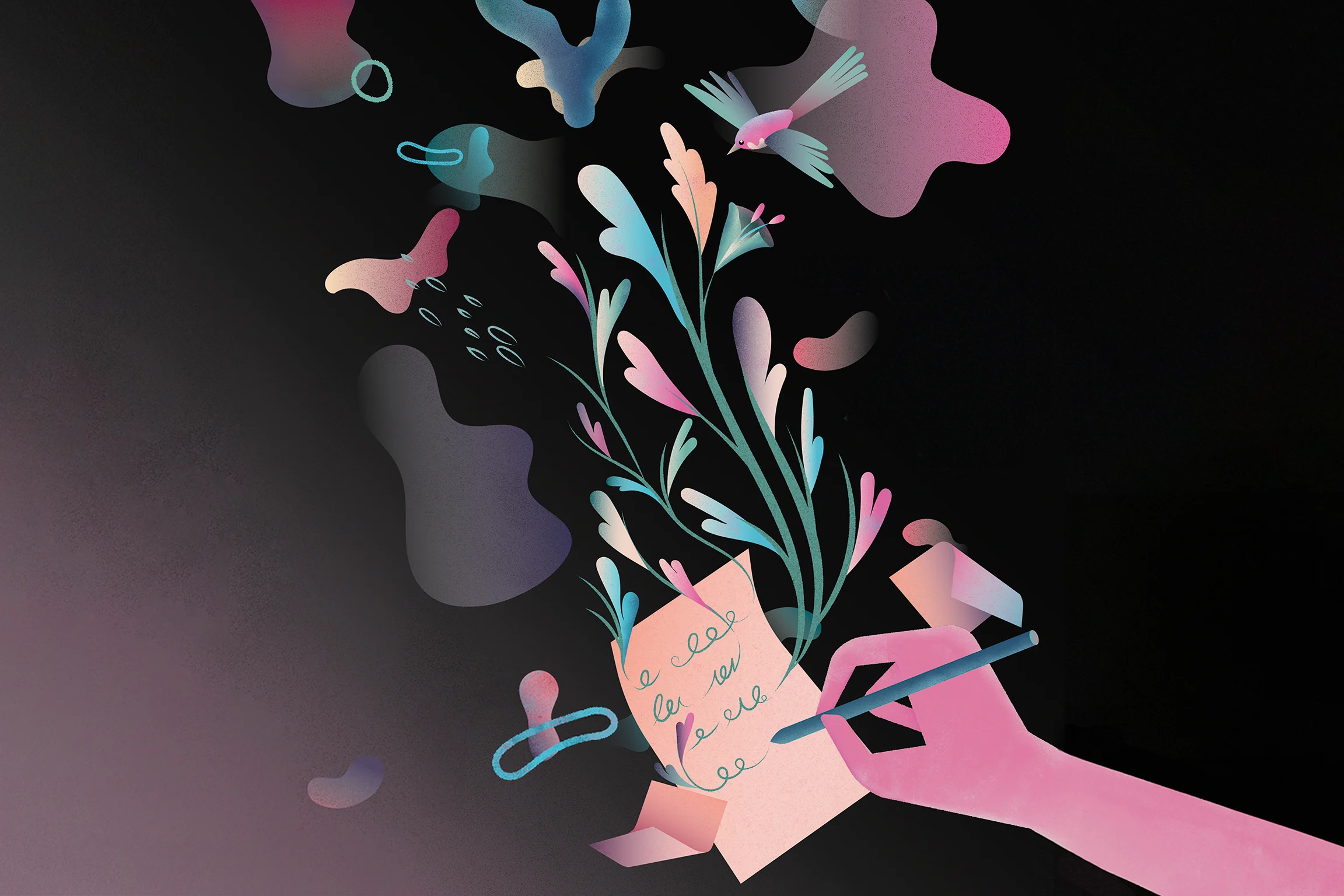
The concrete walls of solitary confinement pressed in around me as the Texas summer heat climbed to triple digits. Sweat pooled beneath me on the thin mattress, my skin sticking to the plastic covering as I struggled to breathe in the stifling air. In that moment of suffocating isolation, I reached for the only thing that had never abandoned me: a stub of a pencil and a scrap of paper. As words flowed from my fingertips, the walls seemed to retreat just enough for me to breathe again. This wasn’t just writing: this was my superpower at work.
Writing has been my constant companion, my savior, and my source of strength throughout my life. From a frightened child creating secret codes to an advocate whose words compelled policy changes within prison walls, my relationship with the written word has transformed me from victim to survivor to someone capable of creating real change. This is the story of how I discovered my superpower, lost it, reclaimed it, and now work to nurture it in others.
The 1980s offered little in the way of trauma counseling for children like me. When childhood sexual violence shattered my sense of safety, my family’s solution was to “pray it away.” But prayers alone couldn’t help me process what had happened or restore my sense of control.
One night, hiding under covers with a flashlight, I discovered that putting pencil to paper created a sanctuary that existed solely for me. I began developing a personal code; a writing system that only I could understand. When I wrote in this secret language, I could express truths too painful to speak aloud. I could create worlds where I was safe, where I had agency, where my voice mattered. In those private pages, I wasn’t powerless. In a childhood where chaos reigned and my body wasn’t my own, writing gave me the one thing I desperately needed: control. This was the beginning of my superpower, though I wouldn’t recognize it as such until decades later.
As childhood gave way to adulthood, my writing evolved alongside my experiences. Through abusive relationships and troubled marriages, my journal remained the one constant when everything else proved unstable. My personal code grew more complex, mirroring the deepening of my own understanding of trauma and survival. When words failed me in person, when fear or shame silenced my voice, I could always find clarity on the page. Writing became a way to reclaim ownership of my narrative when my physical being seemed to belong to others. In moments when I felt most powerless, I could still wield a pen and, in doing so, maintain some fragment of my authentic self.
What I didn’t yet understand was that this ability to transform pain into prose, to transmute suffering into story, wasn’t just a coping mechanism; it was a power waiting to be fully realized.
My early years of incarceration nearly extinguished this vital force within me. Working in prison fields, under armed white men on horseback—an image so reminiscent of America’s darkest history that the parallel was impossible to ignore—drained me of every ounce of energy. Each night, I collapsed onto my bunk, choosing sleep over writing simply to survive until morning. For eight long years, my superpower lay dormant. The daily physical demands left no space for reflection, for processing, for the sacred act of putting words to paper. The silence of those years haunts me still, not because the world was quieter, but because my inner voice was muted by exhaustion.
Yet, even in this fallow period, embers of my power smoldered beneath the surface, refusing to be fully extinguished.
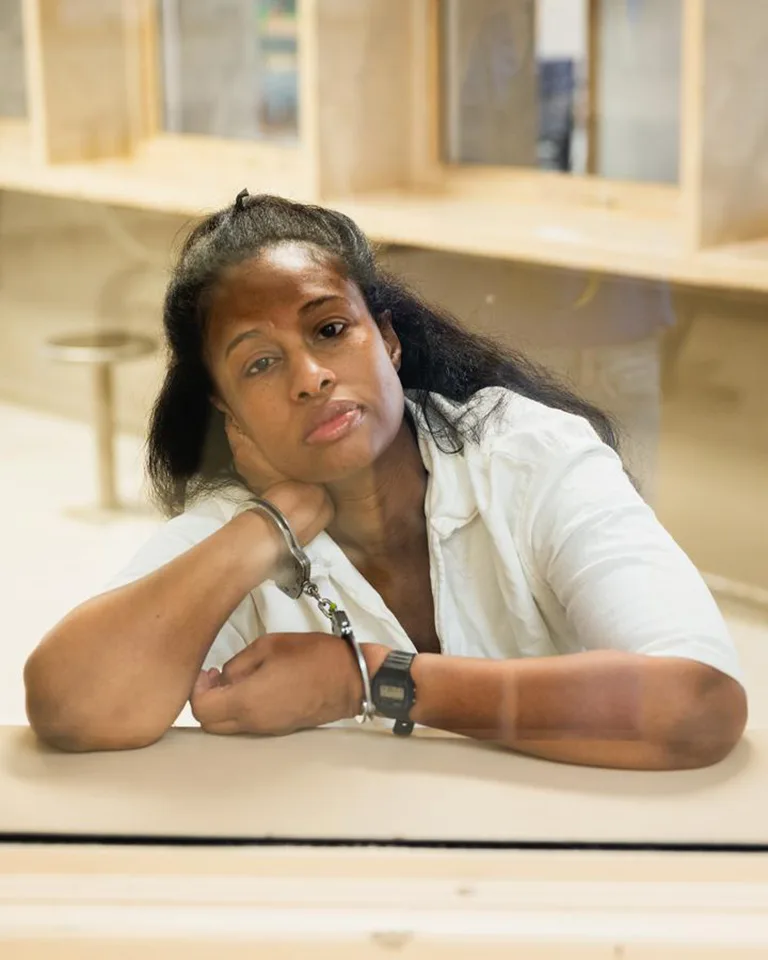
Kwaneta Harris
Writing Freedom Fellow
“Writing has been my constant companion, my savior, and my source of strength throughout my life.”
The bitter irony of solitary confinement is that in trying to break my spirit through isolation, the system instead created the conditions for my voice to resurface. After eight years of forced silence, alone in that cell with nothing but my thoughts, I returned to writing.
The triple-digit heat that summer was lethal. Friends died from heat-related illnesses, their bodies found too late in cells that function like ovens. Their deaths became my subject; my pencil recording not just temperatures but the human cost of institutionalized cruelty. When these writings found their way beyond prison walls and into publication, something miraculous happened: air conditioning units appeared. In that moment, I understood that my superpower extended beyond personal salvation. My words could alter reality not just for me, but for others. They could create tangible change in a system designed to resist change at all costs.
This realization transformed how I approached writing. When the medical dorm opened at Lane Murray without the promised air conditioning, my pen became a weapon in the fight for humane conditions. When prison officials implemented a “gown-only policy” meant to enforce traditional gender norms, my words brought NPR to our doorstep, shining a national light on yet another form of dehumanization.
The policy reversals that followed these exposures revealed to me the full scope of my ability. In a system designed to render us invisible, writing made us seen. In an environment built to silence us, writing gave us voice. In a place where we were made to feel powerless, writing restored our agency.
When the Haymarket Fellowship recognized my work in 2024, it felt like finally finding others who understood the nature of my superpower. The fellowship provided what every superhero needs: mentorship, resources, and community. Through my fellow cohort members and Jyothi Natarajan’s guidance, I learned to refine my voice, to target my message, to maximize the impact of every word. More importantly, the fellowship helped me see that I wasn’t alone. There were other writers, poets, editors, and literary artists like me, wielding their own creative powers against systems of oppression. Together, we formed a league of sorts, individuals using art to challenge how society thinks about punishment, humanity, and justice. The validation I received changed how I viewed my own writing. What began as a desperate act of survival had evolved into something with purpose beyond myself. My superpower wasn’t just for me, it was meant to be shared.
Today, my mission extends beyond my own writing. I work to help others discover their own superpowers whether through poetry, prose, visual art, or other forms of creative expression. Each time I witness another incarcerated person find their voice, I see the potential for change multiply. The carceral system thrives on erasure, on making us invisible both to society and to ourselves. By nurturing writing communities within these walls, we resist that erasure. Each story told, each poem shared, each essay published chips away at the dominant narratives that sustain mass incarceration. When I help someone shape their first poem or offer feedback on an essay about their experiences, I’m not just teaching writing. I’m helping seed another superhero. And with each new voice that rises from these concrete confines, our collective power grows.
“Today, my mission extends beyond my own writing. Each time I witness another incarcerated person find their voice, I see the potential for change multiply.”
Writing saved my life in the most literal sense. It preserved my sanity when isolation threatened to unravel my mind. It created change when conditions became lethal. It restored my humanity in a place designed to strip it away. But the journey doesn’t end with personal salvation. My superpower has a purpose beyond my individual survival, and I embrace the responsibility that comes with it. Through writing, I’ve transformed from victim to advocate to mentor. Each role builds upon the last, expanding the reach of what words can accomplish. I am profoundly grateful for the Haymarket Fellowship’s recognition of the potential in my voice and helping amplify it. Their belief in me reinforced my belief in the power of the written word to create real change.
As I look toward the future, I envision an expanding league of superheroes, incarcerated writers whose words transcend these walls to challenge how society thinks about punishment, redemption, and human worth. Our pens are our powers, our stories, our strength, and our collective voice—a force that cannot be contained by bars or silenced by isolation. The concrete walls still stand, but they no longer define the boundaries of my existence. Through writing, I have found freedom that no prison can constrain, and it is this freedom I now help others discover, one word, one story, one superhero at a time.
###
Kwaneta Harris is a former nurse, business owner, and expat, now an incarcerated journalist and Haymarket Writing Freedom Fellow, from Detroit. In her writing, she illuminates how the experience of being incarcerated in the largest state prison in Texas is vastly different for women in ways that directly map onto a culture rooted in misogyny. Her stories expose how the intersection of gender, race, and place contribute to state-sanctioned, gender-based violence.
Harris is an abolition feminist and through her writing she offers a peek inside the brutal criminal legal system, with hope to reimagine effective non-carceral solutions for those who harm. She writes about censorship, healthcare, climate, and how they affect systems-affected people.
Her writings have appeared in a wide range of publications, including Solitary Watch, Cosmopolitan, Rolling Stone, The Marshall Project, Scalawag, Prism, The Appeal, Teen Vogue, among others. She writes on Substack at Write or Die.
Harris authored a segment on This American Life and was interviewed for a documentary by Al Jazeera about solitary confinement, in which she was detained for 8.5 of her 17 years incarcerated. She co-authored a book—Ending Isolation: The Case Against Solitary Confinement—that will be released by Pluto Press in September 2025. Now she is working on a book about the teenagers from juvenile who were her neighbors in adult solitary confinement.
The Writing Freedom Fellowship awards talented emerging and established poets, fiction writers, and creative nonfiction writers affected by carceral systems for their notable and necessary writing. Developed and administered by Haymarket Books in partnership with the Mellon Foundation and the Art for Justice Fund, Writing Freedom aims to recognize, support, and amplify the essential literary voices and contributions of those directly affected by the criminal legal system.