Your Neighborhood Museum
This Tribal Elder is Dedicating His Life to Tracking Down the Lost Remains of His Ancestors
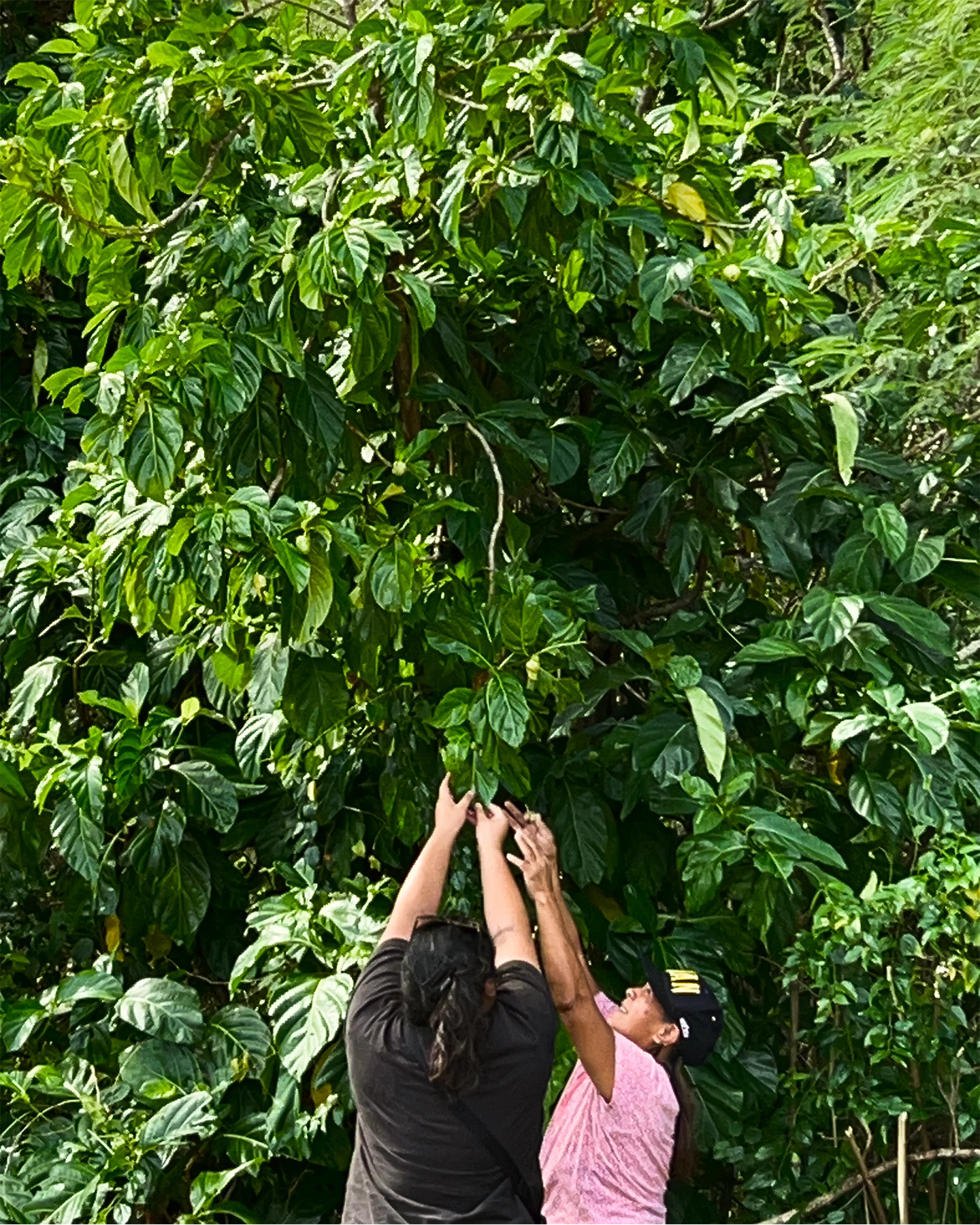
Jagged rocks and thick roots crisscross the forest floor beneath a tall canopy of dark green leaves. Streams of mud wind through patches of marsh and swamp, teeming with the faint hum of mosquitoes and occasional Mariana monitor lizard rustling through foliage.
To the untrained eye, this landscape could seem foreboding and overgrown. To those who know its gifts, it is a sacred pharmacy.
“Every time you go to the jungle, you have to pray,” says Lourdes Manglona, known as Mama Lou, a yo’åmte, the name given to the traditional healers of the CHamoru, the Indigenous people of the Mariana Islands.
“You ask for permission before you make medicine. You have to respect first the plant,” she adds.
Mama Lou, who is 77, grew up on the neighboring island of Rota. Surrounded by the island's pristine forests and abundance of herbs, her grandmother taught her how to prepare åmot, or traditional medicine, for anyone who knocked on their door.
She first began learning the åmot at age two. “My grandma wrote all the names and put it on the side of the plant. Instead of playing outside, I was studying,” Mama Lou laughs. “By nine years old, I’m pounding the medicine already. I’m helping my grandma boil.”
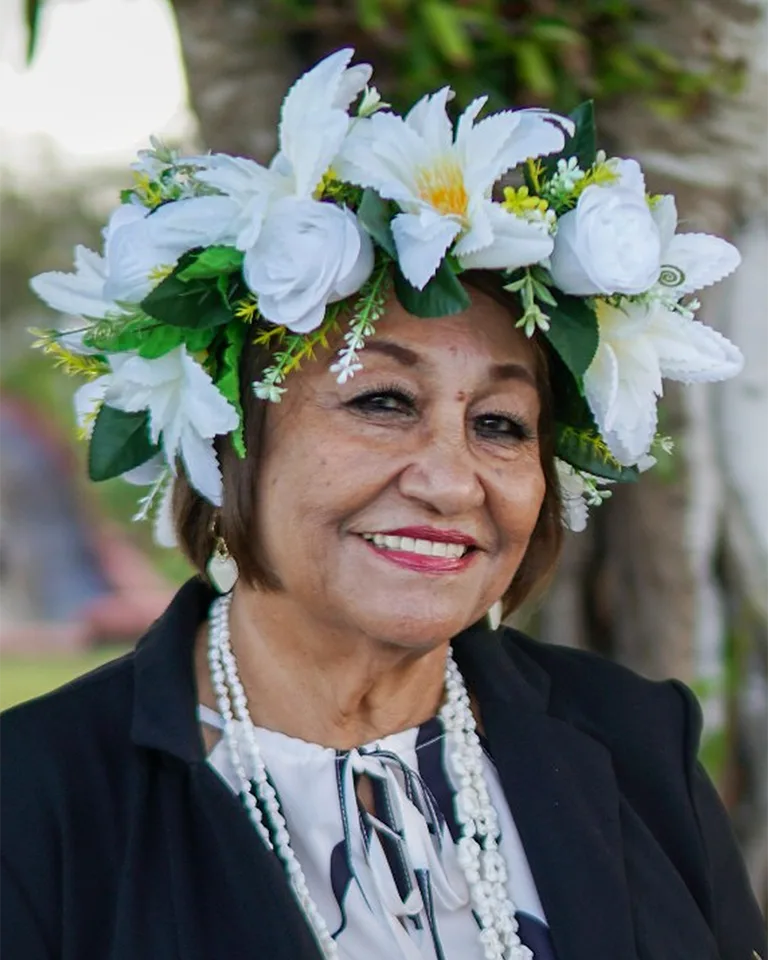
Lourdes “Mama Lou” Manglona
Traditional CHamoru Healer
Photo by Charles Paulino, Jr.
“You ask for permission before you make medicine. You have to respect first the plant.”
When her grandmother passed away three years later, 12-year-old Mama Lou had already committed this knowledge to memory. Decades on, she still carries it.
“I still know all of my grandma’s medicine—234 different kinds,” she says. “For the baby in your womb to the top of your feet.”
Making åmot is more than just a healing practice. It is a means of understanding sacred connections between CHamoru people, land, and ancestors. Passed down intergenerationally, traditional medicine is inseparable from CHamoru language, culture, and philosophy—relationships that have been sustained for more than 3,500 years through a deep connection to the land and its forests.
That relationship has, however, been strained by centuries of colonialism.
When Spain colonized Guam in 1668, Christian missionaries tried to eradicate Indigenous religious and healing practices, determined to impose Western, Catholic lifestyles onto CHamorus. In 1898, the United States ushered in a new era of colonial rule for Guam when it acquired the island during the Spanish–American War.
“In Guam, we have a lot of colonization and militarization,” says Dr. Tricia Lizama, a CHamoru Studies professor and professor of social work at the University of Guam who works closely with Mama Lou. “We joke that we have concrete jungles because all these buildings have destroyed our natural habitat.”
According to the Government of Guam, about one-third of the island is occupied by the U.S. military today. Training grounds and military bases have overtaken ancestral lands, and many native plants used for medicine have been lost or are difficult to access, says Human Rights Watch.
Take the forests located on the U.S. Naval Base Guam, for instance.
“There’s a preserve, but you need a pass, and you can only go at specific times. Uncle Mill [an elder] needed medicine one day, and he’s walking into the backyard, but it was the preserve. He almost got arrested because he didn’t know the formalities of getting a pass,” Lizama recalls. “He was very angry and hurt. It’s like you’re telling me that I don’t know how to take of my own environment, but this is how I grew up. I don’t need someone to regulate that for me.”
As access to local lands and knowledge has narrowed over the years, fewer people have been able to learn, practice, and carry CHamoru cultural traditions forward. The consequences are evident in everything from the prevalence of the language, which, it’s estimated, less than 20% of the population now speaks, to the kind of medical knowledge that Mama Lou holds.
Fifteen years ago, Lizama interviewed many of the most prominent healers, asking them to share how they became a yo’åmte. “Out of the 12 people I interviewed in 2011, everyone has died,” she says. Even when elders have identified a family member to pass their knowledge onto, fewer young people are able or willing to take it on. “It’s a huge responsibility.”
Amidst these challenges, the University of Guam’s CHamoru Studies program is revitalizing and sustaining the knowledge of CHamoru ancestors—as both cultural practice and a living body of humanities scholarship. By bridging Indigenous and institutional knowledge, the wide-ranging program approaches not just traditional medicine, but also language and seafaring as systems of meaning, history, and philosophy. Through this humanities-centered framework, students engage in an in-depth and experiential study of CHamoru ways of knowing—from courses taught entirely in the CHamoru language to certificate programs exploring traditions like Micronesian navigation.
“People in our community these days don’t always have opportunities to access elders who possess and can pass down this knowledge. It comes with a responsibility to practice our values, to respect our elders, and to respect this knowledge because it’s a gift,” says Dr. Kisha Borja-Quichocho-Calvo, associate professor and program coordinator of the CHamoru Studies department.
Through their Island Wisdom courses, students learn traditional cultural practices in a university setting—an approach that reimagines how humanities knowledge can be taught, preserved, and shared.
This, however, once seemed impossible. “How do we put this Indigenous curriculum together in a Western institution?” Lizama recalls asking. “No healer is going to teach in a classroom. They think it’s counterculture.”
But Mama Lou said yes.
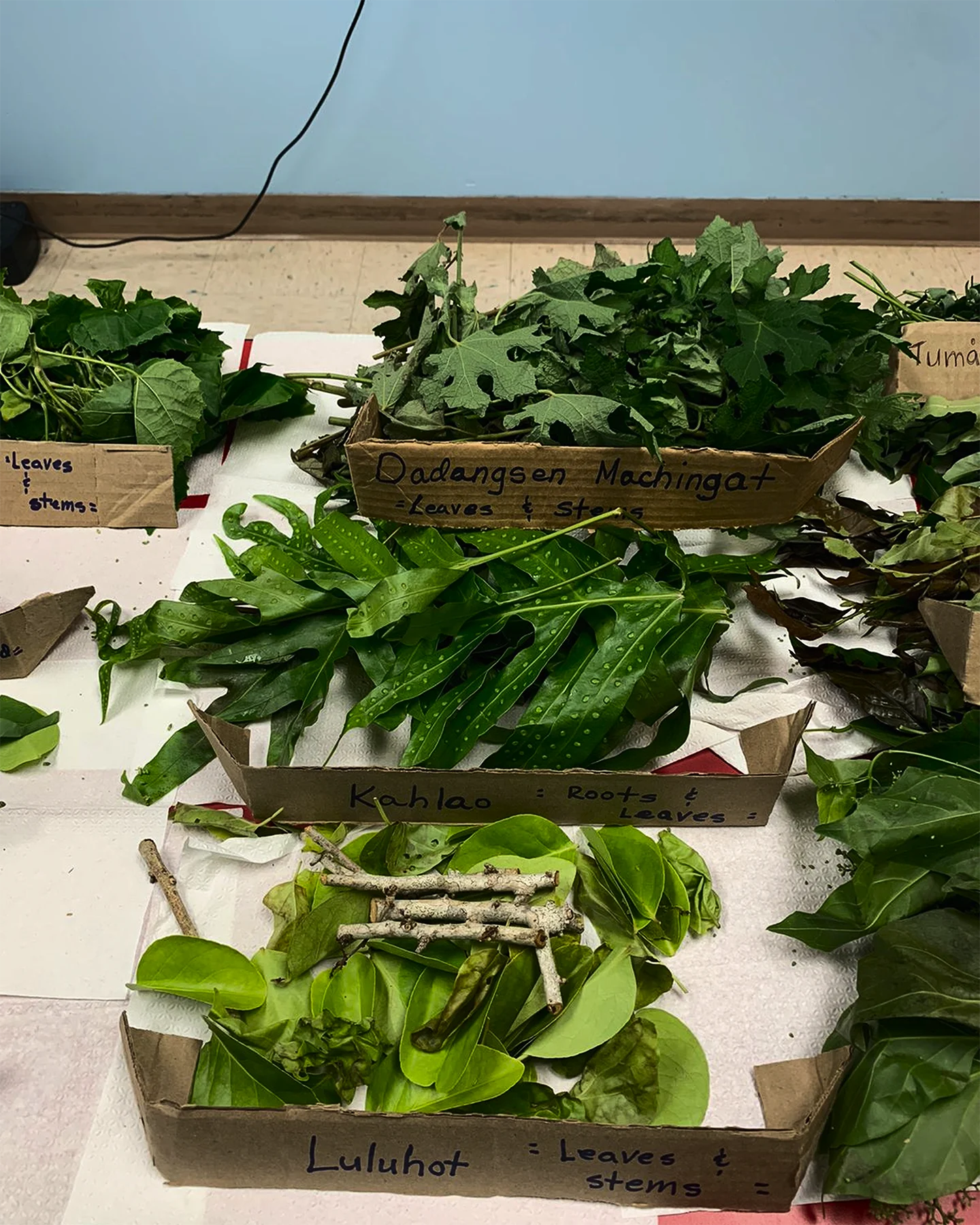
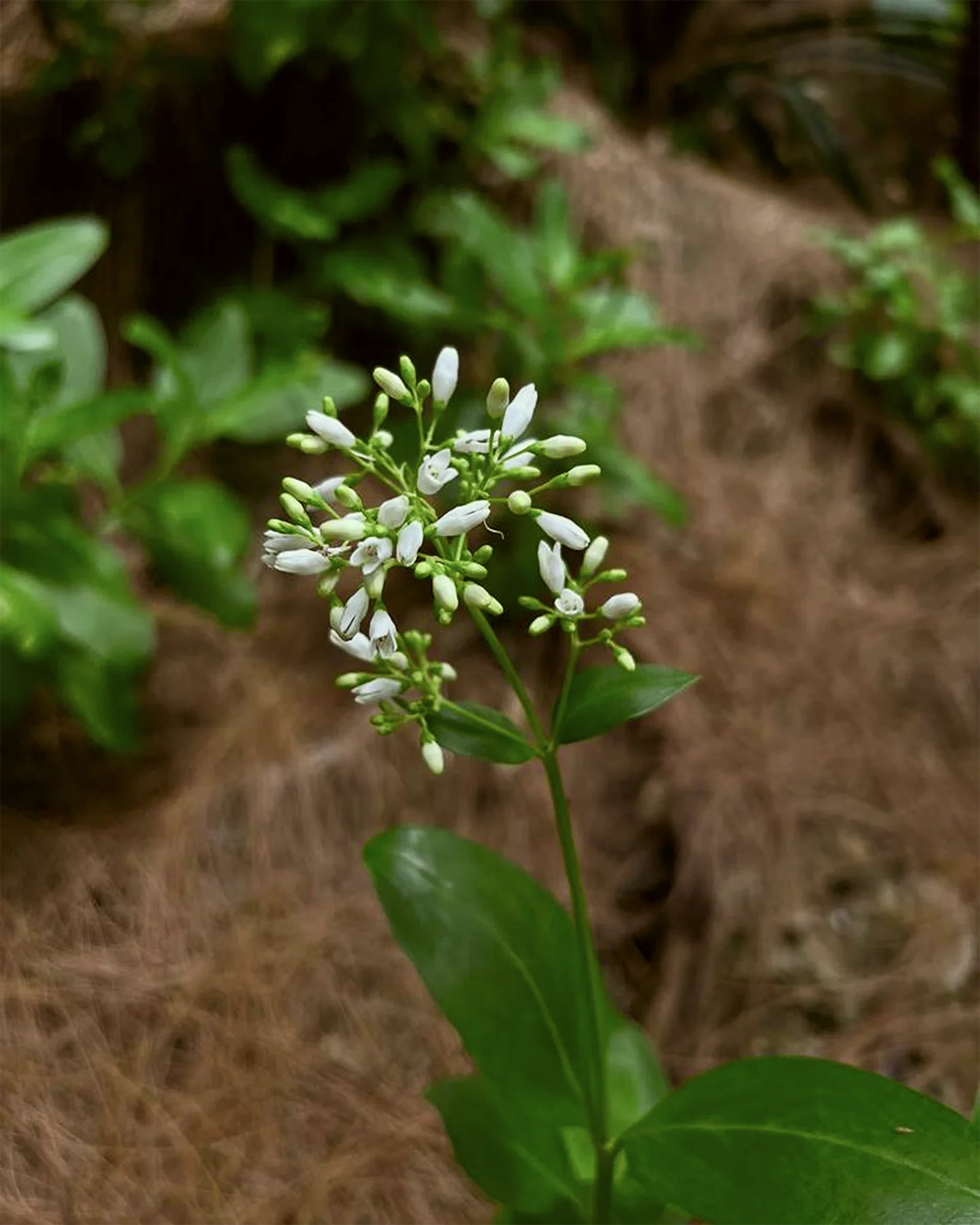
Her classes draw in a wide range of students, from recent high school graduates and working mothers to CHamorus on the mainland seeking to reconnect with their heritage. Over three courses, students learn the English and CHamoru name for various plants, how to identify them in nature, and the techniques needed to prepare them for medicine. For example, all students who graduate from the course gain the skills to make Åmot Pasmun Sinagu, a cough and flu remedy that uses ten different medicinal herbs.
However, what they learn goes far beyond memorization. “It’s not just about the åmot,” says Lizama. “There are also big parts about our culture, our values. You learn that everything is interwoven.” Mama Lou teaches students the prayers before harvesting, how to honor the spirits who protect the plants and land, and the emotional and spiritual care required of a CHamoru healer.
Mama Lou is the first to say that making medicine is hard. The work is hands-on and demanding—wading through mud, crossing streams, scraping dirt off thin roots, pounding leaves until your hands ache. For young learners, it is also liberating.
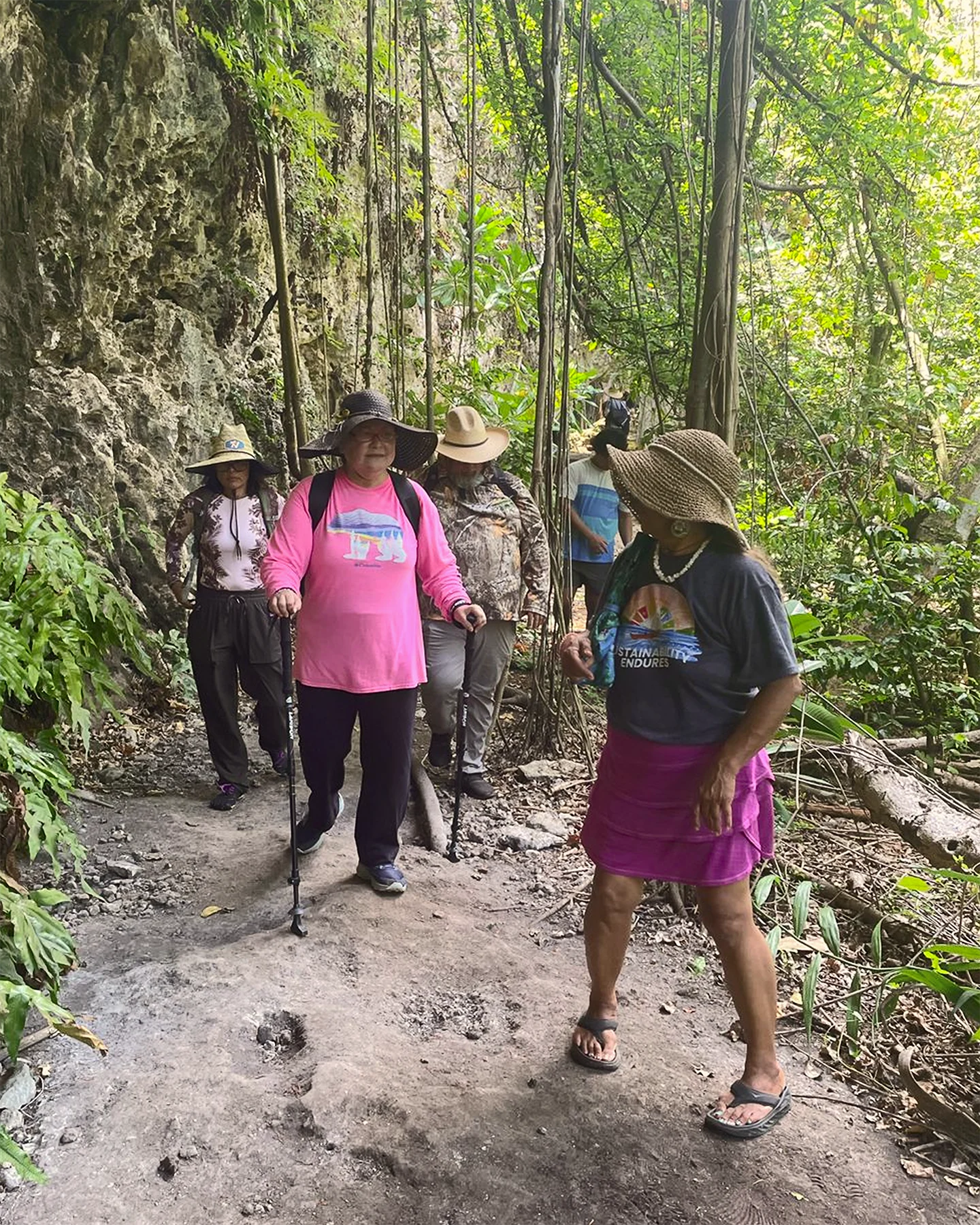
“We can’t bring negative vibes when we’re going to pick medicine,” says 27-year-old Caley Jay “CJ” Chargualaf, a conservationist at the University of Guam, who began studying under Mama Lou in 2019 as an apprentice. “If I’m in a bad mood, we believe that energy will transfer into the medicine and potentially not work. We have to go into it with a clear mind.”
“In our modern age, with phones and technology, we have endless distractions at our fingertips,” Chargualaf adds. “But when we’re picking the medicine, cleaning it, paying attention when it’s boiling, you have to be present. You have to be mindful. And it translates into everything else you’re doing.”
For Chauntae Quichocho, a 27-year-old CHamoru language teacher also studying under Mama Lou, traditional healing is a reclamation of her heritage. “My paternal grandmother was a yo’åmte, but she lived on an island next to us, Saipan, so I was disconnected from that part of my heritage,” she says.
Now, each lesson is a way of reconnecting with both the practice and her grandmother’s memory. “When the work is hard, I try to think of her and honor her. I call her into the space to guide me.”
Mama Lou’s teachings take root, she says, because of what she learned from her first teacher.
“I teach for my heart. Before my grandma died, she said to me, ‘I want you to go out and teach people how to make medicine so they can cure their families,’” Mama Lou recalls.
“But there is a part you have to learn. You have to put in love. The medicine is not going to work, if you don’t love.”
Grant insight
University of Guam
The University of Guam, based in Mangilao, Guam, was awarded $900,000 in October 2023 through Mellon’s Higher Learning grantmaking area.
View grant details