Report
What’s in a Place? More than Geography
It had been years since Tasheena Zonnie—a 40-year-old Diné mother of five from Navajo County, Arizona—had been in the same place as her immediate family. Her mom and dad are divorced and rarely get along. Her older sister—like so many in the town where Tasheena and her siblings grew up—suffers from addiction to methamphetamines. And her older brother, like her, had been busy taking care of his growing family.
But, that Christmas Eve in 2023, they were all there together, some of them with their own kids, three miles off the main road in a remote part of Navajo land. The youngest member of Tasheena’s family—her brother, then-35-year-old Dustin Zonnie—had been missing since March. This was the 45th search to try and find him.

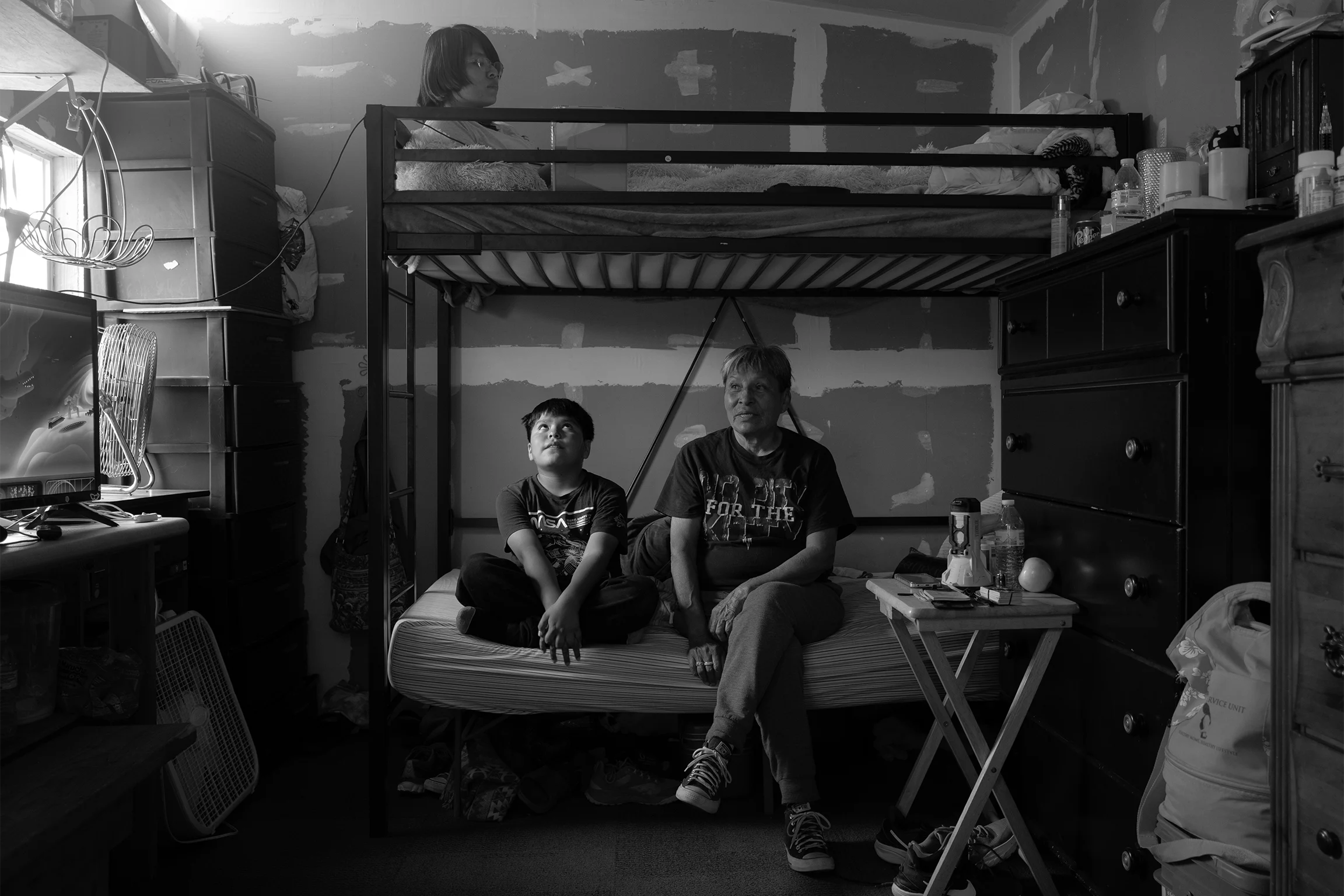
Tasheena and the family-turned-search-party combed the area, trudging through thick red mud, over treeless knolls and deep into dried ravines, looking for any signs of Dustin, a man who had been known for his unforgettable laugh and talent for metal fabrication work before his life was upended by drug addiction. A criminal investigator assigned to the case told the family that the FBI had been there recently, after a witness came forward with a tip. But they had not found anything. So, with her older brother’s truck, which could handle the muddy, off-road terrain, Tasheena and the search party were determined to extend the perimeters of the search.
About 30 minutes in, Tasheena’s eight-year-old nephew spotted something that looked like a weathered basketball. But once he got closer, observing dry cracks along a white dome partially submerged in the earth, he realized something was wrong. It turned out to be what remained of Dustin’s skull.
Tasheena, who had been gathering information and coordinating with law enforcement nonstop for nine months, reached for her phone, only to find she had no cell service.
She saw her mother and father walking up to her, knowing they would have to see Dustin, as she put it later, “left in the middle of nowhere.”
“I don’t know what to do!” she yelled into the phone. Eventually, her sister-in-law caught a signal and called the police. The family was told it would take some time for anyone to arrive.
In that moment, all they could do was build a fire—and wait in the cold, together.
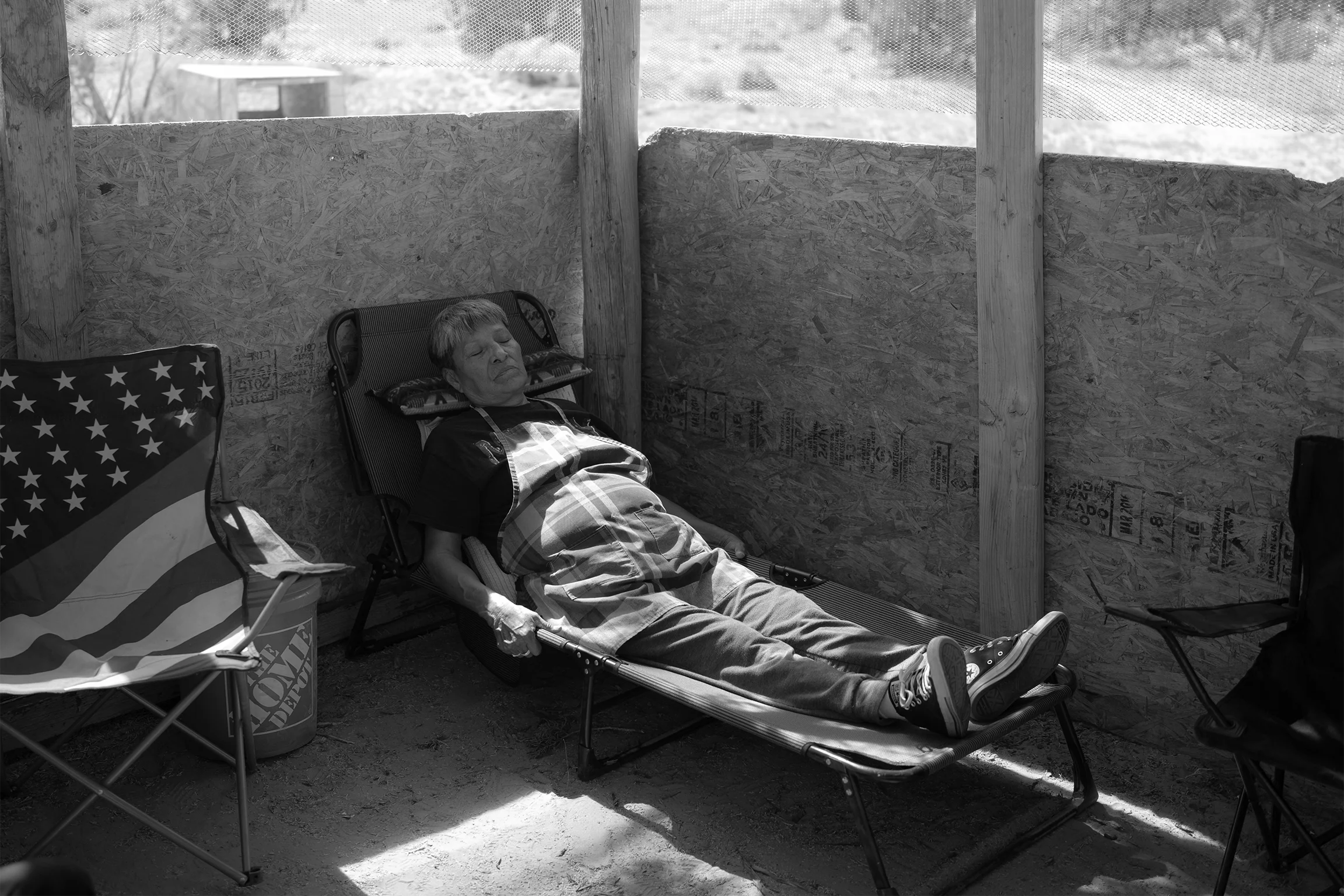
According to Tasheena’s mother, 67-year-old Carolyn Charley, there was only one thing Dustin had ever truly wanted, and that was for his mother to have a stable home. But the children’s father left when they were still in school. As a young single mother, stability had been hard to come by. Over the 18 years Tasheena lived with her mother, she and her three siblings lived in at least seven different places.
“Pretty much I raised them by myself ... We’ve been moving here and there. Rentals, then borrowing,” Carolyn said. “I’ve been struggling all my life.”
At one point, Carolyn had dreams of going to college. But taking care of her children required her to take whatever jobs she could—first as a school bus driver and later as a home care provider.
“We never had an actual place to go back to and say, ‘That’s home,’” Tasheena said, “but my mom was our home—wherever she was, that was home.”
When Carolyn’s older children grew and left her care, it was Dustin who stayed. “He always stayed around me, and he tried to help me,” Carolyn said.
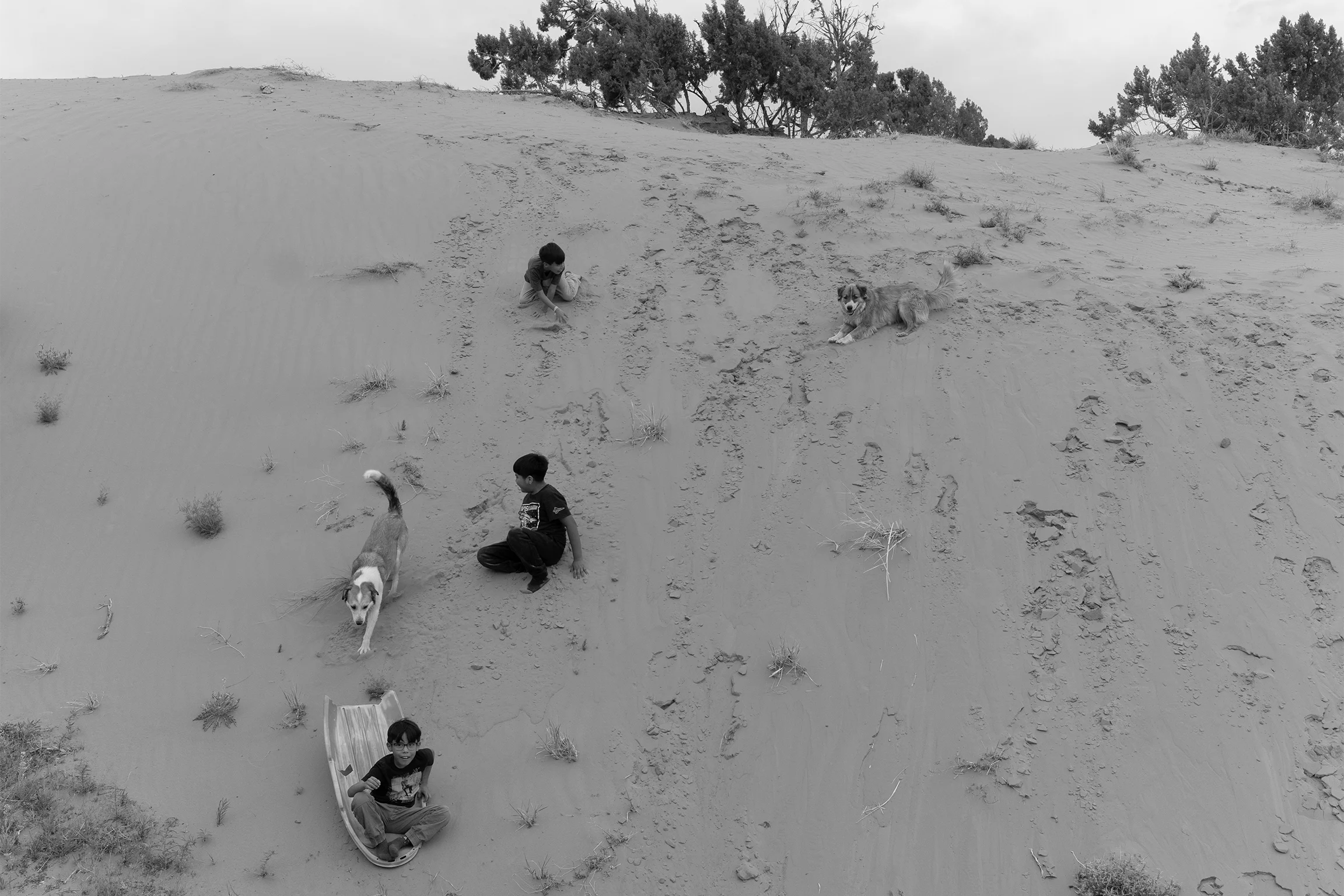
Over the years, Tasheena, who had been close to Dustin as a child, witnessed him struggle first with alcohol dependency, and then with addiction to methamphetamine. “We grew up with domestic violence and addiction and all of that, and he just really went down the route of addiction,” Tasheena said.
Together, she, her mother, and other family members did their best for Dustin, helping him find food and shelter during the cold winter months, when temperatures on the reservation routinely dip below freezing.
According to a study in the PLOS Global Public Health journal, Navajo County, Arizona, was one of the five US counties most impacted by alcohol-induced mortality over a 26-year period starting in 1999. Additionally, according to data from the Centers for Disease Control, in 2023, Navajo County residents had a 66 percent higher likelihood of experiencing an unintentional drug overdose death than the national average.
That’s why much earlier, in 2006, fearing the level of addiction that was gripping the area, Tasheena left her hometown, embracing sobriety along the way.
“The biggest thing I had to do to protect myself was to just keep that distance—I felt like I had to get away from it,” she said.
It was in March 2023, living in Phoenix, when her phone rang.
“My mom had given me a call in the middle of the night, and I had always dreaded those calls—because [of] my brother and my sister battling addiction. You just get to that point where you think, ‘maybe this call is it,’” she said.
Carolyn told Tasheena that one of their relatives had heard a rumor that “something had happened” to Dustin—and that she had filed a report with the police. The police took the report to a criminal investigator—who, in turn, suspected homicide. From there, the case was taken to the Navajo Nation Police Department of Criminal Investigations, which collaborates with the FBI for certain crimes on Indigenous nations.
After asking around in the community, Tasheena was told that Dustin had last been seen at a house that “was occupied by drug dealers,” at a location far from where his remains were ultimately discovered. In early 2025, she says, she received confirmation from the FBI that the DNA of the skull they found was Dustin’s.
Tasheena is disappointed with how slow and unavailable the authorities were throughout the nine-month search for her brother.
She believes that if she hadn’t been active on social media, constantly emailing political officials, and organizing awareness walks, the tip that ultimately had led them to the area where he was found would not have happened.
“I’m like, nobody is going to forget my brother. Nobody is not going to do anything,” Tasheena said.
The investigation into exactly what happened—including how Dustin died and who is responsible for his death—is still ongoing. And his is not an isolated case. The number of missing Navajo persons totaled more than 70 in early 2026, according to the Navajo Police Department.
While they wait for answers, Tasheena decided she would do everything to build what she knows Dustin wanted: a home for their mother.
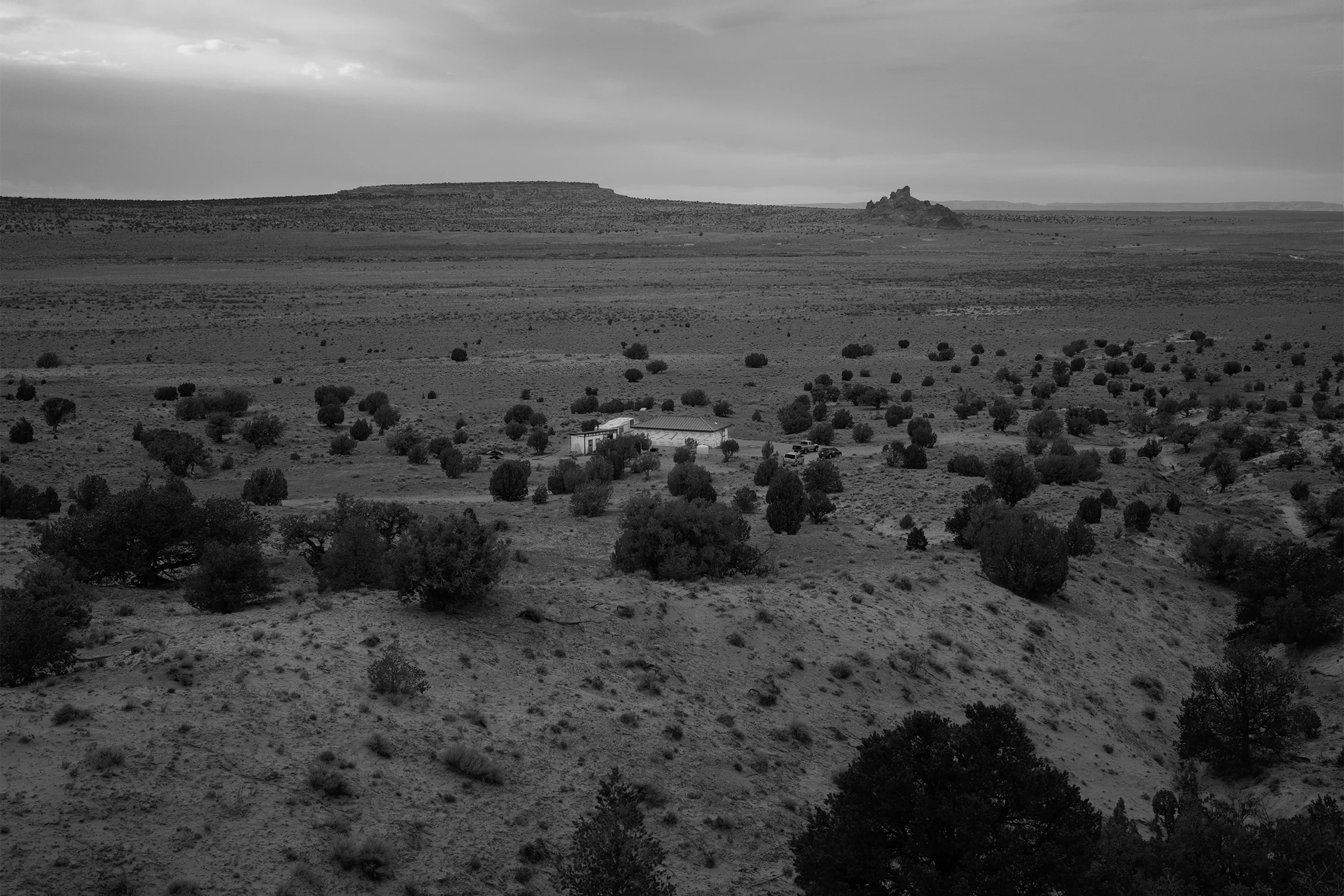
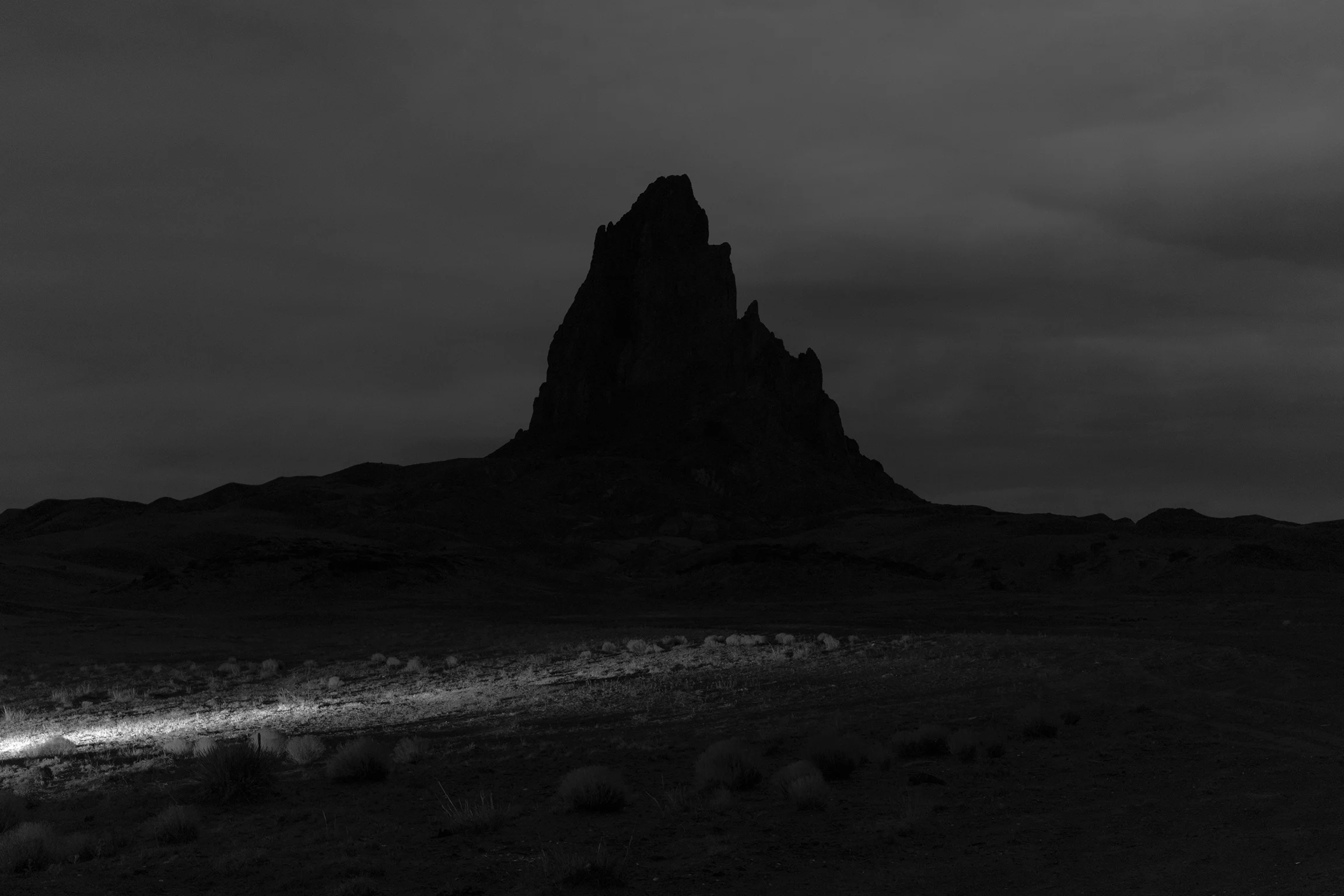
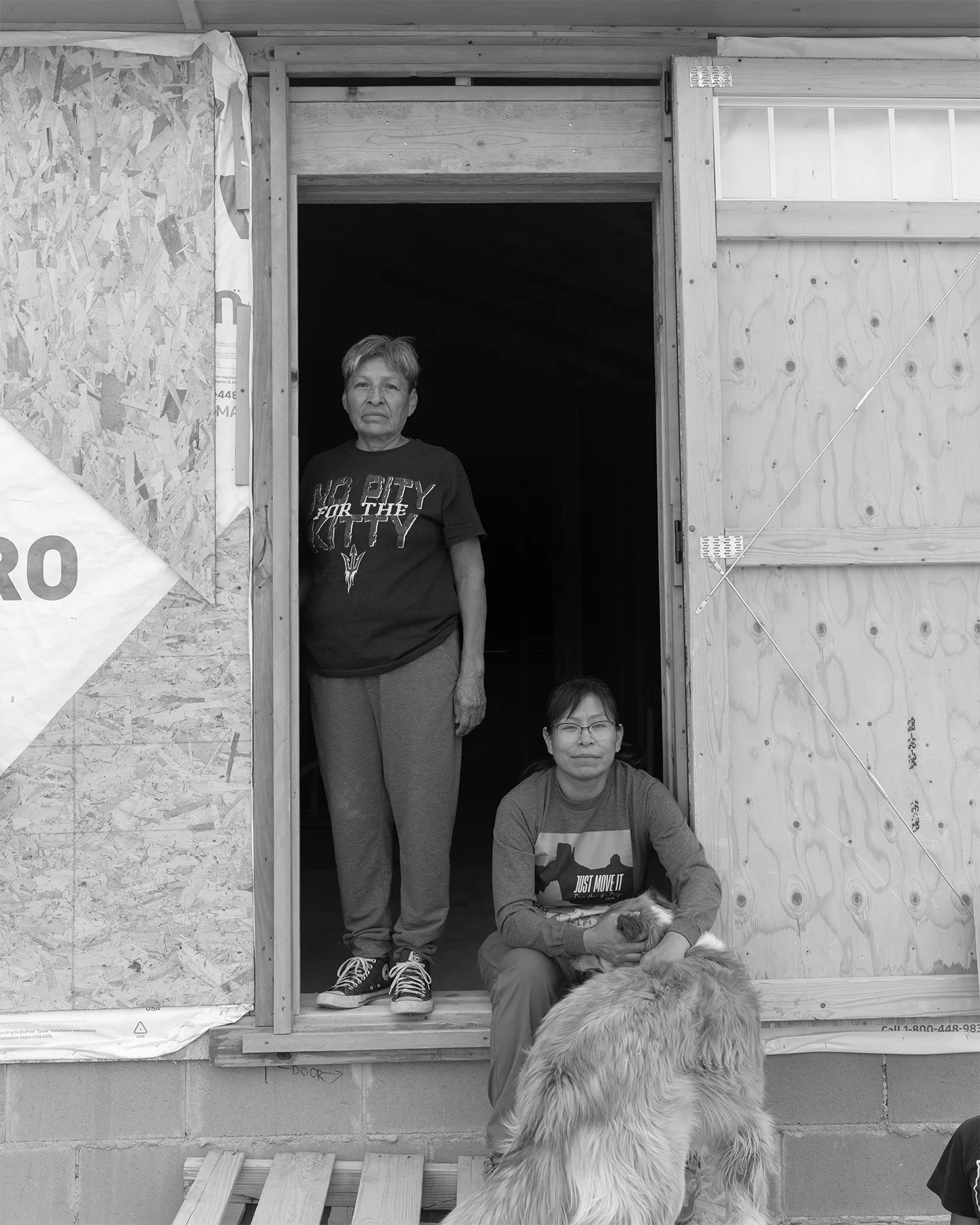
In early 2026, Carolyn was living in what her daughter described as “a shed.” It has no electricity or running water and occasionally leaks when it rains or snows. To heat the home in the winter, Carolyn finds wood nearby and chops it to fit inside a small stove. She hauls water in five-gallon jugs every couple of days from her brother’s house, half a mile away. When the family needs to bathe, she heats it up on a propane stove. “That’s how we wash up—that’s what we do,” Carolyn said. To drink, she purchases bottled water, and for supplemental power, she has a generator.
Carolyn shares the space with two of her grandchildren, 10-year-old, Saven, and 19-year-old, Jaydii. Their living quarters are particularly tough on Jaydii, who is autistic and experiences sensory hypersensitivity to loud sounds, making the close quarters of their current home challenging.
Jaydii, Tasheena said, may “need to be looked after for the rest of her life,” which further emphasized her determination to fix her mother’s precarious housing situation. That’s when the family found Nááts’íilid Initiative, an organization with a mission to address the urgent need for housing and utility infrastructure on Navajo land.
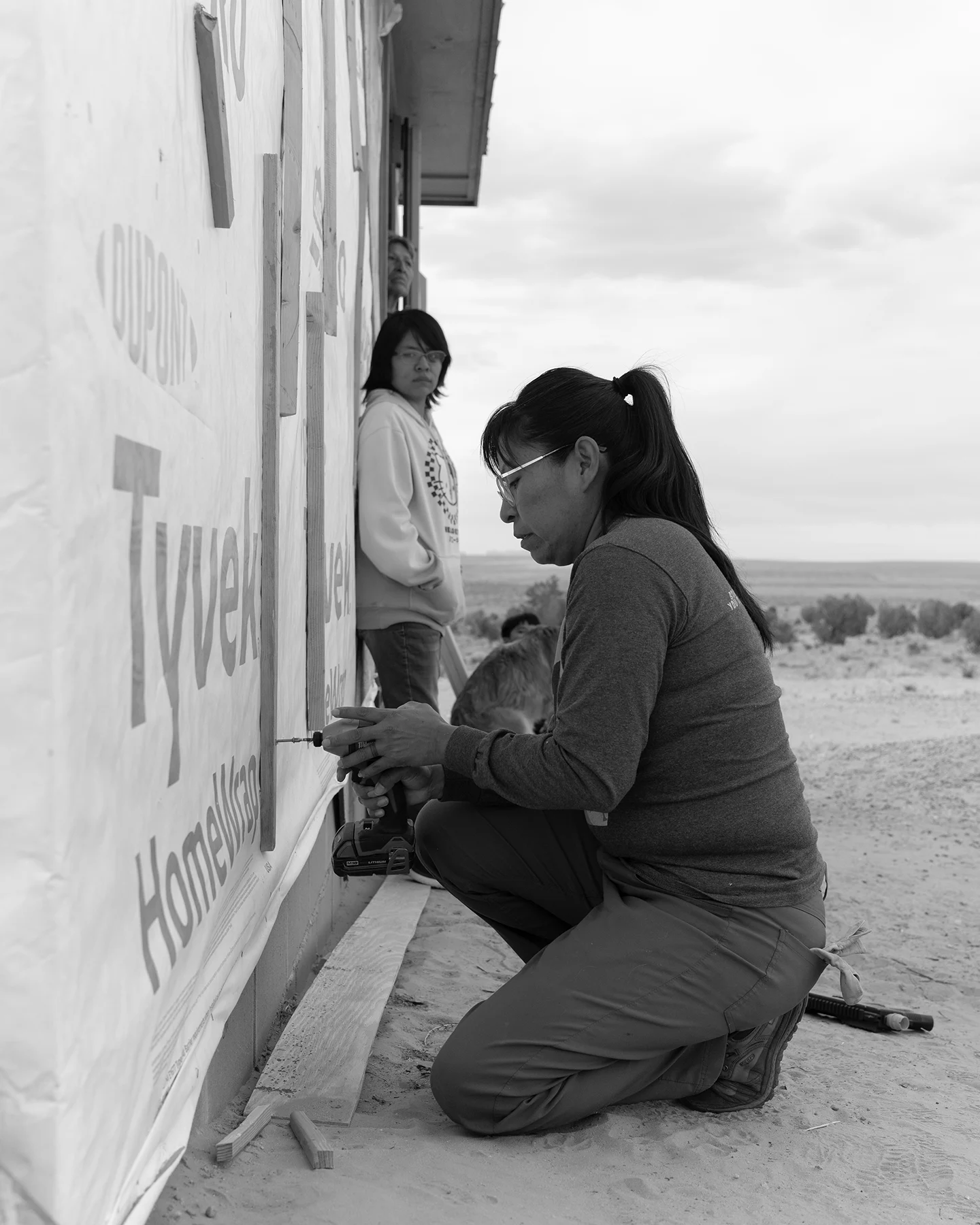
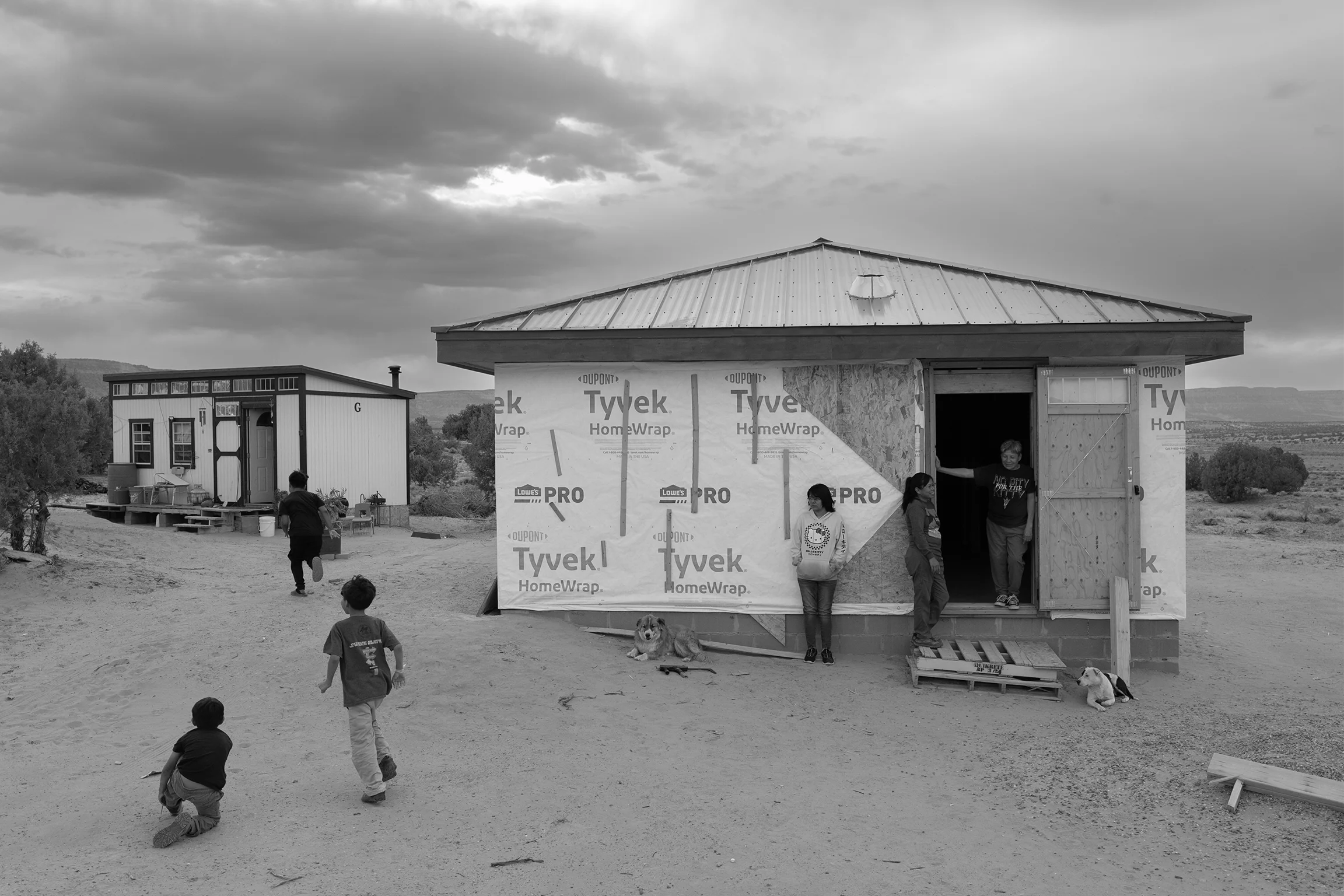
Nááts’íilid builds homes in a unique way, integrating traditional teachings and building practices into the home building process. Builders make use of sustainable and culturally significant materials like clay, straw, and wool that are sourced directly from the site. Crucially, the builders themselves are people from the community—either the future owners or beneficiaries of the home being built or prior participants of the program who, through helping build their own homes, have gained the residential construction skills needed to build a house from scratch.
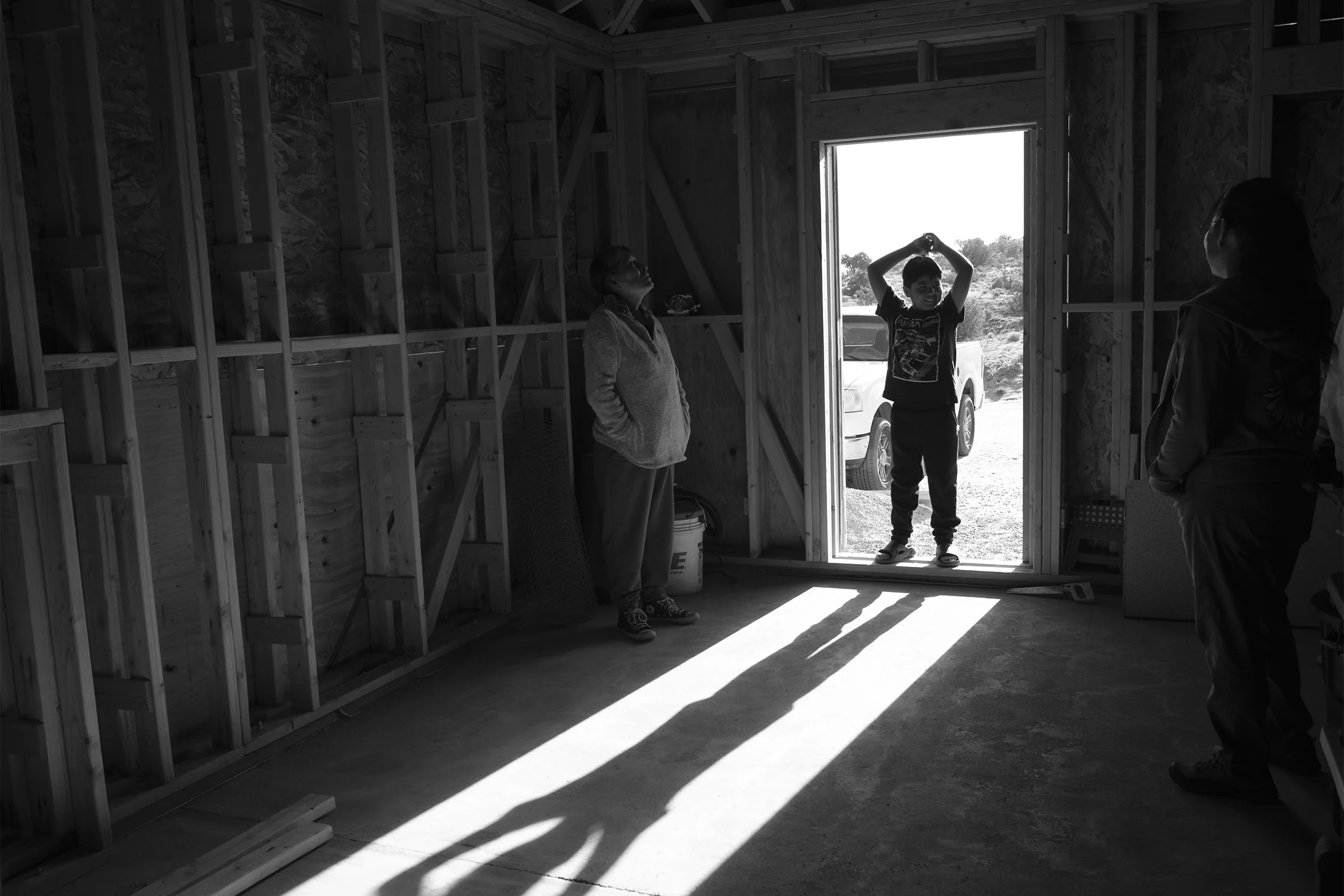
The home is being built by a team of apprentices, a contractor, and Carolyn’s granddaughterJakobi Smith, daughter-in-law Shanielle Dempsey, alongside Tasheena.
Tasheena works ten-hour days, carrying a nail gun and lugging around 80 lb. bags of concrete. It can be exhausting, but, with the house expected to be completed by the end of 2026, the end is in sight. She knows what it will mean for her mother.
“It’s going to be her very own, very first home. And at that age, that’s everything,” Tasheena said.

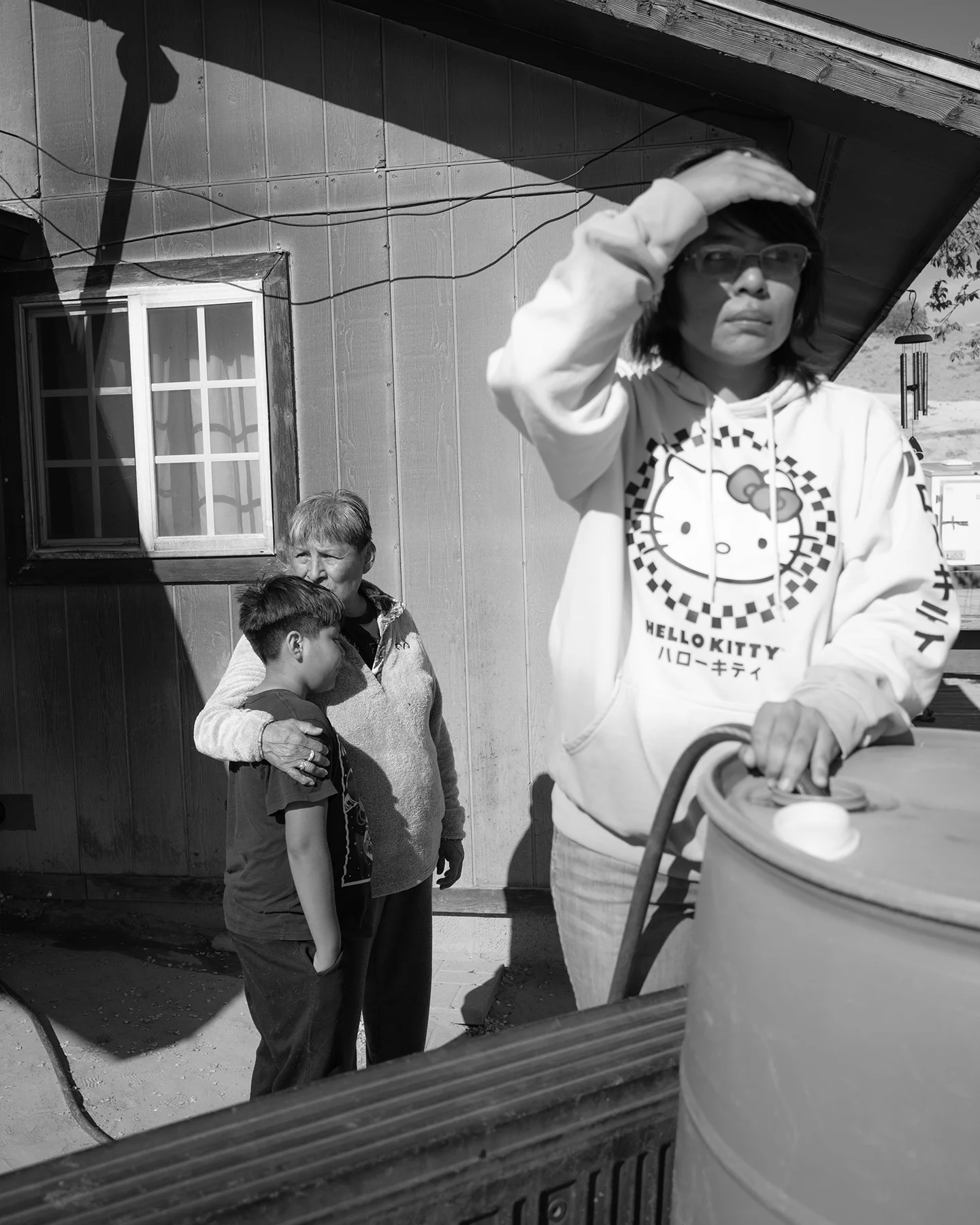
“With our culture, the mother is the matriarch of the family,” she added.
Every time Carolyn visits the site to help out—putting in what the Nááts'íilid Initiative calls “sweat equity,” which has included helping dig the foundation and pouring cement for the living room she’ll soon sit in—she remembers how important it was to Dustin for her to find a stable place to live.
“It really reminds me of my son, the home being built,” she said. “He would have been very, very happy.”
When Carolyn’s house is complete, reminders of her family, homeland, and culture will be everywhere.
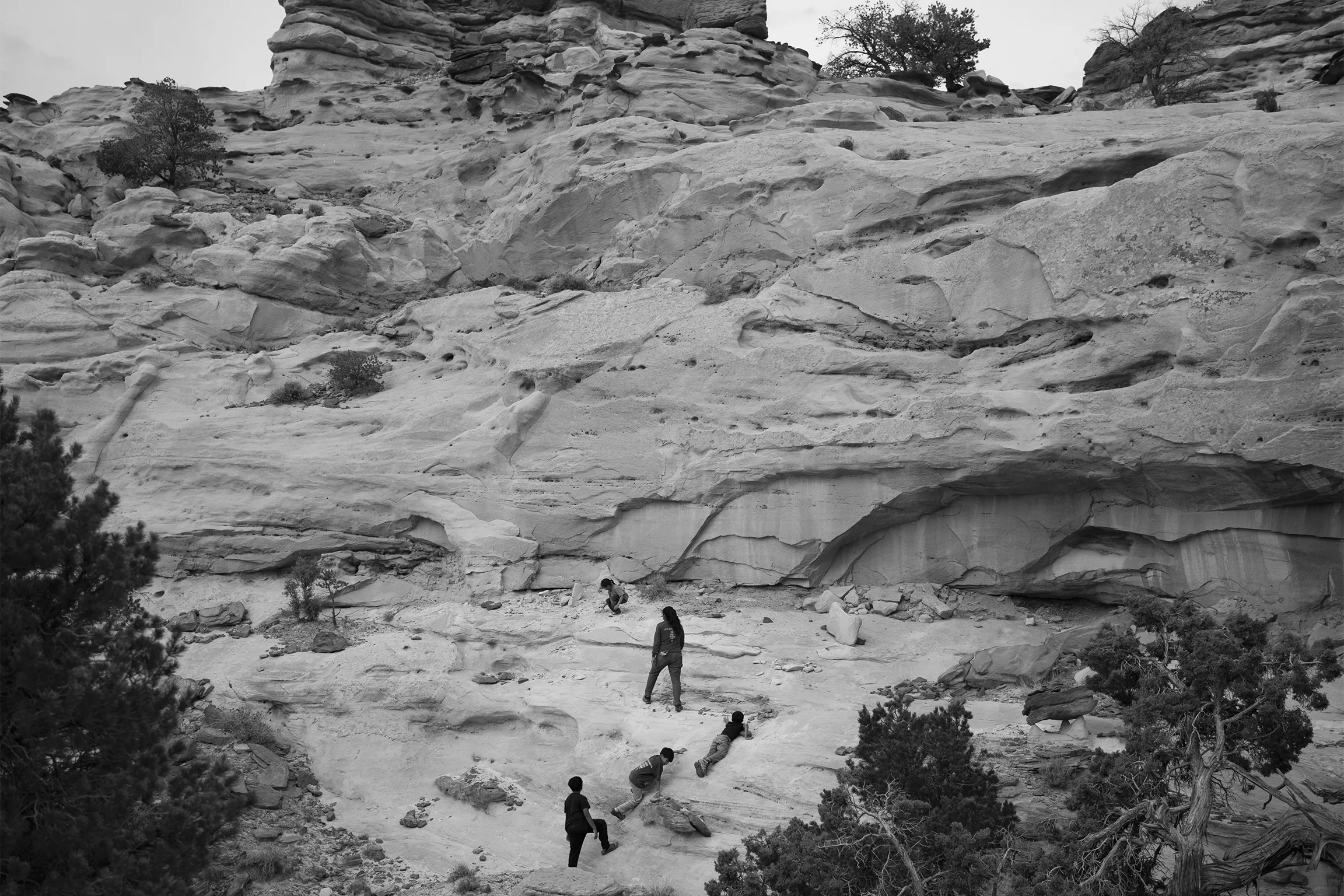
Per Diné tradition, the main door is designed to face east. Tasheena believes this placement, oriented towards the rising sun, will bring blessings and protection. A large window will overlook the red rock cliff that Carolyn, Tasheena, and Dustin all climbed. Earth and straw will insulate the home’s rooms from the cold, as they have for centuries of Navajo residents. And a large wood-burning stove will keep the family comfortable in winter.
That last image is one that Tasheena keeps returning to.
“I see a warm fire,” she said.
“It's centering and bringing peace to the home. Everything is just finished. And everything is good.”
Grant insight
Nááts’íilid Initiative
Yestermorrow, Inc., fiscal sponsor for Nááts'íilid Initiative, was awarded $500,000 in June 2022 through the Humanities in Place grantmaking area.
View grant details